


Functional beverages: Balancing taste, science and scale as consumers demand “more per sip”


Key takeaways
- Consumers are demanding more than wellness benefits from functional beverages, including hydration, gut health, recovery, and digestive comfort.
- Manufacturers must balance taste, clean labels, sugar reduction, and formulation stability as they scale multi-benefit ready-to-drink formats.
- Repeat purchase depends on noticeable, science-backed advantages offered without compromising taste or drinking experience.

Functional beverages are increasingly expanding beyond wellness claims, with consumers demanding hydration, energy, protein, and gut health benefits from drinks — seeking “more per sip.” For beverage manufacturers, maintaining taste while keeping labels simple remains an ongoing challenge.
Multi-benefit formats that connect specific use scenarios — from morning energy and workday focus to exercise recovery and digestive comfort — are propelling ingredient innovation in the category to withstand real-world processing, shelf life demands, and regulatory scrutiny.
Innova Market Insights’ 2026 trend “Beverages with Purpose” highlights beverages as vehicles for benefits beyond hydration. Healthy, convenient, and functional beverages are driving growth, as 51% of consumers globally increase consumption.

Food Ingredients First explores the next phase of functional beverages with Valio, dsm-firmenich, Nektium, and Synergy Flavours, discussing how technical hurdles, regional preferences, and science-backed formulation are shaping products that can drive repeat purchase.
Sinikka Saikkonen, senior business development manager at Valio, says the biggest recent shift in functional beverage innovation is around recovery, which has moved beyond post-exercise use into everyday well-being.
“Consumers are looking beyond sports performance and increasingly prioritizing sustained energy, balance, and resilience throughout the day. This is driving demand for beverage solutions that optimize recovery by combining protein for muscle recovery and carbohydrates for energy replenishment in one functional product.”
“Alongside this shift, hydration has also evolved into more of a lifestyle-driven trend that supports daily performance, not just athletic activity,” she adds.
“Benefit stacking” and proteins in functional beverages
Maud Roeters, senior director Strategy, Marketing & Innovation for Beverages, at Taste, Texture and Health, dsm-firmenich, says that hydration is still the foundation of beverage innovation, but the market has evolved “significantly beyond simple fluid replenishment.”
“What has changed most is that hydration is no longer a differentiator; it has become an expected baseline. As a result, innovation is centered on benefit stacking, combining hydration with targeted health outcomes tailored to specific moments throughout the day.”
 Protein fortification is driving clean label recovery drinks that combine proteins and carbohydrates to support muscle recovery and energy replenishment, says Saikkonen.Additionally, manufacturers are looking for “superior formulation stability” to enable high-quality product launches, Elena García, scientific product & communication manager at Nektium, tells us.
“The industry is focused on ingredients that are highly soluble and organoleptically neutral, ensuring no impact on pH, clarity, or taste — a critical factor for clean label beverage development.”
Saikkonen also emphasizes that protein has become mainstream, shifting from niche sports nutrition to everyday consumption.
“Consumers are looking beyond sports performance and increasingly prioritizing sustained energy, balance, and resilience throughout the day. This is driving demand for beverage solutions that optimize recovery by combining protein for muscle recovery and carbohydrates for energy replenishment in one functional product.”
Chris Whiting, European category development manager at Synergy Flavours, also says protein fortification is going mainstream — citing Innova data showing that 82% of consumers say they are interested in F&B products containing protein.
“Consumers are increasingly recognizing the importance of protein in areas of health and wellness outside of gym-goers and fitness programs, including healthy aging and in GLP-1 support.”
“Protein ready-to-mix powders remain a mainstay, and we’re seeing increasing innovation in ready-to-drink formats where protein is the primary selling point.”
Roeters also highlights a growing interest in protein fortification, particularly in clear protein waters that combine hydration with nutritional gains. “These products appeal to consumers looking for convenient ways to support active lifestyles, recovery, and overall wellness without compromising on taste or refreshment.”
Natural and hybrid innovations fuel functional beverage growth
García at Nektium links the protein trend to “performance nutrition” with potential crossovers with energy drinks. “Several major coffee and fast-casual chains offer protein coffees now, for example, and brands are experimenting with various other hybrid products.”
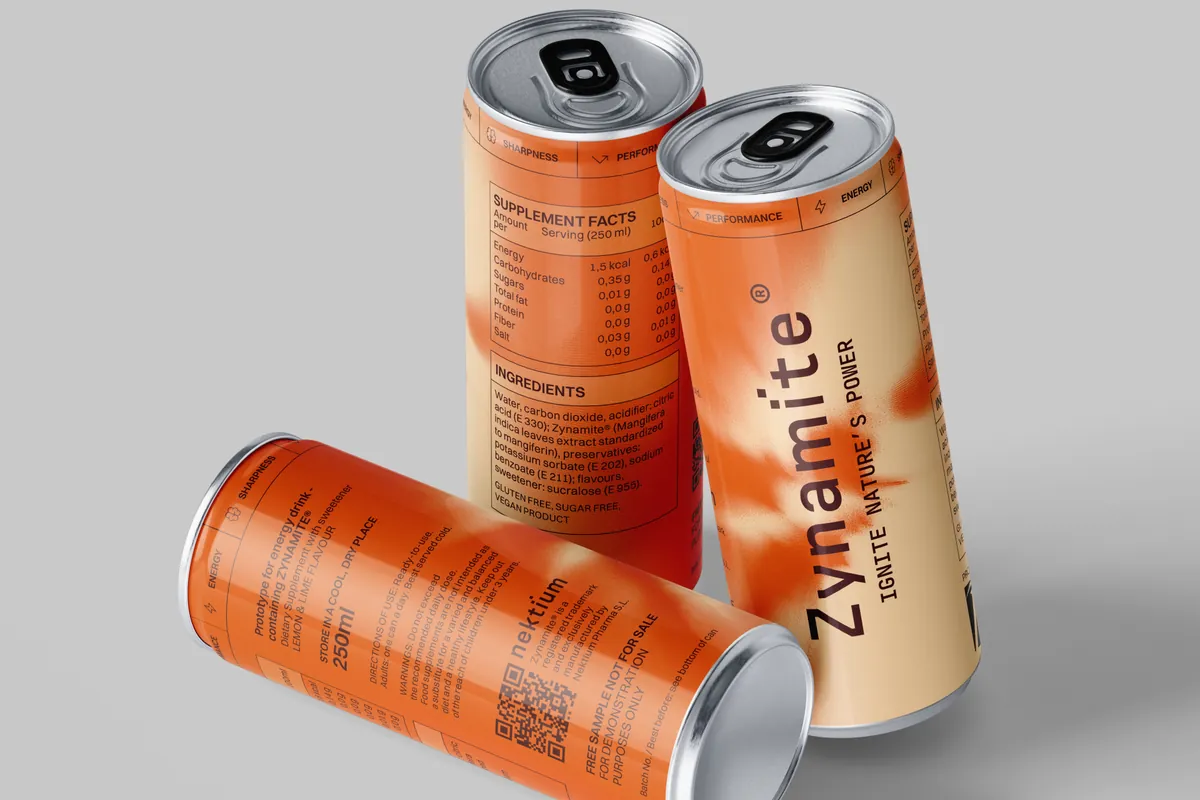 Nektium’s Zynamite ingredient is claimed to be a non-stimulant nootropic support for mental energy and cognitive performance, without traditional stimulant side effects (Image credit: Nektium).She points toward the company’s “fast-acting, non-stimulant nootropic” Zynamite that delivers perceptible results in 30 minutes without the “crash” associated with traditional energy ingredients.
“Our recent clinical data on Zynamite S gives manufacturers the scientific backing required to confidently stand out on front-of-pack labeling.”
Whiting at Synergy Flavours also highlights “calmer” energy sources, such as matcha, L-theanine, cacao, ashwagandha, and lion’s mane. He explains that these ingredients offer focused energy and other specific benefits over traditional energy drinks.
“Ocado [online grocery retailer] has reported a 54% year-on-year increase in health drink sales across kombucha, prebiotic sodas, and other functional formats, signaling a clear shift toward natural and plant-powered energy,” says Whiting.
Meanwhile, Saikkonen at Valio considers emerging ingredients, such as certain adaptogens and nootropics, to be overhyped, “especially when scientific evidence or effective dosage levels remain limited.”
“Clean label, natural recovery beverages that combine protein and carbohydrates address core consumer needs like muscle recovery and energy replenishment in a proven and effective way,” she says.
Taste as a key purchase driver
Many functional ingredients can be unpalatable and present taste challenges due to off-notes. Whiting says manufacturers can overcome these issues using taste modulation technology that targets the user’s perception of flavor, mouthfeel, texture, and aftertaste.
“These technologies can reduce the presence of off-notes and undesirable textures, such as astringency or ‘chalkiness’ in high-protein beverages or the unpleasant taste left by some synthetic sweeteners, to offer a ‘cleaner’ taste,” he explains.
Meanwhile, Roeters highlights the rising emphasis on “scientifically substantiated ingredients” supporting credible health claims, and solutions that enable clean label positioning and sugar reduction without compromising on sensory appeal.
 Maud Roeters: Premixes, taste modulation, and natural colors help brands deliver complex functional beverages with quality, shelf life, and consumer appeal.“Balancing functionality with taste remains one of the industry’s biggest challenges. Consumers increasingly expect beverages to deliver meaningful health benefits, but they are unwilling to compromise on flavor or drinking experience.”
Saikkonen describes taste as critical in functional beverage formulations — they must enable “both proven benefits and an enjoyable, even indulgent experience, making them easy to integrate into daily routines.”
“Dairy-based solutions such as Valio Eila Pro and milk protein concentrate specialty powders are designed to perform across different RTD applications, supporting stable, high protein beverages with good taste and process efficiency.”
“Valio’s Fast Track solution makes it possible to launch a lactose-free milk with 44% more protein, 31% less sugar, and the fresh taste of milk.”
Stability and solubility challenges in functional beverages
The companies broadly agree that scaling functional drinks remains technically complex.
For Roeters, bitterness, sedimentation, ingredient interactions, nutrient stability, and sugar reduction are some of the barriers.
“Functional ingredients can interact with one another, affecting solubility, efficacy, color stability, and overall product quality. This is particularly relevant when combining multiple benefits within a single beverage.”
Additionally, scaling successful ingredient systems from “concept to commercial production” requires careful management of ingredient compatibility, manufacturing efficiency, and regulatory compliance.
 Chris Whiting: Functional ingredients can challenge solubility, color stability, and quality in multi-benefit beverages.García says many functional ingredients were not originally designed for beverages, creating solubility, clarity, taste, pH, and stability issues.
“For example, mangiferin is the active ingredient in Zynamite. It has low solubility in most food-grade solvents, which significantly limits the application possibilities, particularly in the beverage space. Because of that, we developed Zynamite S, which offers instant dissolution in water,” she explains.
Functional drinks adapt to local tastes
Emphasizing that the protein boom is truly global, Saikkonen says that market maturity differs across regions — Europe and North America are more established, while Asia-Pacific is growing rapidly.
“Regional differences are shaped by taste preferences, cultural approaches to health, and local dietary habits. For example, in Asia-Pacific, higher prevalence of lactose intolerance increases the importance of lactose-free, easy-to-digest dairy solutions that deliver the benefits of high-quality protein without gut discomfort.”
Roeters explains that in Europe, hydration, gut health, immunity, and clean label positioning are major drivers, with consumers placing “strong emphasis on scientifically substantiated benefits and ingredient transparency.”
“Regulatory scrutiny around health claims also influences product development and market positioning. North American consumers tend to show strong interest in energy, performance, hydration, and increasingly mood and mental well-being solutions.”
Beverage formats also differ regionally. “Tea-based functional beverages continue to resonate strongly across many Asia-Pacific markets, while sports drinks, flavored waters, and functional soft drinks remain important vehicles for innovation in North America and parts of Europe.”
What will define future functional beverage success?
The experts emphasize that successful functional beverages of the future will need to deliver benefits consumers can actually notice, without compromising palatability.
 Elena García: As consumers grow more skeptical, manufacturers need ingredient-specific human trials to prove cognitive beverage bioactives deliver measurable results.Nektium’s García says experiential products have an advantage because consumers want natural bioactives that “deliver instant power and energy that users can actually feel.”
Whiting at Synergy expects taste to remain the main differentiator since repeat purchase depends on flavor profiles as much as functionality.
“As fortification can impact taste, it will become increasingly important for manufacturers to ensure that taste is maintained while increasing functionality and reducing ingredients, such as sugar and fats,” he tells us.
For Saikkonen at Valio, the “more per sip” mindset will continue shaping the category, but success will come from “combining a few clear, relevant benefits that are both credible and noticeable in everyday use.”
“Winning products are those that align scientific evidence, a clear use occasion, and a great user experience, delivering real value in every serving.”


Upcoming webinars

Oat-Standing Ingredients - Showcasing Irish Grain Through Innovation
Tirlán Ingredients

2027 Food Safety Risks for Quality & Compliance Leaders
FoodChain ID

Formulating for function: Developing benefit-led beverages with natural colours, botanicals, and flavours
Givaudan Sense Colour