


Vegetarian Society registers certification marks in EU amid rising F&B demand

Key takeaways
- The Vegetarian Society registers its Vegetarian Approved and Vegan Approved certification marks in the EU.
- Certification includes checks on ingredients, processing aids, production controls, and supply chain information where clarification is required.
- Cold beverages and baked goods are driving F&B demand, while the “Plant-Based” mark offers brands a broader positioning option.
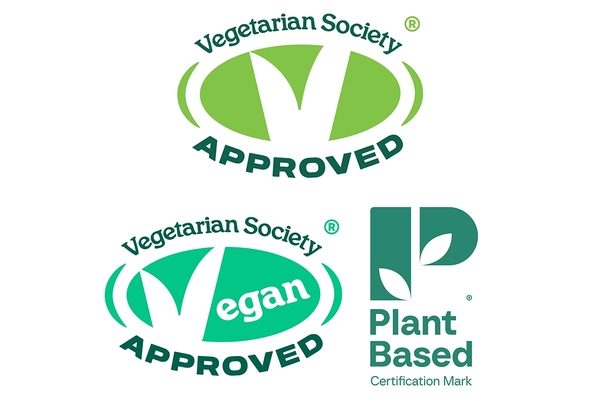
The Vegetarian Society has registered its modernized Vegetarian Approved and Vegan Approved certification marks in the EU. The move gives food and beverage manufacturers greater scope to use the labels consistently across European markets.
The registrations form part of an ongoing international rollout, with further territories expected to follow in the coming months. The development concerns the registration and protection of the marks rather than EU regulatory approval of individual certified products.
Speaking to Food Ingredients First, Ben Worth, director of development at the Vegetarian Society, says the move offers practical and commercial benefits for companies selling products across multiple jurisdictions.
“EU registration gives F&B manufacturers greater flexibility to use the Vegetarian Approved and Vegan Approved certification marks on products marketed across European countries, providing a consistent and recognizable way to communicate product suitability to consumers.”

“For manufacturers operating across multiple European markets, a trusted certification mark can be a valuable commercial asset. It provides independent verification of a product’s vegetarian or vegan credentials and offers consumers a clear visual cue at the point of purchase, helping brands communicate their proposition with greater confidence and consistency.”
EU demand strengthens
The organization says manufacturers are already extending the marks beyond their domestic portfolios as demand for recognizable dietary information grows.
“We are already seeing strong demand from manufacturers trading across the EU, with many existing clients extending use of the certification marks to their exported products. We have also seen a significant increase in EU-based businesses joining the certification scheme,” Worth tells us.
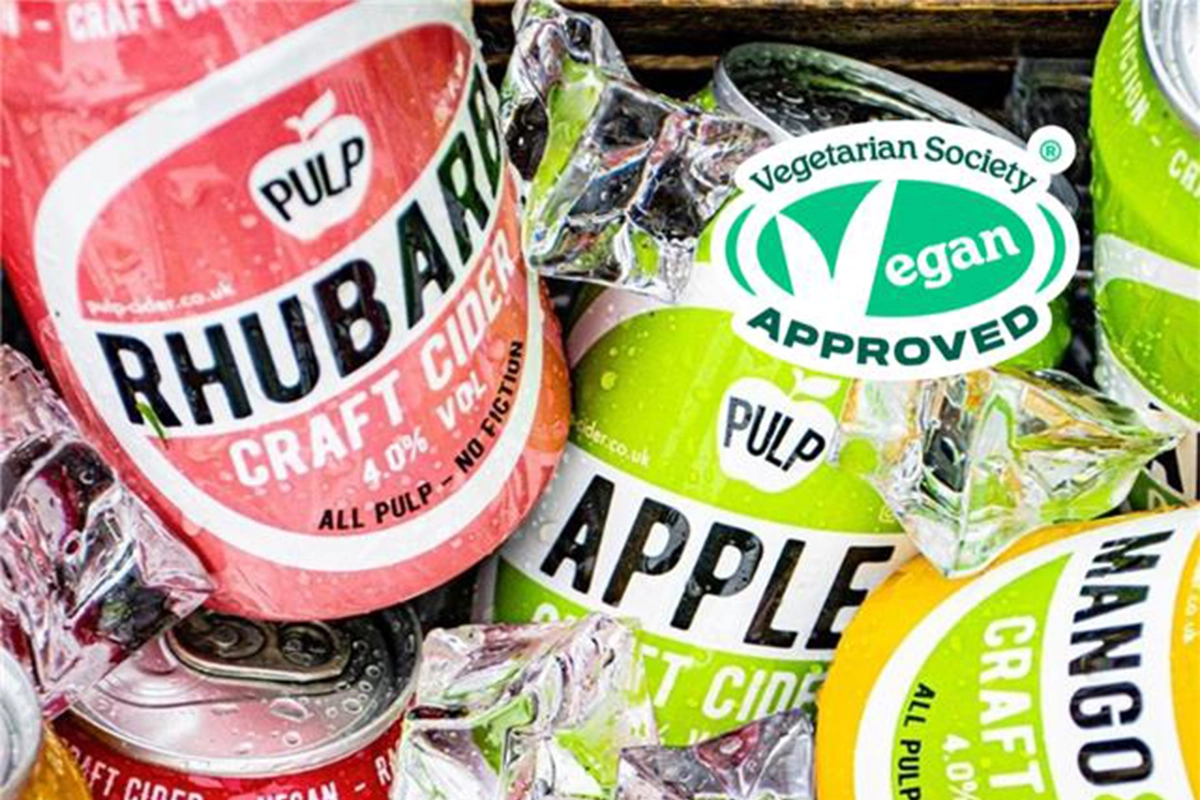 Cold beverages and baked goods are driving demand for vegetarian and vegan certification.“This reflects growing recognition of the value of credible, independently verified certification in helping brands build consumer trust, differentiate their products, and respond to increasing demand for clear dietary information.”
Trust and clear communication are becoming increasingly important as consumers navigate a growing range of product claims and technologies. Recent EIT Food research found that 38% of European consumers with high trust in the food system were open to food innovation, compared with only 6% of those with low trust.
The EU registration also arrives amid renewed scrutiny of how vegetarian and vegan products are presented. European lawmakers are reopening the debate over plant-based products using familiar meat-related names, including “burger,” “sausage,” and “nugget.” The proposals have raised concerns about potential rebranding, packaging costs, and regulatory fragmentation.
Checking the whole formulation
Before a product can carry one of the Vegetarian Society’s marks, its complete formulation is reviewed against the organization’s certification standards.
“All products undergo rigorous checks against our independent certification standards before they can join the certification scheme. Every ingredient submitted as part of an application is reviewed using our bespoke ingredient assessment system.”
“The system compares ingredients against our technical knowledge base, helping assessors apply previous decisions consistently while identifying ingredients that require further investigation.”
Worth explains that ingredients with several possible origins may require additional documentation from the applicant. New ingredients are researched against the certification criteria, with the findings recorded to support consistency in future assessments.
Processing aids are also assessed according to whether the manufacturer is applying for vegetarian, vegan, or plant-based certification. This can bring less visible elements of production into the assessment rather than focusing solely on the ingredients listed on-pack.
“We will then check that processing aids are vegan or vegetarian depending on the certification application,” says Worth.
Cross-contamination controls are another central part of the process. Manufacturers must take reasonable and practicable measures to separate certified products from ingredients or products that do not meet the relevant criteria.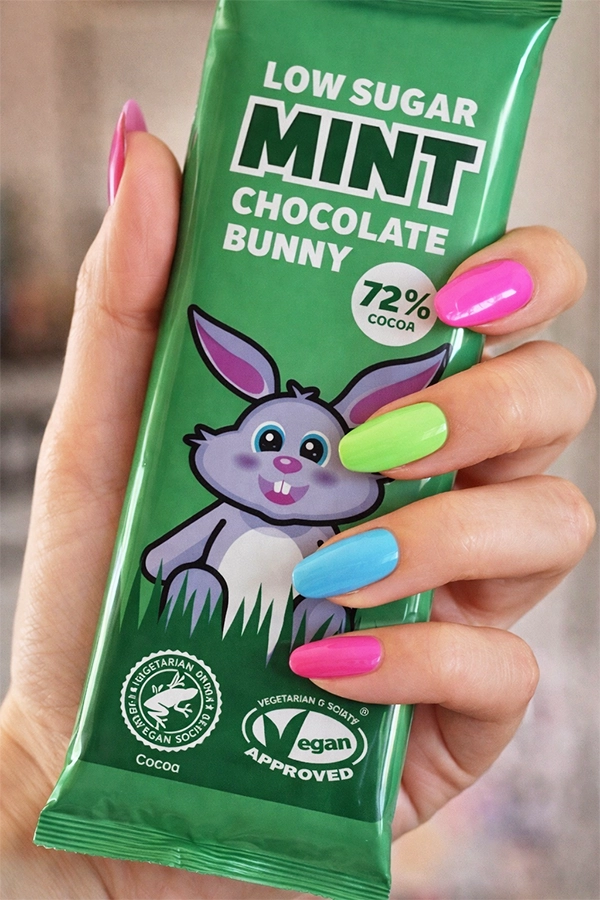 Certification checks cover ingredients, processing aids, supply chains, and cross-contamination.
“If the same production line is shared with non-vegetarian/vegan/plant-based products/ingredients, thorough cleaning must be carried out before vegetarian/vegan/plant-based production commences.”
“This extends to all associated machinery, equipment, utensils, surfaces, and clothing, which must remain clear of non-vegetarian/vegan/plant-based products/ingredients before products are touched, prepared, produced, or packaged. Clear procedures must be in place to ensure correct packaging is used, and errors are avoided.”
Worth stresses that these measures relate to manufacturing practices rather than allergen controls. “This relates to industry standards for manufacturing, not allergen standards,” he says.
Beverages and bakery gain ground
Food remains the largest market for the Society’s Vegetarian Approved, Vegan Approved, and “Plant-Based” marks. Within F&B, two categories have stood out over the past year.
“We have seen significant growth in the cold beverage and baked goods categories over the last 12 months, with some exciting clients coming on board,” says Worth.
The organization has also introduced a “Plant-Based” certification mark alongside its modernized vegetarian and vegan marks. Manufacturers can select which mark best suits their positioning through one set of checks and one price.
“If the target market is solely vegans, use our Vegan Approved certification mark. If the target market is broader, lead with our “Plant-Based” certification mark, which resonates with that wider audience, then put the Vegan Approved certification mark on the back to reassure vegans it’s suitable for them,” says Worth.
Although food is its biggest market, the Vegetarian Society says beauty and cosmetics is currently its fastest-growing segment, led by companies seeking independent vegan certification covering animal-derived ingredients and animal testing.
The registrations follow a redesign process that began with client consultations in August 2023. Rather than replacing the established visual identity, the Society modernized the marks to preserve recognition and accommodate different packaging formats.
The Vegetarian Society cites March 2023 YouGov research involving 2,036 vegetarian and vegan adults, which found that 75% actively look for a Vegetarian Society Approved trademark on product packaging.