



EIT Food: Consumer trust gap slows uptake of emerging food technologies


Key takeaways
- European consumers are becoming slightly more open to food innovation, but overall acceptance remains low.
- Trust is a major factor: 38% of high-trust consumers are open to innovation, versus 6% of low-trust consumers.
- Cultivated meat, precision fermentation-derived dairy, and insect-based ingredients still face resistance, highlighting the importance of familiarity, relevance, and clear consumer benefits.
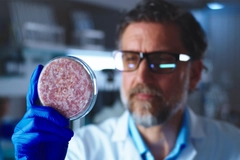
European consumers are showing signs of warming to food innovation, but unfamiliar technologies such as cultivated meat, precision fermentation-derived dairy, and insect-based ingredients continue to face consumer resistance, according to new EIT Food research.
The “Trust in innovation: Between familiarity and fear” report finds that overall openness to innovative food products edged up from 28% in 2024 to 31% in 2025. But behind that increase, willingness to try several individual technologies fell, highlighting a persistent gap between interest in innovation and acceptance of what ends up on the plate.
Trust appears to be central to that divide. Among consumers who trust the food system, 38% say they are open to innovation. That falls to just 6% among those with low trust.

The research draws on responses from 19,954 adults across 18 European countries, with fieldwork carried out in July and August 2025.
Trust makes the difference
EIT Food says consumers are more likely to consider unfamiliar food technologies when they have confidence in the companies, regulators, retailers, and other actors behind them.
The opposite is also true. Technologies viewed as more disruptive can run up against cultural, personal, or religious values, while unfamiliarity and reactions such as disgust can quickly dampen interest.
Age is another dividing line. Nearly two in five consumers ages 18 to 34 say they are open to new food products, compared with fewer than one in five of those ages 55 and older. Consumers who trust the food system are far more open to cultivated meat, precision-fermented dairy, and insect-based ingredients.
Even consumers motivated by health or sustainability are not immune to the trust gap. Among people with a strong intention to eat healthily, willingness to try new technologies stands at 32% for those with high food system trust, versus 8% among those with low trust.
For sustainability-oriented consumers, the difference is similarly stark: 35% of high-trust consumers are willing to try new technologies, compared with 10% of those with low trust.
“Food innovation will only succeed if consumers trust the people and systems behind it,” says Klaus G. Grunert, professor of marketing at Aarhus University and lead of the EIT Food Consumer Observatory.
Grunert argues that technical explanations alone will not be enough. Companies need to make the benefits of new foods tangible, linking the science to safety, taste, usefulness, and consumers’ everyday lives.
Unfamiliar technologies lose ground
The report lands at a time when European food innovators are pushing ahead with technologies that remain relatively new to many shoppers.
Some products covered by the research fall under the EU’s novel food framework and require safety assessment and authorization before entering the market. But regulatory approval does not necessarily translate into consumer appetite.
Our coverage of the UK’s emerging food-tech pipeline similarly highlighted fermentation’s progress toward commercialization, while pointing to continued consumer skepticism around cultivated products.
That challenge is particularly relevant for the protein transition. Food Ingredients First reported in April that another EIT Food study found broad industry support for a more circular and diversified European protein system, while warning that consumer trust, alongside financing and regulatory hurdles, could slow progress.
The latest EIT Food findings suggest even consumers motivated by sustainability may not be ready to embrace every technology designed to support those goals.
Putting the product before the process
For ingredient suppliers and food manufacturers, the report points to a communication challenge as much as a technological one.
Rather than leading with complex explanations of how a product is made, EIT Food recommends connecting innovation with more immediate benefits, including taste, health, pleasure, and relevance.
Familiarity may prove especially important. A novel ingredient that fits easily into recognizable products, eating occasions, and cultural expectations could have an easier route to acceptance than technology presented primarily for its scientific novelty.
The wider picture is therefore mixed. Europeans are becoming somewhat more receptive to food innovation overall, but some of the technologies attracting significant industry attention still face resistance.
For innovators, securing regulatory approval may only be the first hurdle. Winning trust — and giving consumers a reason to actually want the finished product — could prove just as important.




Upcoming webinars
Oat-Standing Ingredients - Showcasing Irish Grain Through Innovation
Tirlán Ingredients

2027 Food Safety Risks for Quality & Compliance Leaders
FoodChain ID

Formulating for function: Developing benefit-led beverages with natural colours, botanicals, and flavours
Givaudan Sense Colour