


TraceGains senior director on Formula AI and the future of food R&D


Key takeaways
- TraceGains launches Formula AI as an AI-powered platform for food scientists and product developers.
- Formula AI integrates AI directly into the food development process to accelerate NPD and reduce formulation costs.
- The platform provides a collaborative workspace for R&D teams to work together in real-time.
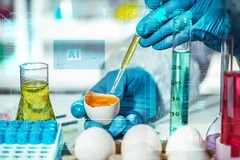
TraceGains has launched Formula AI, an AI-powered laboratory and workspace specifically for food scientists and product developers in the F&B industry. The digital platform can help speed up the sector’s R&D and time-to-market by embedding AI directly into the food development process, accelerating NPD, reducing costs, and ensuring compliance.
While AI has largely been seen as a backend tool for NPD, consumer attitudes are increasingly favorable toward AI-driven innovation. Data from Innova Market Insights shows that 41% of consumers globally are open to products developed using AI — signaling that tools like TraceGains’ Formula AI not only help R&D teams streamline formulation and compliance but align with evolving consumer expectations.
Although AI could revolutionize R&D speed and unlock up to half a trillion dollars in value annually, the F&B industry has struggled to fully benefit from it due to fragmented systems and manual processes, says TraceGains.
Industry-specific data from the compliance, quality, and innovation solutions company finds that 83% of F&B brands are boosting NPD investment — yet only 2% are fully digitized — as they face growing regulatory, sourcing, nutritional, and sustainability pressures.
Formula AI offsets these challenges by digitizing workflows and helping food scientists make “faster and smarter decisions,” while reducing formulation iterations, development costs, and the time between concept and production.
Food Ingredients First speaks with John Thorpe, senior director of Product Management at TraceGains, to explore the practical impacts of Formula AI for food scientists, how it differs from generic AI tools, and why the platform’s benefits go beyond “just producing a recipe.”
Formula AI lowers the barrier to AI for food scientists. How does this change the day-to-day work of R&D teams in terms of speed, accuracy, and creativity?
Thorpe: Formula AI was built for food scientists, not for generic AI users. It changes the day-to-day work of food scientists by helping them move faster through the earliest and most iterative formulation stages. Today, a lot of formulation work is still manual — teams are balancing cost, nutrition, taste, claims, regulatory considerations, ingredient functionality, and sourcing constraints at the same time. Formula AI gives them a workspace and digital lab notebook interface where they can explore ideas, generate candidate formulas, compare variants, capture findings, persist tribal knowledge, and reason through tradeoffs more quickly.
 John Thorpe: Formula AI doesn’t just generate a recipe; it helps scientists understand the logic behind each formulation recommendation.On speed, Formula AI drafts formulation ideas, suggests ingredient substitutions, and pulls together answers grounded in real supplier and ingredient data, turning what was hours of cross-system research into minutes.
On accuracy, every suggestion is anchored in rich, domain-specific data, including TraceGains’ Gather network of supplier specifications, NutriCalc’s reference ingredient database, the customer’s own enterprise data, and validated food-science references so scientists can verify what they're working with.
On creativity, the conversational interface lets scientists explore trends, ingredient combinations, and what-if scenarios without leaving the workspace they’re already iterating in. And because Formula AI doubles as a shared lab notebook, best practices and new experimental observations are continuously recorded and fed back into the system, so every team’s creativity compounds over time.
In what ways does Formula AI help food scientists make smarter decisions?
Thorpe: Formula AI is designed to support food scientists across several high-value formulation jobs: creating candidate formulas, generating constrained variants, multi-objective optimization, identifying like-for-like or functional ingredient substitutions, comparing trade-offs, and helping teams think through feasibility earlier in the process.
For example, a user might want to reduce sugar, increase protein, remove an allergen, improve cost, or explore a plant-based alternative. Formula AI can help generate formulation pathways and explain why certain ingredients or substitutions may make sense functionally. It can also help teams think earlier about constraints, such as nutrition, claims, quality, safety, sourcing, and regulatory fit (areas that often create rework when discovered too late).
The key is that the system is not just producing a recipe. It is helping the scientist understand the formulation logic behind the recommendation. Formulation suggestions are grounded in real ingredients from the TraceGains Gather network and the scientist’s own enterprise library.
Substitutions consider functional properties, specification constraints, nutrition and allergen profile, and supplier availability, not just name similarity.
Compliance guidance is baked in. Scientists specify the markets they’re shipping to and Formula AI reasons against those regulatory regimes from the first ingredient suggestion. So when a scientist asks, “Can I replace this ingredient and still hit my nutritional targets while staying compliant in the EU?” The answer is one conversation, not three separate searches across three systems.
How does the platform support collaboration among multiple scientists or teams working on the same product formulation?
Thorpe: Collaboration is central to how we’ve designed Formula AI. Formula AI was designed as a food-scientist workspace, not a one-off prompt tool. That means the value is not just in generating a response, but in helping teams capture the formulation journey: what was tried, why changes were made, which variants were compared, what evidence was captured, and what should be handed off into governed enterprise systems.
That is especially important in larger R&D organizations, where multiple scientists, regulatory partners, commercialization teams, and product leaders may touch the same project. Formula AI can help make the reasoning behind formulation decisions more visible and reusable, so teams are not relying only on scattered notes, spreadsheets, or institutional memory.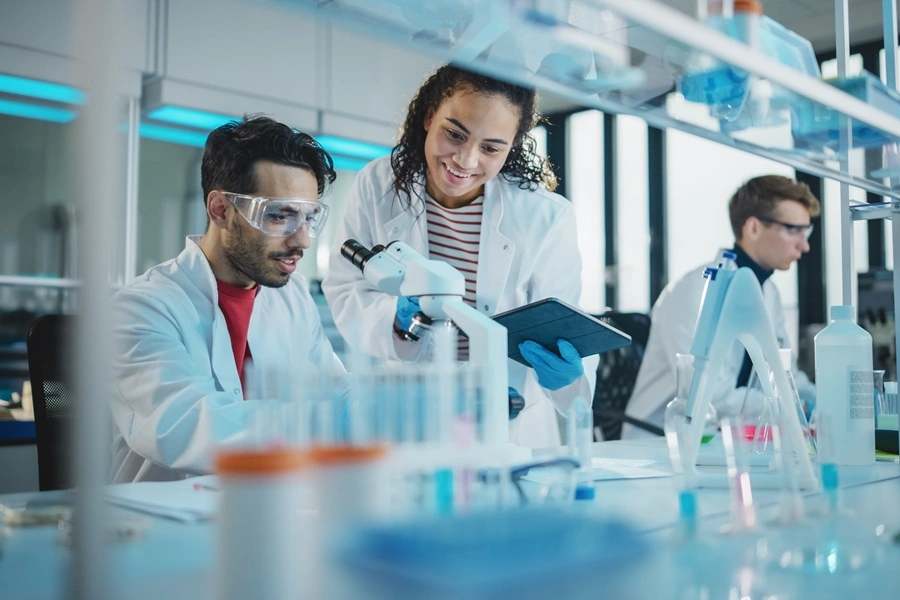 Formula AI is built as a workspace for food scientists, helping teams capture the full formulation journey, not just generate a response.
Each formula lives on a shared recipe agent/human canvas with full version history, so multiple scientists can iterate without overwriting each other’s work. The lab notebook stays tied to the formula and its versions. Observations, decisions, and reasoning are preserved alongside the work itself, not scattered across email threads or sticky notes.
Agentic chat history syncs with the formula’s version history, so the rationale behind any decision is always recoverable. And as teams develop their own ways of working, those patterns become reusable playbooks, and newer team members get the benefit of experienced colleagues’ approaches from day one, instead of relearning them by trial and error.
Can Formula AI help food scientists experiment with new ingredients or formulations more safely, without risking regulatory or production issues?
Thorpe: That is one of the most important opportunities. Food scientists need room to explore, but they also need to avoid creating concepts that are exciting in theory and problematic in practice. Formula AI can help surface potential issues earlier by evaluating formulation ideas against constraints such as ingredient functionality, claims, nutrition, sourcing feasibility, and quality or regulatory considerations.
It should not be viewed as a replacement for regulatory review, bench validation, sensory work, or production trials. Instead, it is a way to move risk discovery earlier in the process. If a formulation direction creates a sourcing concern, a claims issue, a functional tradeoff, or a likely compliance question, the team can identify that earlier, before they have spent multiple rounds of lab work or commercialization effort heading down the wrong path. Most importantly, Formula AI agents will remember prior learnings and findings, helping ensure that mistakes aren’t repeated.
Three design choices help make it real. First, suggestions are grounded in real supplier and ingredient data, not hallucinated, so scientists don’t have to debunk a fictional ingredient before they can evaluate it. Second, the agent reasons against the regulatory regimes for the markets you’re shipping to, so allergen, additive, and labeling considerations surface at the design stage rather than when a batch fails QA.
Third, and most important, Formula AI is built with a strict human-in-the-loop principle: food scientists move faster, but the system is built so they don’t move recklessly.
How does embedding AI into the R&D process affect a company’s time-to-market and product development costs?
Thorpe: Embedding AI into the R&D process has the potential to compress the early stages of formulation, especially ideation, variant generation, substitution, and tradeoff analysis. In many organizations, those steps take significant time because food scientists are manually evaluating multiple constraints at once and pulling information from many different places.
Formula AI can help teams explore more options in less time, identify stronger candidates earlier, and reduce avoidable rework caused by late discovery of constraints. That can support faster movement from idea to candidate formula and, ultimately, a more efficient handoff into formal product development workflows. Innova data finds 41% of consumers are open to AI-developed F&B products, highlighting opportunities for AI-assisted innovation.
The impact on cost comes from reducing wasted cycles: fewer dead-end formulation paths, faster comparison of alternatives, and better use of scientist time. We are careful not to frame AI as eliminating the need for human judgment or physical testing. The value is in making each cycle smarter and more informed.
First, time-to-concept — scientists explore many more ideas in the same hours because the heavy lifting of ingredient research, substitution analysis, and regulatory checks happens conversationally. Second, fewer dead-end lab cycles — the agent helps scientists rule out non-viable formulations before they consume bench time, and bench time is where most R&D cost actually sits.
Third, less context loss between projects — institutional knowledge (what worked, what didn’t, and why) stays with the formula and compounds across projects, so teams stop relearning the same lessons.
How do you see AI fundamentally changing the way future food R&D is conducted?
Thorpe: Over the next 5–10 years, AI will shift food R&D from a mostly manual, sequential process to a more continuous, constraint-aware, and data-connected process. Today, teams often discover key constraints late: a sourcing issue, a claims issue, a nutrition miss, a cost problem, or a sensory tradeoff. AI can help bring those constraints forward so teams can make better decisions earlier.
The future is not AI replacing food scientists. It is food scientists working with AI-native systems that can generate options, compare tradeoffs, capture evidence, and connect exploratory work to governed enterprise systems. That will make R&D faster, more transparent, and more collaborative.
There are three things I expect to look fundamentally different: The work shifts from search-and-document to converse-and-reason; AI becomes the institution’s memory; and Formulation becomes multi-objective by default.