



Mars and ofi forge partnership to drive regenerative cocoa farming in Ecuador

Key takeaways
- Mars and ofi launch a five-year partnership to promote climate-smart and regenerative agriculture in cocoa production in Ecuador.
- The partnership will help over 960 farmers implement agroforestry, biochar, and other regenerative practices across 9,000 hectares.
- Both companies have committed to net-zero emissions by 2050, aligning their efforts with the Science Based Targets initiative.
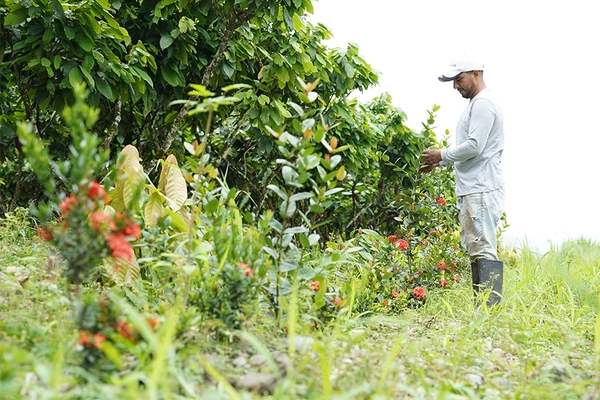
Mars and ofi (Olam Food Ingredients) have today announced a five-year strategic partnership (2025–2029) to help advance climate-smart and regenerative agriculture practices in cocoa production in Ecuador across their shared cocoa supply chain. Both companies have ambitions to be net-zero by 2050.
The American confectionery giant defines “climate-smart agriculture” as “context-appropriate practices that are applied to best optimize efforts to reduce and remove GHG emissions, regenerate soils, support biodiversity, and adapt to increasing climate hazards.” The partnership aims to reduce the carbon footprint associated with cocoa production and help farmers increase their productivity.
Mars and ofi have been collaborating on cocoa sustainability programs in Ecuador for a decade. In this next phase, more than 960 farmers across major cocoa-growing regions are expected to implement climate-smart and regenerative agriculture, such as agroforestry and biochar, across more than 9,000 hectares of farmland.

“Building on our long-standing collaboration in cocoa sourcing, this effort demonstrates our belief that when companies share common goals, they can deepen cooperation and drive more meaningful impact at scale. We value ofi’s ongoing commitment to helping Mars realize its vision of a more modern, inclusive, and sustainable cocoa ecosystem that can support farmers and the environment,” says Benjamin Guilbert, global vice president for Cocoa at Mars.
Cocoa industry challenges
The cocoa supply chain is facing several challenges, including climate change, which can disrupt production due to unpredictable weather patterns like droughts and floods. Additionally, cocoa farmers are often grappling with low wages and poor working conditions, leading to a shortage of skilled labor.
Furthermore, the demand for sustainable cocoa production is increasing, but the lack of efficient, scalable solutions and support for farmers makes it difficult to implement widespread change. These factors combined create uncertainty and instability in the global cocoa market, which is spurring innovation in cocoa alternatives.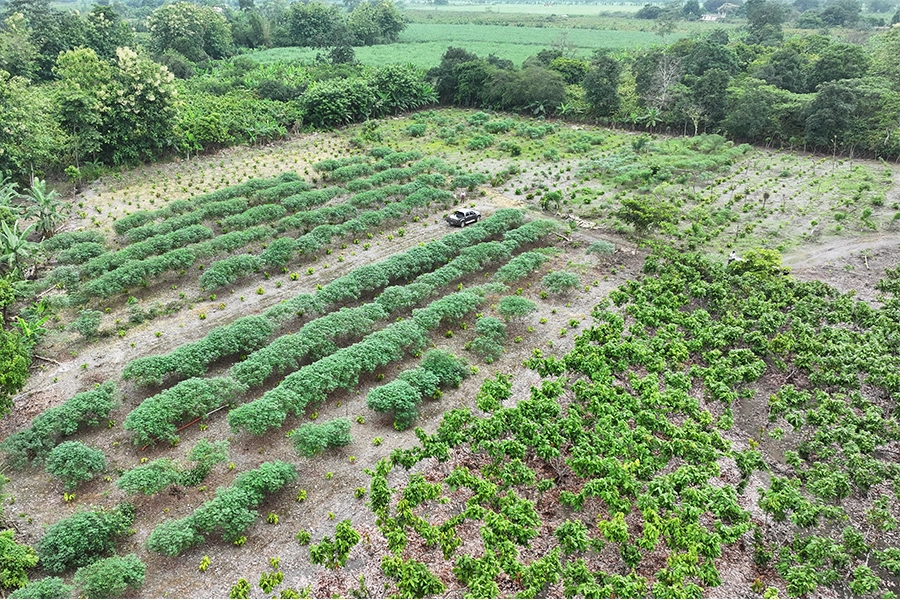 Mars and ofi’s partnership aims to transform cocoa farming in Ecuador with climate-smart and regenerative practices.
ofi posted essentially flat full-year operating profit of S$1.1 billion (US$815 million) for 2025, as the cocoa, coffee, dairy, nuts, and spices business absorbed what CEO Shekhar Anantharaman called “one of the most volatile commodity markets and uncertain trade environments in recent memory.”
Mars and ofi aim to help farmers transition from full-sun monoculture to multistrata agroforestry to support environmental sustainability and farmer resilience. By mimicking natural forest ecosystems, these systems can boost cocoa production, support microorganisms and pollinators, and create natural barriers against pests and disease.
Farmers will also be equipped with tools to use low-carbon fertilizers, improved crop residue management, and biochar applications. These interventions aim to help participating farmers strengthen long-term resilience in cocoa farming by enhancing soil health, reducing GHG emissions, increasing CO₂ removals, and improving cocoa crop yields.
“Together with Mars, we’re scaling up regenerative practices like agroforestry and biochar in Ecuador aimed at cutting GHGs and helping to secure the future supply of cocoa. By making these practices more accessible to farmers, we hope to reduce barriers for implementation and costly inputs, while opening new income opportunities that can make a real difference to building more resilient livelihoods,” says Andrew Brooks, head of Cocoa Sustainability at ofi.
Science Based Targets initiative
Mars says it wants to be a positive force in the cocoa system, and that this ambition requires “deep collaboration” with ingredient suppliers like ofi. By aligning with the Science Based Targets initiative (SBTi) standards, and co-investing in farmer-centered solutions, Mars aims to push the cocoa industry forward with credible GHG reduction goals.
“True progress on climate requires shared ambition and mutually beneficial value. Having Net Zero targets validated by SBTi enables a bold framework for Mars and ofi to invest together in the long term in solutions that are good for cocoa farmers, good for the environment, and good for the future of our supply chain,” says Pedro Amaral, associate director and head of Cocoa Climate Sustainability at Mars.