


Kirin pushes LC-Plasma postbiotic into everyday beverage and foodservice formats


Key takeaways
- Kirin expands LC-Plasma into everyday beverage and foodservice formats, including fruit drinks, children’s beverages, and overseas launches.
- The push comes as Kirin Beverage faces weaker sales, higher input costs, and a 30.2% drop in normalized operating profit.
- Kirin is also addressing longer-term sourcing resilience, with new SBTN validation highlighting water, land, and tea supply-chain risks.
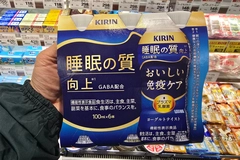
Kirin Holdings is expanding the use of its LC-Plasma ingredient across everyday beverage and foodservice formats, as it looks to make functional health benefits a more routine part of consumption.
LC-Plasma is Kirin’s proprietary postbiotic ingredient derived from Lactococcus lactis strain Plasma, developed to support immune function.
The push comes at a challenging time for its domestic soft drinks business. Kirin Beverage posted first-half 2026 revenue of ¥121.8 billion (US$769 million), down 2.8% year over year, while normalized operating profit fell 30.2% to ¥5.2 billion (US$32.8 million). Revenue from health science products slipped 2.1% to ¥19.3 billion (US$122 million).
Kirin pointed to lower sales volumes, higher raw material and processing costs, and increased advertising and promotional spending as key pressures on profitability. Some of that spending went toward supporting new LC-Plasma products, including the iMUSE Fruit Refresh range launched in April.
Bringing functionality into everyday refreshment
The Fruit Refresh launch shows how Kirin is trying to move immune-support products beyond a narrow wellness occasion and into the mainstream soft drinks aisle.
The 500 mL PET beverages pair LC-Plasma with familiar fruit flavors and added vitamins and minerals. The grapefruit-mix drink contains 100 billion LC-Plasma bacteria, along with vitamins B6 and C, while the apple-mix version combines the same amount of LC-Plasma with vitamin C and iron.
Rather than leading purely with health claims, Kirin is positioning the drinks around refreshment, taste, and everyday hydration.
“Beyond the technology itself, what matters is how it is embedded into the everyday lives of consumers,” says Mitsuharu Yamagata, Kirin Holdings senior executive officer responsible for marketing and corporate brand strategy, in the company’s 2026 Integrated Report.
Early sales suggest this approach is working. In May, the company said the two products had sold more than 10 million bottles in about three weeks. Overall, iMUSE brand volumes in April were around 70% higher than a year earlier. Kirin expands LC-Plasma into everyday beverage occasions, as rising costs pressure its soft drinks business.
For beverage developers, the strategy reflects a broader shift in the functional beverages market. Health ingredients are increasingly being built into products that fit established consumption habits, rather than requiring consumers to adopt a separate supplement or wellness routine.
Kirin is also widening LC-Plasma’s reach beyond conventional retail. In April, it introduced its children’s beverage Kirin Tsuyoi zo! Mutekids, which contains LC-Plasma, into institutional foodservice for the first time.
In Vietnam, Kirin subsidiary Interfood relaunched iMUSE in June as a 430 mL lemon-and-yogurt-flavored refreshment drink containing 100 billion LC-Plasma bacteria. The product is being distributed through supermarkets, convenience stores, and cafeterias and kiosks at schools and factories.
Higher-value ingredients remain a growth focus
The rollout sits within Kirin’s wider effort to build profitability around proprietary health science ingredients.
In its Q2 presentation, the company named “high-value-added ingredients” as one of the main growth drivers for its Health Science business, alongside organic growth, regional synergies, and M&A.
“No matter how advanced the technologies we develop may be, they have little value unless they are embraced by consumers,” says Kirin Holdings CEO Yoshinori Isozaki in the integrated report.
Kirin is targeting ¥30 billion to ¥33 billion (US$189 million to US$208 million) in normalized operating profit from Health Science by 2030 through organic growth. By 2035, including acquisitions, it is aiming for ¥500 billion (US$3.16 billion) in revenue and ¥75 billion (US$473 million) in normalized operating profit, equivalent to a 15% margin.
Health Science normalized operating profit rose 20.8% year over year to ¥10.4 billion (US$65.6 million) in the first half.
This division extends well beyond food and beverages, but Kirin’s drinks activity shows how it intends to translate its ingredient science into more familiar consumer formats.
Sourcing risks come into sharper focus
Kirin also used its August 7 reporting day to reveal that it has completed validation of Steps 1 and 2 under the Science Based Targets Network framework. This makes it the first Asia-Pacific-headquartered company to disclose its progress on the SBTN Target Tracker.
Its assessment covered water use and pollution at its own operations, as well as nature-related risks connected with high-risk commodities further upstream. These included water, soil, land use, and land-use change.
Sri Lanka, a key sourcing region for tea leaves used in Kirin’s Gogo-no-Kocha bottled tea brand, was identified as a priority area for water use, water quality, and land management.
Kirin says it has spent more than a decade mapping sourcing plantations, supporting Rainforest Alliance certification, conserving water sources, and collecting environmental data in the region.
While Kirin is looking to create more value through proprietary functional ingredients, it also has to pay closer attention to the resilience of the agricultural and water systems that support its core beverage portfolio.
Kirin raised its full-year normalized operating profit forecast from ¥235 billion (US$1.48 billion) to ¥253 billion (US$1.60 billion).
For the F&B industry, the key takeaway could be how Kirin is working to bring functional ingredients into more everyday drinking occasions, while managing the cost and sourcing pressures that come with scaling them.