


Ingredion Q3 results: Rising costs overshadow clean label gains

Key takeaways
- Ingredion cut its 2026 earnings outlook as Q3 adjusted operating income fell 19% year over year.
- Clean-label demand supported volume growth, but higher tapioca and manufacturing costs squeezed profits.
- The Argo facility’s slower earnings recovery and softer demand weighed on North American results.
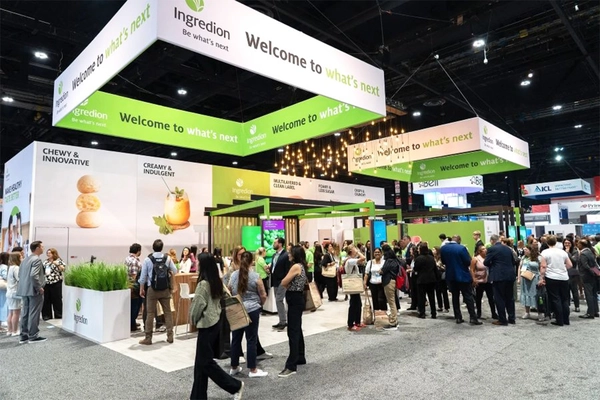
Ingredion has cut its 2026 earnings outlook as higher production and ingredient costs squeeze profits, despite continued clean label demand. A slower earnings recovery at its Argo facility (Illinois, US) and softer food and beverage demand weighed on third-quarter results.
Adjusted operating income fell 19% to US$206 million, compared with the third quarter of 2025. The company now expects adjusted diluted earnings of US$9.25–9.70 per share for the year, down from its previous US$10.30–10.90 range.
“Our third quarter results fell short of our expectations, largely due to Argo’s slower than anticipated financial recovery,” said Jim Zallie, Ingredion’s chairman, president, and CEO, in the earnings announcement.
Clean label demand sustains growth
Texture & Healthful Solutions volumes rose 2%, marking a 10th consecutive quarter of growth. Sales increased 1% to US$610 million, but operating income fell 10% to US$95 million.
Higher tapioca costs, manufacturing expenses, and unfavorable price mix outweighed volume gains. Zallie said customers continue to reformulate for simpler labels, affordability, and nutrition.
The performance marks a change from Ingredion’s Q2 results, when the segment’s volumes rose 7%, and operating income increased 5%. Demand has continued to grow, but at a slower pace.
Ingredion has previously highlighted how clean label reformulation can help manufacturers manage costs. Speaking to Food Ingredients First in June, Constantin Drapatz, business manager for Texture Food Solutions EMEA, described using functional native starches to reduce higher-cost dairy ingredients and fats while preserving texture.
At Fi Asia Indonesia in September, the company also emphasized ingredient systems that balance health, texture, and cost. Raymond Deidrick, its vice president and general manager for Texture and Healthful Solutions for ASEAN and Texture Solutions food lead for APAC, explained that savings must be assessed across the recipe.
“In Southeast Asia, if you remove the sugar, the formulation cost goes up,” he told us.
Argo earnings recovery lags
At Argo, production has stabilized, and inventories are largely rebuilt.
However, Ingredion attributes roughly two-thirds of the delayed earnings recovery to maintenance and manufacturing costs, and one-third to customer demand. Its priorities include reducing maintenance spending, improving yields, and rebuilding customer volumes.
Operating income in Food & Industrial Ingredients in the US and Canada fell 36% to US$52 million, compared with the third quarter of 2025.
Group sales declined 1% to US$1.792 billion. Excluding the Pakistan business, in which Ingredion sold its majority stake, sales increased 2%, supported by favorable currency movements and higher volumes.
Latin America offered a stronger volume picture, with growth of 4% led by brewing and beverage customers. However, currency pressures in Mexico and earthquake disruption in Colombia contributed to a 6% decline in segment operating income.
Revised full-year outlook
Ingredion now expects full-year Texture & Healthful Solutions operating income to be flat to up low single digits, compared with its previous forecast of mid-to-high single-digit growth.
The company is also preparing for its proposed acquisition of Tate & Lyle, which secured shareholder approval in July.
The combination would expand its capabilities in texture, sweetening, sugar reduction, and fortification. Completion is expected in the second half of 2027, subject to regulatory approvals.