


Fi Asia Indonesia 2026 live: Ingredion turns to ingredient systems to balance health, texture and cost


Key takeaways
- Ingredion combines ingredients into systems to reduce sugar and salt while maintaining texture and controlling formulation costs.
- Indonesian consumers favor contrasting creamy and crunchy textures, while affordability remains a leading priority for manufacturers.
- Savory sauce reformulation, clean label ingredients, and AI-supported formulation offer opportunities to meet changing Southeast Asian demand.
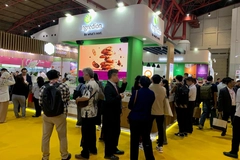
Ingredion is putting ingredient systems at the center of its Southeast Asian formulation strategy, as manufacturers seek to reduce sugar and salt without losing indulgent textures or pushing up costs. At Fi Asia Indonesia 2026 (Sep 16–18), the company is demonstrating how combinations of ingredients can help meet these competing demands, from sauces and beverages to crispy coatings.
Speaking to Food Ingredients First on the show floor, Raymond Deidrick, vice president and general manager for Texture and Healthful Solutions for ASEAN and Texture Solutions food lead for APAC, says the conversation is increasingly moving beyond individual ingredients toward their role within the complete recipe.
“We see less single ingredients and a lot more combinations of ingredients to produce the desired results,” he says. “This implies a shift toward ingredient systems.”
Making reformulation cost-neutral
The economics of sugar reduction help explain the shift from individual ingredients toward entire systems. Removing sugar can introduce costs elsewhere in a formulation, making the choice of accompanying ingredients central to commercial viability.
“In Southeast Asia, if you remove the sugar, the formulation cost goes up,” says Deidrick. Raymond Deidrick, Ingredion’s VP and general manager for Texture and Healthful Solutions for ASEAN and Texture Solutions food lead for APAC.
However, he explains that replacing an expensive masking flavor alongside sugar reduction can sometimes keep a formulation cost-neutral. The opportunity lies in looking across the recipe for savings rather than assessing each ingredient in isolation.
“Don’t just give them [customers] one product, but help them optimize their overall formula. That’s the only way to give a premium texture, improve the label, and manage the cost at the same time.”
For Indonesian manufacturers, those costs remain a defining consideration. Although customers want healthier products and more indulgent eating experiences, Deidrick says affordability generally leads their priorities, with some premium brands placing greater emphasis on health or texture.
Ingredion’s 2025 ATLAS consumer research illustrates the tension. Approximately 87% of Indonesian respondents say they are willing to pay up to 30% more for packaged food and beverages carrying reduced-sugar claims. Across APAC, however, more than 40% rank price among their three most important purchasing factors.
Understanding customer trade-offs
To establish what matters most for each reformulation project, Deidrick says Ingredion introduced a “solutions brief” about a year ago, bringing its sales and technical teams into discussions about customers’ targets.
“We sit down with the customer and try to understand what their target is, because everybody wants all of their demands to be met,” he explains.
“They want a product to be cheaper and with a more indulgent texture.”
Understanding the brand’s positioning and target market helps determine which compromises are acceptable and which attributes must be protected.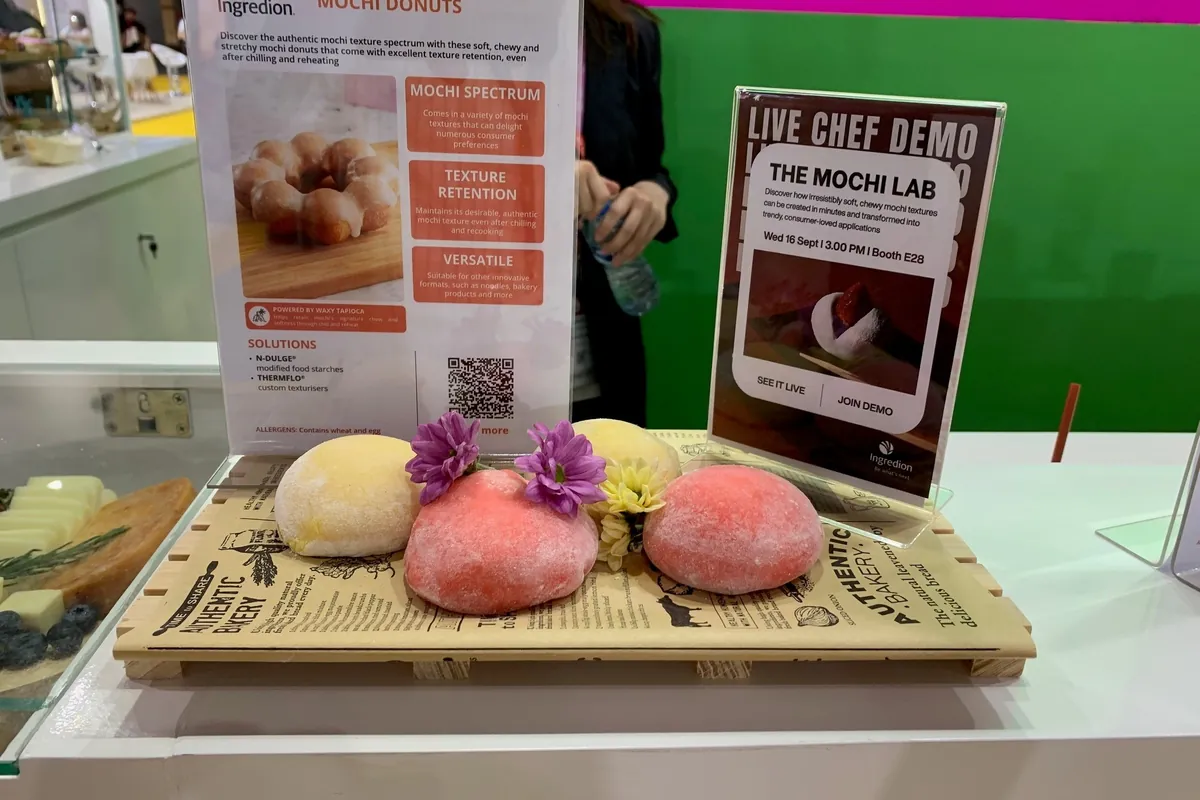 Ingredion is showcasing its mochi donuts, maintaining texture retention after chilling and reheating.
“We want to offer them all. But different solutions can offer different trade-offs,” he adds.
Creamy textures meet crunch
Texture is particularly important in Indonesia, where Ingredion’s research indicates nearly 80% of consumers prefer products with multiple textures. Deidrick says this is among the highest levels the company sees across Asia-Pacific.
“Ease of consumption matters in Indonesia,” he says. “You have a lot of convenience formats.”
Within those formats, contrasting sensations can create appeal. He highlights the combination of soft, creamy textures with harder, crunchier elements, while noting that even crunch requires a more precise understanding of consumer preferences.
“In snack products, some Indonesian customers like that airier crunch versus a hard crunch.”
Ingredion’s showcase reflects these preferences through mochi donuts, creamy milk skin yogurt, and fried chicken coatings. According to the company, its batters and breadings can prolong crispiness for up to eight hours while reducing oil absorption by up to 18%.
Sugar and salt reduction expands into sauces
Beyond texture, Deidrick sees opportunities to extend sugar reduction into more savory applications.
“Beverage is a big market for sugar reduction, but it’s well known,” he says. “We see it expanding into the savory space — especially sauce.”
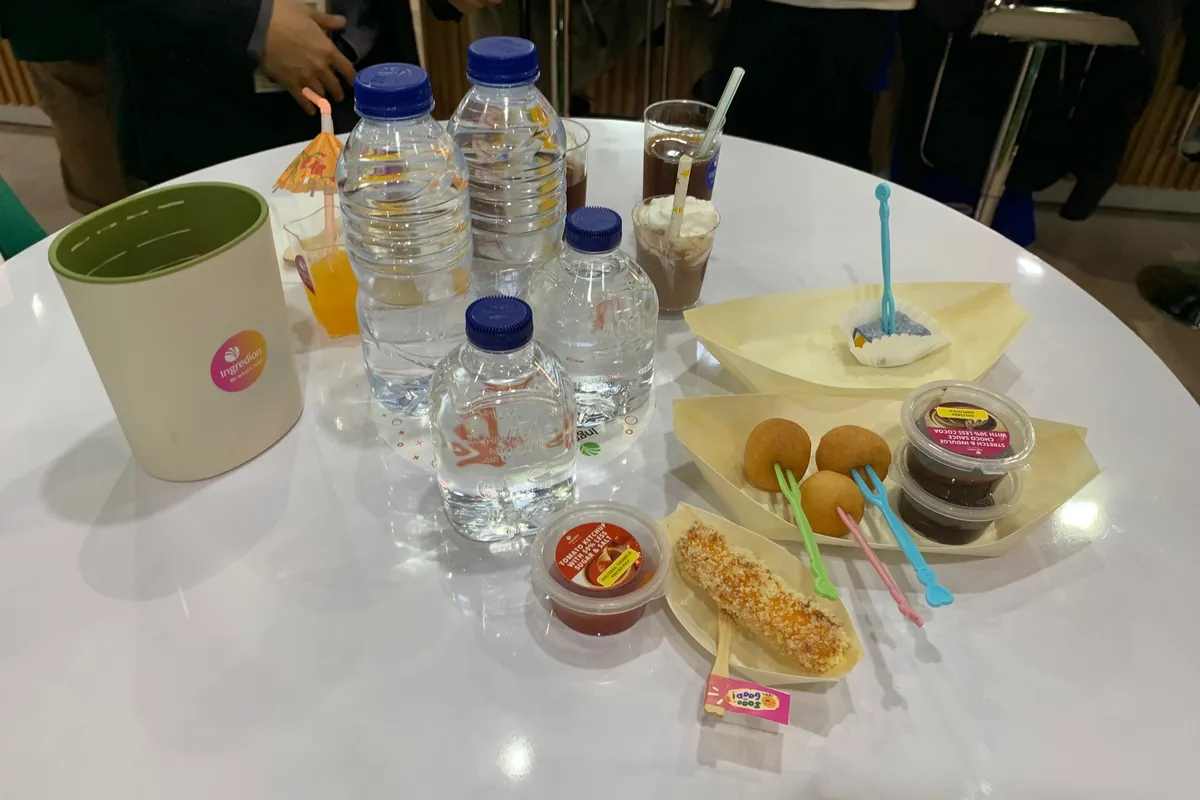 Ingredion is showcasing its sugar- and salt-reduced products. He says Indonesian customers are already using Ingredion solutions to reduce sugar and salt by 25% in savory sauces. At the show, the company is also presenting concepts offering 50% reductions, including a lite tomato ketchup.
“It’s about giving something that’s a little bit healthier while maintaining or slightly reducing the total formulation cost,” says Deidrick. “Those are the projects that really excite customers.”
Clean label and faster formulation
Looking at the next three to five years, Deidrick identifies high-performing clean label ingredients and faster formulation support as major priorities.
“We’ve got a lot of new clean label solutions to offer great texture,” he says, pointing to regional investment and developments spanning texture, sugar reduction, and salt reduction.
Speed is becoming equally important as consumers encounter information and reassess ingredients more quickly.
“That pace of information and pace of education means consumer preference can move very quickly.”
Ingredion is using AI to help its teams navigate an expanding ingredient portfolio and support formulation work.
For customers trying to respond quickly, Deidrick sees closer collaboration and a clearer understanding of the full formulation brief as essential.
“Our customers need to act fast,” says Deidrick. “The pace of change is only accelerating.”
With live reporting from Joshua Poole at Fi Asia Indonesia 2026