


Givaudan posts Q1 2026 sales growth but Taste & Wellbeing underperforms

Key takeaways
- Givaudan’s Taste & Wellbeing division saw a -0.4% decline in sales, contrasting with +5% growth in Q1 2025, while the overall group recorded a +2.8% increase in sales.
- The company faces shifting consumer preferences, economic pressures, and regional imbalances, but continues to focus on natural and clean label products to meet evolving demand.
- The Fragrance & Beauty segment is driving overall growth, highlighting a shift in demand within Givaudan’s portfolio, as food-related products face significant headwinds.
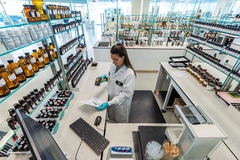 (Image credit: Givaudan).
Givaudan’s Q1 2026 sales results show a slowdown in its Taste & Wellbeing division, with a -0.4% decline in like-for-like sales, compared to +5% growth in Q1 2025. However, the overall group recorded sales of CHF 1.875 billion (~US$2.04 billion), an increase of +2.8% on a like-for-like basis.
After a full year of moderate growth in 2025 (+2.4%), Taste & Wellbeing has shown weaker momentum at the start of 2026, which could signal emerging challenges in food‑related flavors and wellness solutions — especially if this trend continues through the year.
The declines in Taste & Wellbeing sales were primarily in Europe, North America, and Latin America. While the company didn’t specify exact percentages for each region, these areas experienced overall weaker demand for F&B products, contributing to the division’s slowdown.

The softening in Taste & Wellbeing sales may signal short-term challenges in food-related products, even though Givaudan’s long-term growth target of 4–6% remains intact on a like-for-like basis. Givaudan’s CEO Christian Stammkoetter says the company is pleased with the “solid start” it has made to 2026, against “strong prior year comparables.”
“In an environment where geopolitical volatility persists, and end market conditions in selected markets remain challenging, the strong natural hedges of Givaudan across business segments, geographies, and client groups continue to support the resilience of our business,” he says.
Givaudan’s mid- and long-term ambitions
Givaudan points to its 2030 strategy, “Driving sustainable growth with customers,” as its guidance over the next five years to “thrive in a dynamic market environment, driving sustainable growth with customers through creative, high value-added products and solutions.”
 Givaudan’s Q1 2026: Taste & Wellbeing faces a sales decline, while Fragrance & Beauty drives growth.The company says it plans to leverage its existing strengths and proven model in its core business, while further expanding into high-value adjacent spaces to fuel sustainable and profitable growth.
The group is targeting over 12% average free cash flow over the five-year period, as well as its 2030 purpose goals, which include reducing scope 1+2+3 GHG emissions in line with the SBTi Net-Zero Standard.
Givaudan says it will also continue to pursue acquisition opportunities that align with its strategic focus areas.
Fragrance & Beauty outshines Taste & Wellbeing
The performance gap between Taste & Wellbeing and the Fragrance & Beauty segment highlights a shift in demand dynamics within Givaudan’s portfolio. While Fragrance & Beauty posted strong sales growth in Q1 2026 (+5.9%), Taste & Wellbeing experienced a decline in sales, signaling that consumer priorities may be shifting away from food-related products.
Unilever has notably reacted to this trend by agreeing to sell its global Foods business to McCormick in March. The British multinational is set to reinvent itself as a pure-play home and personal care business following the divestment, focused on higher‑growth, higher‑margin categories like beauty and home care.
This environment suggests that Givaudan’s food-related business faces significant headwinds, even as other segments like Fragrance & Beauty are performing well. Rising raw material costs and supply chain issues are forcing food companies to cut costs, which impacts the demand for premium and innovative flavor solutions.
Moreover, regional imbalances in demand create added complexity. While Asia-Pacific showed growth,
 Givaudan focuses on natural, clean label flavors to meet growing market demands.Europe, North America, and Latin America faced weaker demand. These factors highlight the fragmented nature of the market, with some regions struggling while others are growing, making it harder for Taste & Wellbeing to sustain its previous growth trajectory.
Givaudan targets clean label innovation
The challenges facing Givaudan’s Taste & Wellbeing division are largely driven by shifting consumer preferences, economic pressures, and market saturation. Consumers are becoming more health-conscious and gravitating toward plant-based or clean label products, reducing demand for traditional, processed flavors.
Givaudan has increasingly focused on natural and clean label products to align with the growing consumer demand for healthier, more sustainable options. The company offers a wide range of natural flavors made from plant-based ingredients, while it is also investing in sustainable sourcing and innovations to meet the demand for natural and better-for-you F&B solutions.
Givaudan Taste & Wellbeing recently highlighted its flavor and color innovations for functional beverages at Expo West 2026 in Anaheim, US. The division demonstrated how it can support manufacturers in boosting their health-forward solutions through a combination of science, digitalization, and consumer insights.
Meanwhile, the company’s new natural, acid-stable blue color is a step closer to EU approval after the European Food Safety Authority released positive feedback on its risk assessment. Everzure Galdieria, a vibrant natural alternative to the synthetic Brilliant Blue FCF color, responds to the growing consumer demand for recognizable, clean label ingredients.