


Manus unveils fermentation-based monk fruit sweetener for scalable sugar reduction


Key takeaways
- Manus has launched a fermentation-made monk fruit sweetener at commercial scale in the US, offering F&B brands a domestic alternative to China-grown monk fruit.
- The sweetener is zero-calorie, non-glycemic, and about 350 times sweeter than sugar, with a clean taste profile.
- The ingredient supports scalable sugar reduction and supply-chain resilience.
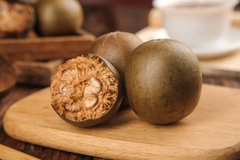
Bioalternatives company Manus has unveiled its fermentation-made monk fruit sweetener, calling it the first US-made monk fruit sweetener produced at a commercial scale through fermentation. The ingredient offers F&B brands a domestic alternative to a category long dependent on crops grown in China.
The ingredient is claimed to be zero-calorie, non-glycemic, and about 350 times sweeter than sugar, and has a cleaner taste profile without bitterness.
Manus is pitching its monk fruit sweetener as a “second source” for manufacturers, as the world’s entire supply of monk fruit is grown in a single region of southern China, Guangxi. The company says this is “leaving brands exposed,” due to harvest cycles, price swings, and quality variation.
“For decades, the world’s monk fruit has come only from China, leaving the category dependent on a single harvest and a single supply chain,” says Ajikumar Parayil, founder and CEO of Manus.
“We have changed that. By producing it in America, at commercial scale, we give the food industry a second source it can rely on — and we turn monk fruit from a niche, premium ingredient into a practical workhorse for sugar reduction.”
Due to its solubility and stability, the sweetener can be used in ready-to-drink beverages, dairy and plant-based alternatives, baked goods and confectionery, functional and nutritional products, and foodservice.
Bioalternatives platform scales US monk fruit sweetener production
Manus’ Monk Fruit Sweetener innovation is the company’s newest product from its bioalternatives platform. It is produced through industrial fermentation at its biofacility in Augusta, Georgia, US.
 Manus is transforming monk fruit from a niche, premium ingredient to a practical workhorse for sugar reduction, says founder and CEO Ajikumar Parayil.“It is the latest breakthrough from a proven technology and scale-up platform for bioalternatives, reinventing how the world’s most valuable molecules are made, across sweeteners, flavors, and the building blocks of essential medicines,” says Parayil.
Manus says its “cell factories” are over 1,000 times more efficient than nature, and also carry a smaller environmental footprint than cane sugar. “Normalized to equivalent sweetness, lifecycle analysis indicates Manus’ Monk Fruit Sweetener uses roughly 6.7% of the land and water that cane sugar requires,” underscores the company.
The company highlights that it has successfully completed FEMA GRAS review (FEMA No. 5108) for the sweetener for flavor use, with an FDA GRAS Notification for broader F&B use in progress.
It will debut the ingredient at the upcoming IFT FIRST 2026 in Chicago (July 12-15), followed by broader commercialization.
Monk fruit targets mainstream sugar reduction
For F&B companies, monk fruit is an important sugar reduction tool, with Manus aiming to advance it from a niche premium ingredient to a more scalable sweetener option to meet consumers’ health demands. Nearly 72% of consumers globally are actively cutting sugar, while sweetener NPD is growing at 8% annually, according to Innova Market Insights data.
 Manus’ zero-calorie, non-glycemic sweetener can be used in ready-to-drink beverages, baked foods, and confectionery.Manus’ monk fruit sweetener targets mainstream sugar reduction as it has an optimized mogroside profile that offers rounded sweetness and no bitter aftertaste. Mogrosides are the natural sweet-tasting compounds found in monk fruits, with promising therapeutic potential for diabetes according to studies.
The ingredient complements the company’s stevia Reb M innovation — due to their synergistic sensory properties, the two ingredients achieve a “rounder, more sugar-like taste” when combined.
However, producing a molecule as complex as mogroside V through fermentation “requires more than 30 enzymatic steps within a single cell, and we have successfully engineered and scaled that process,” says Christine Santos, chief technology officer of Manus.
“Using a fully water-based, solvent-free purification process, we have achieved an optimized mogroside profile that gives a clean, highly soluble sweetener with no bitter aftertaste.”
“The result is an ingredient that is chemically identical to the mogrosides found in nature with the performance, consistency, scalability, and supply reliability that food and beverage manufacturers require,” Santos adds.