



Europe’s food system faces growing climate and supply chain risks

Key takeaways
- Extreme heat, drought, and water scarcity put pressure on agricultural productivity, and increase the risk of supply chain disruption.
- Despite strong scores for affordability, supply sufficiency, and import diversification, inconsistent trade standards and pressure on cold-chain infrastructure could undermine food availability.
- Higher agricultural input costs and declining venture capital investment in agri-food innovation highlight the need for supply chain diversification, infrastructure investment, and more resilient sourcing strategies.
Europe’s food system ranks among the world’s most resilient, but mounting climate pressures, supply chain weaknesses, and trade barriers could threaten that position, according to a new report from Economist Enterprise, supported by Cargill.
The analysis warns that vulnerabilities spanning agricultural production, irrigation, and cold-chain infrastructure risk amplifying disruption across the food supply chain, with potential consequences for raw material availability, operating costs, and food prices.
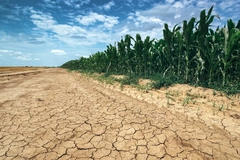
The findings come after a summer of extreme heat, wildfires, and drought across Europe, highlighting the challenges facing food producers and the businesses that depend on them.
Maintaining reliable food supplies
While Europe performs strongly on food affordability, supply sufficiency, and import diversification, the report identifies growing concerns over agricultural productivity and water availability.

It also warns that divergent certification, inspection, and product standards are adding costs and delays to cross-border trade, potentially undermining the region’s ability to maintain diverse, and reliable food supplies.
The report calls for greater investment in agricultural infrastructure and innovation, alongside closer collaboration across the food value chain, to strengthen the region’s ability to withstand future shocks.
What are the key findings of the index?
The Resilient Food Systems Index, which benchmarks 60 countries across affordability, availability, quality, and safety, and climate risk responsiveness, found that Europe scored 81.26 out of 100 for food affordability and 81.16 for sufficiency of supply.
The region also recorded a score of 83.6 for import diversification, outperforming other leading agricultural importers. However, these strengths rely on maintaining efficient trade flows and the infrastructure needed to move food from farms to consumers.
The region scores 77.51 on dietary diversity, 18 points above the global average.
Pratima Singh, lead researcher on the Resilient Food Systems Index at Economist Enterprise, says: “Europe’s strong score in the Resilient Food Systems Index reflects solid foundations, but those foundations are under strain. Productivity is being squeezed by rising input costs, climate risks, and geopolitical instability. Beyond the farmgate, distribution and logistics infrastructure, particularly cold chain capacity, is also under pressure.”
“The challenge is to build a system that can anticipate, absorb, and adapt to future shocks. Fit-for-purpose investment and innovation can close these gaps, but no single actor can do it alone. Strengthening resilience will take action across the whole value chain, from producers and processors to retailers, financiers, technology providers, and policymakers."
Speaking to Food Ingredients First, Geert Maesmans, VP of R&D at Cargill Food EMEA, explains how any solution to overcoming challenges has to be commercially viable, manufacturable, preferentially compatible with existing infrastructure and supply chains or introduced via new supply chain (investments) and supported by clear regulatory pathways and customer demand.
“In agriculture, adoption takes time because farmers are making high-stakes decisions about land, water, inputs and livelihoods. They need credible evidence and a clear reason to believe the investment will work in their own conditions,” he tells us.
“Companies such as Cargill can help close the gap by bringing commercial and operational requirements into the process early. We can help innovators test solutions in real-world settings, identify constraints before significant investment is committed, and connect technology providers with farmers, processors and customers.”
The aim is to make the route from research and demonstration to sustained commercial use clearer and less uncertain. Once that is done, this can be scaled. The fall in agri-food venture investment reported by the Index underlines the need to build confidence in that route.”
 The report warns that differing certification and inspection requirements are increasing trade costs and delays, putting Europe’s food supply at risk.
Supporting farmers
Maesmans cites one example, Cargill’s RegenConnect, which is available to eligible farmers in several European countries, including France, UK, Germany, Poland, Romania and Hungary. It supports practices such as cover crops, reduced tillage and no-till farming, with agronomic support and financial incentives. The approach recognizes that practices need to suit local growing conditions and make economic sense for farmers if they are to be adopted and sustained.
Cargill is adapting to the added pressures of climate risks on agricultural and consequent supply chain risks by focusing on maintaining options across the system: diversifying sourcing, strengthening processing capability and working with farmers and customers so that supply chains can adapt when conditions change.
“The Resilient Food Systems Index highlights growing production volatility and water-related pressures in Europe, while the wider discussion points to exposure around energy, fertilizer, protein crops and oilseeds. The specific pressure will vary by region, season and crop, so I would be cautious about naming one commodity as the single biggest risk,” Maesmans adds.
One example of building regional capability is Cargill’s planned expansion of sunflower processing capacity in Saint-Nazaire, France. It is intended to create opportunities for local farmers, strengthen regional supplies of high-protein meal and make better use of agricultural by-products.
“For manufacturers, the practical step is to understand dependencies early and plan for variability: consider sourcing options, processing flexibility and alternative routes, while staying close to supply partners. Resilience comes from having choices when conditions change,” Maesmans says.
Overcoming production problems
Agricultural productivity is another concern. Europe recorded greater year-on-year volatility in agricultural production than every region except North America, while only three of the 14 European countries assessed achieved faster average annual productivity growth in 2018–22 than in the preceding five years.
Meanwhile, although public investment in agricultural research and development remains relatively strong, venture capital investment in agri-food innovation fell from US$9.2 billion to US$4.04 billion in 2025.
The report argues that improved access to finance for technology demonstrations and commercial scale-up will be essential to turning innovation into practical gains in resilience.
Managing supply chain risks
For food and beverage businesses, these vulnerabilities could translate into greater uncertainty over ingredient availability and procurement costs.
Rising fertilizer and energy prices can squeeze farm margins, while drought, and yield volatility may affect the supply and pricing of key agricultural commodities.
According to Eurostat, EU agricultural input prices rose by 4.7% year on year in the second quarter of 2026, with fertilizer and soil improver prices up 13.4%, highlighting the cost pressures already facing producers.
Businesses can mitigate these risks by diversifying suppliers and sourcing regions, improving visibility across their supply chains, and working more closely with farmers and logistics partners to anticipate potential disruption.
Reviewing procurement strategies, investing in more efficient storage and distribution, and supporting agricultural technologies that improve water efficiency and productivity could also help limit exposure, notes the index. The challenge is to strengthen resilience without adding unsustainable costs or compromising the affordability and availability of food.




Upcoming webinars

2027 Food Safety Risks for Quality & Compliance Leaders
FoodChain ID

Formulating for function: Developing benefit-led beverages with natural colours, botanicals, and flavours
Givaudan Sense Colour

Let's reveal the grain potential: Innovate
Meurens Natural