


Cold by default: Nestlé highlights how Gen Z is rewriting the rules of coffee


Key takeaways
- Gen Z is increasingly turning to iced, cold brew, and other chilled formats as its entry point into coffee, helping drive year-round demand for cold coffee.
- Nestlé is expanding its cold coffee portfolio across Nescafé, Nespresso, and Starbucks Coffee at Home, with new formats targeting both out-of-home and at-home consumption.
- Growth in cold coffee is creating opportunities for brands and ingredient suppliers across flavors, textures, milk alternatives, concentrates, functional ingredients, and convenient preparation formats.
Cold coffee is moving beyond its traditional summer niche as younger consumers embrace iced, cold brew, and other chilled formats year-round — creating new opportunities for coffee brands, retailers, and ingredient suppliers.
Cold coffee is no longer simply an alternative to a hot cup. It is becoming a defining way in which a younger generation enters and experiences the coffee category, prompting brands to rethink everything from product development and formats to at-home preparation and marketing.
Nestlé says half of Gen Z consumers in North America have their first-ever cup of coffee cold rather than hot, while one in three coffees consumed out-of-home globally is now ordered cold.
Nestlé targets cold coffee growth
Nestlé is making cold coffee a priority as demand is increasingly driven by younger consumers for whom a chilled coffee is becoming the default rather than the alternative.
The food and beverage giant also points to US data showing that non-espresso cold formats — including cold brew, nitro, and frozen blended coffee — grew by nearly 42% between 2020 and 2025.
Broader US market data points in the same direction. The National Coffee Association’s 2025 National Coffee Data Trends report found that past-day consumption of non-espresso specialty coffee formats increased from 12% of American adults in 2020 to 17% in 2025. Its 2026 research also found that 69% of 25–39-year-olds had consumed specialty coffee in the previous week.
Cold coffee at home
For the coffee industry, the significance of this shift extends beyond temperature. Cold formats offer a different sensory profile and a highly customizable platform for flavors, milk alternatives, concentrates, and functional additions, while opening opportunities across cafés, foodservice, ready-to-drink, and at-home consumption.
Nestlé is responding by expanding its cold coffee offering geographically, growing its ready-to-drink business, and developing formats aimed at younger consumers. One example is the recent launch from Nestlé and Starbucks of a green coffee extract-based beverage format designed for customization at home.
Market forecasts underline the commercial potential. Nestlé says the global cold brew coffee market is estimated at almost US$3.8 billion in 2026 and is forecast to more than double by 2031.
That growth is prompting major coffee players to invest in the category. Nestlé has identified cold coffee as a growth platform across its portfolio, expanding products and formats through Nescafé, Nespresso, and Starbucks Coffee at Home.
The question for the wider ingredients and beverage sector is therefore shifting from whether cold coffee is a trend to how far the category can evolve — and which flavors, formats, textures, and ingredients will define its next phase.
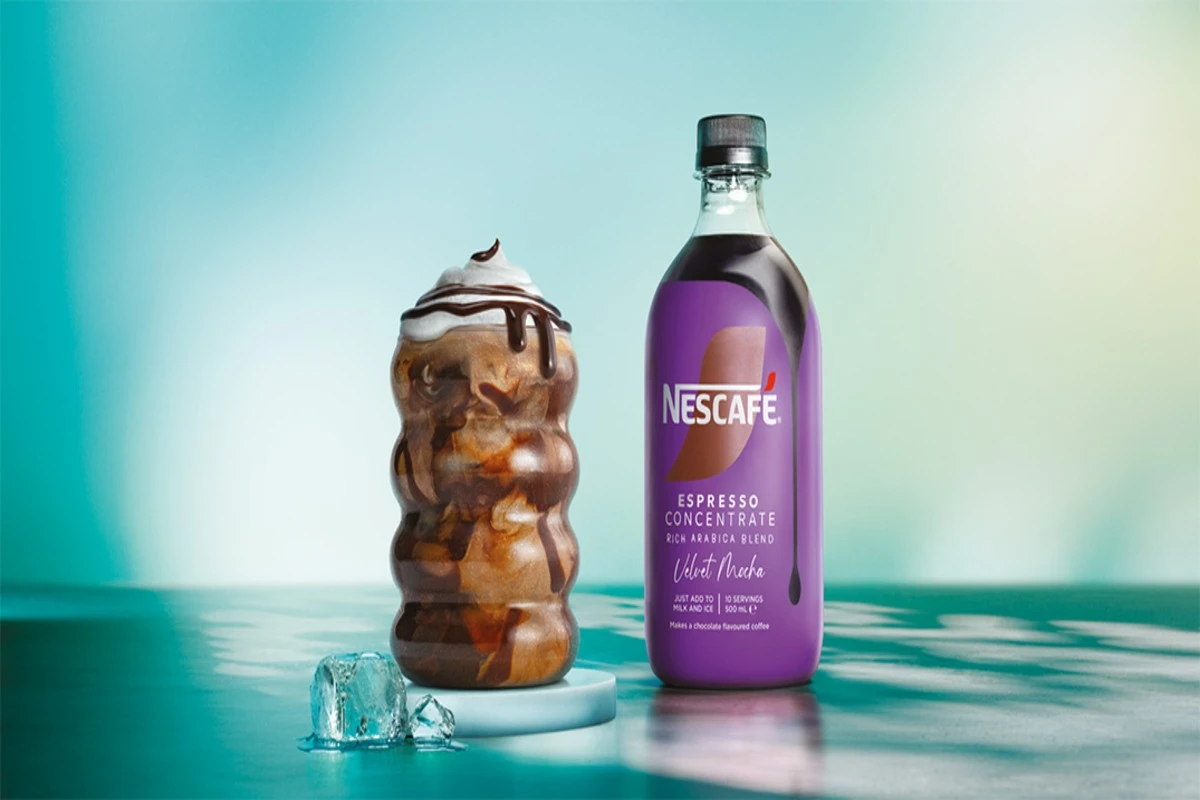 Nestlé is expanding cold coffee offerings across Nescafé, Nespresso, and Starbucks Coffee at Home.
Taste is driving the shift to cold
The rise of cold coffee may have been amplified by social media, but its roots lie in cafés, where younger consumers became familiar with iced formats before developing a taste for traditional hot coffee.
The appeal is partly sensory. Serving coffee over ice can soften its bitterness and intensity, creating a smoother, lighter profile that works well with milk alternatives, syrups, and other flavor additions.
For many younger consumers, this makes cold coffee a more approachable and versatile entry point to the category.
Crucially, cold coffee is no longer a drink reserved for warmer months. Its customizable nature allows it to fit a wider range of consumption occasions throughout the day, giving brands an opportunity to extend coffee beyond traditional drinking habits.
The shift toward at-home cold coffee consumption is also creating new opportunities for convenient formats.
Nestlé initially unveiled Nescafé Espresso Concentrate — a product designed to create café-style iced coffee at home without specialized equipment or barista skills — in Australia and China in 2024, before expanding availability to the US and Europe.
Nespresso also moved further into the category with its year-round Over Ice range, designed for premium capsule users looking to incorporate cold coffee into their everyday routines.
Meanwhile, Starbucks Coffee Craft concentrate, initially launched in Japan, South Korea, and the UK, is aimed at bringing a coffeehouse-style iced coffee experience into the home.
Overcoming cold coffee formulation challenges
As cold coffee moves into more formats and consumption occasions, formulation and processing present their own technical challenges.
Nestlé says its coffee R&D center in Orbe, Switzerland — a global hub for the company’s coffee innovation — is working on technologies designed to address these challenges, from solubility and texture to the performance of coffee in cold liquids.
“One recent breakthrough came in developing an innovative freeze-drying technique that lets premium soluble coffee dissolve smoothly in cold liquids, a problem conventional methods struggled with,” the company says.
The technology is designed to combine the convenience of soluble coffee with the quality consumers expect from premium coffee, creating new opportunities for cold coffee consumption without the need for specialist preparation.
First used in Nescafé Iced Blend, the technology is now being applied across Nestlé’s wider cold coffee innovation pipeline.
For ingredients and beverage suppliers, developments such as these point to a broader opportunity. As consumers become more accustomed to drinking coffee cold, the category is opening up space for new approaches to flavor, texture, sweetness, dairy alternatives, concentrates, and functional ingredients.
The result is a coffee market in which temperature is becoming only one part of the proposition. For a generation entering the category through iced and chilled formats, cold coffee is increasingly the starting point rather than the alternative.