


Illuminated fermentation emerges as tool for cultivated coffee scale-up


Key takeaways
- Brevel applies its illuminated fermentation platform to plant cell culture, partnering with Coffeesai to support the scale-up of coffee cell production.
- Early trials indicate that controlled light exposure can enhance cell growth and influence the production of valuable compounds linked to flavor, aroma, and overall biomass quality.
- The project reflects growing industry interest in plant cell culture as a climate-resilient production method that can reduce dependence on agricultural land, weather conditions, and seasonal variability.
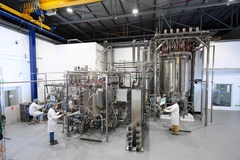
Brevel has joined forces with Coffeesai to explore how its illuminated fermentation platform can support the production and scale up of coffee cell cultures. The partnership marks Brevel’s deeper entry into the plant cell-culture sector, applying its proprietary biomanufacturing technology to help move cellular agriculture closer to commercial viability.
The collaboration focuses on using controlled light exposure inside fermentation systems to enhance plant cell growth and influence the production of valuable natural compounds. Unlike traditional fermentation processes that occur in the dark, Brevel’s system integrates light as an active biological driver, aiming to improve both efficiency and output quality.
Illuminated fermentation
The collaboration comes at a time when food and beverage manufacturers are increasingly exploring alternative production methods that can deliver greater supply chain resilience.
By using controlled light exposure to optimize plant cell growth and potentially influence flavor-related compounds, Brevel and Coffeesai are investigating whether coffee cell culture can become a more scalable and commercially viable source of coffee ingredients.
Coffee prices have faced upward pressure in recent years amid climate challenges affecting major growing regions, underscoring interest in alternative production methods. Manufacturers have been grappling with unprecedented volatility in raw material costs and climate-related supply disruptions.
According to Brevel, early trials with Coffeesai’s coffee cell cultures have demonstrated promising results, including high cell densities and sustained growth under a semi-continuous cultivation process. The companies are also evaluating whether light manipulation within the fermenter can influence sensory-related characteristics, such as flavor and aroma.
Flavor control mechanism
Coffeesai, which develops coffee using plant cell culture, says early trials suggest light could become an important tool for shaping flavor characteristics during cultivation.
“So far, in our collaboration with Coffeesai, we discovered a strong correlation between light intensity and the flavor profile of the resulting coffee. This means that light can be used as an additional ‘lever’ to control the flavor of the product and meet consumer demand,” Yonatan Golan, CEO and co-founder of Brevel, tells Food Ingredients First.
“Traditional plant cell culture done in the dark can control some flavor aspects using certain chemical and physical elicitors, but none of them can provide the same flavors as light.”
 As climate volatility, resource constraints, and supply chain pressures reshape food production, coffee remains one of the most vulnerable ingredients, with yields increasingly affected by rising temperatures, water scarcity, and changing growing conditions.
Climate pressure on coffee
Plant cells naturally produce compounds known as secondary metabolites, which are responsible for many of the flavors, aromas, and functional ingredients valued by food and biotech companies.
In crops such as coffee and cocoa, these compounds include polyphenols and flavonoids that contribute to the final sensory profile. According to Golan, light plays a critical role in stimulating their production.
“Light is naturally a central trigger for the production of these compounds, just as it is in nature. Traditional fermentation, which takes place in the dark, relies on alternative pathways and often requires chemical or physical elicitation methods that can be disruptive. Using light is the cleanest and often the most effective approach, and in some cases we have seen yields increase by 200–300%,” he says.
Plant cell culture is increasingly being explored as an alternative to conventional agriculture, particularly for crops sensitive to climate change. Coffee — especially high-quality Arabica, which accounts for nearly 70% of global coffee production — is highly vulnerable to temperature shifts, and researchers estimate that up to half of current coffee-growing regions could become unsuitable by 2050.
Scaling coffee cell culture production
The collaboration between Brevel and Coffeesai comes at a time when food and ingredient production is increasingly shaped by climate volatility, resource constraints, and supply chain instability. Coffee is often cited as one of the most exposed commodities, with production sensitive to temperature changes, water availability, and shifting growing regions.
At the same time, global demand continues to rise, putting additional pressure on traditional agricultural systems.
Brevel’s illuminated fermentation approach aims to address some of the key limitations of traditional dark fermentation by introducing precise light profiles that influence cellular metabolism. The company says this method can help improve consistency, increase production efficiency, and enhance the profile of bioactive compounds, such as phenols.
The initiative is supported in part by a US$1 million grant from the Israel Innovation Authority, which is aimed at expanding Brevel’s platform into plant cell culture and adjacent industries.
“The generous grant allows us to expand our bandwidth and capabilities to work with multiple partners in parallel. We are developing additional tools that will allow the companies we work with to have access to large amounts of real time data and gain significant insights on the metabolism and performance of their plant cells,” says Golan.
“The ability to very precisely understand what happens during the fermentation process is key to optimization, scale, and quality of the end products.”
“Moving to commercial production will mostly depend on the specific product that the companies we are working with are developing. Coffee and cocoa, for example, will require a bit more time due to the volumes required and the relatively low price point. Other products like saffron, marigold, and higher-end ingredients, which we are now working on, will get much faster to market, as early as the end of this year if all goes well.”
To meet the upcoming demand, Brevel entered into agreements with JV partners to set up manufacturing facilities in much larger capacities. These are planned for the end of 2027/early 2028.




Upcoming webinars

Oat-Standing Ingredients - Showcasing Irish Grain Through Innovation
Tirlán Ingredients

2027 Food Safety Risks for Quality & Compliance Leaders
FoodChain ID

Formulating for function: Developing benefit-led beverages with natural colours, botanicals, and flavours
Givaudan Sense Colour