




Bird flu outbreaks: Will US egg prices rise as manufacturers face fresh supply risks?

Key takeaways
- US bird flu outbreaks raise concerns over egg and chicken prices ahead of holiday demand.
- Regional egg shortages challenge ingredient sourcing, while nationwide price increases remain uncertain.
- Food manufacturers turn to alternative sourcing, reformulation, and AI-driven planning to manage disruptions.
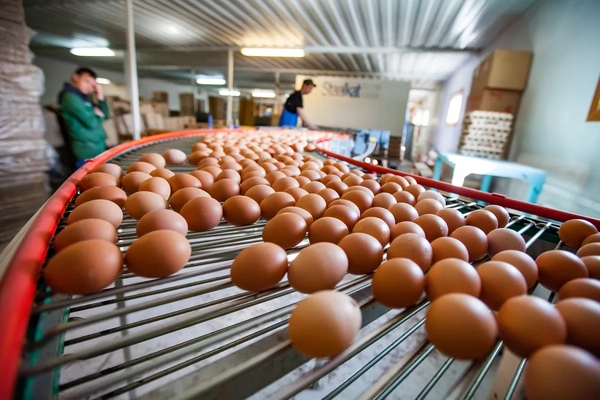
Bird flu outbreaks across the US are raising fresh industry concerns about egg and chicken prices ahead of the holiday season. Growing seasonal demand from bakeries, retailers, and foodservice operators means manufacturers must navigate supply constraints, rising procurement risks, and potential reformulation challenges.
USDA data indicate continued avian influenza activity in commercial and backyard poultry flocks, with detections typically increasing during autumn bird migrations. In Europe, Wageningen University & Research has reported the first Dutch poultry farm outbreak of the 2026/27 season, highlighting regional supply risks.
Food Ingredients First examines egg and poultry pricing and supply implications with Rohit Tripathi, VP of industry strategy for manufacturing at Relex, an AI-powered supply chain planning company.
Poultry markets face uncertainty
According to USDA data, an outbreak confirmed in Illinois on October 19 affected 934,600 birds, while a separate outbreak in California on October 28 affected approximately 1.3 million laying hens.
The outbreaks come against a backdrop of easing national egg prices following earlier bird flu-driven price spikes. The USDA’s October Food Price Outlook forecasts US retail egg prices to decline by 29.3% in 2026 compared with 2025, while poultry prices are projected to rise by 1.2%. These annual forecasts do not account separately for the price impact of the latest outbreaks.
Despite this volatility, Tripathi cautions against predicting nationwide egg-price increases from individual outbreaks. Rohit Tripathi says manufacturers must align sourcing and production decisions amid supply constraints.
“The Illinois outbreak is significant for the affected producer and its customers, particularly as the food industry prepares for holiday demand. However, the scale of the outbreak needs context, preliminary assessments indicate that this represents roughly <0.5% of the US table-egg laying flock. That makes it premature to predict a nationwide egg price increase from this incident alone.”
He explains that regional shortages are a more immediate concern: “Eggs are not always interchangeable across suppliers and markets. They must meet egg size, quality, housing, packaging, and delivery requirements.”
“A retailer or food manufacturer may therefore experience a shortage even when sufficient eggs exist elsewhere in the country.”
Tripathi describes repeated outbreaks as a source of bigger risks affecting several farms or regions “before supply networks can adjust.”
Chicken prices require a separate assessment, as commercial egg-laying operations and broiler meat production have different supply chains, he adds.
Supply chain response
Losing laying hens reduces production immediately, but price effects depend on replacement supplies and distribution, Tripathi says.
“Wholesale egg markets can respond relatively quickly when buyers seek alternative suppliers. Retail prices may take longer to adjust because of existing contracts, inventory, and pricing arrangements. An outbreak does not automatically translate into a proportional price increase,” he explains.
Producers must reallocate eggs, review customer commitments, and adjust packing and transport. This is particularly complex for eggs because the supply of different sizes and grades depends on the age and composition of the laying flock.
Tripathi cites a Relex customer in Asia-Pacific that faced an avian influenza disruption and had to redistribute limited egg supplies. Egg shortages could accelerate demand for functional egg alternatives.
“By using detailed planning that accounted for production constraints, product requirements, and customer priorities, it could respond more quickly and maintain a structured allocation process.”
For chicken, a reduction in table-egg layers does not directly reduce the supply of chickens raised for meat, Tripathi notes. Continued disease activity across poultry operations could, however, create broader supply and pricing pressures.
Impact on ingredient companies
For ingredient companies using egg or poultry ingredients, shortages can complicate formulation.
“Eggs provide binding, emulsification, texture, and other properties in baked goods, sauces, prepared meals, and processed foods. Replacing them may require recipe changes, production trials, and new quality assessments,” Tripathi explains.
While egg substitutes can help, he warns that they may change the taste, shelf life, or cost of the finished product. Food Ingredients First previously explored how supply volatility is driving interest in functional egg alternatives.
Beyond reformulation, manufacturers must also prioritize how limited ingredients are distributed across product lines.
“The most important planning question becomes which finished products should receive the available ingredients. A manufacturer may have several products competing for the same limited supply, with different margins, customer commitments, and production requirements.”
Poultry processors face similar challenges when balancing demand across different cuts.
“A producer cannot independently increase the supply of chicken breasts without also producing the other parts of the bird. Companies must balance demand across different cuts and identify markets for products that exceed immediate demand.”
Tripathi identifies AI-supported supply chain planning as a tool for navigating these constraints. It allows manufacturers to assess alternative suppliers, production capacity, ingredient costs, and product mixes before adjusting operations.
“The objective is to protect customer service and product quality while limiting unnecessary waste, costly last-minute purchases, and production disruption.” Holiday demand adds pressure to egg sourcing and distribution.
GLP-1 shifts egg and poultry demand
Beyond supply-side pressures, the growing use of GLP-1 medications and consumers’ changing eating patterns are introducing new uncertainties for egg and chicken demand, particularly as protein-rich foods gain traction.
Tripathi says increased interest in protein does not necessarily mean consumers buy more food. Many GLP-1 users report eating smaller portions and thus, lower total consumption.
“The supply chain implication is that manufacturers and retailers should monitor changes at the product level. Demand may shift between large family packs and smaller portions, fresh and prepared products, or traditional snacks and protein-rich alternatives.”
These shifts complicate demand forecasting, requiring producers to distinguish lasting trends from temporary shifts driven by promotions, pricing, or short-term supply shortages.
Recovering from bird flu impacts
Tripathi says restoring egg production can take months, even if alternative supplies ease immediate shortages.
He highlights the importance of distinguishing between the recovery of the affected farm and the recovery of supply for its customers. A producer may be able to redirect eggs from other facilities or secure replacement supply relatively quickly, depending on available capacity, contracts, and regulatory requirements.
“That can reduce the immediate impact on customers even while the affected farm remains out of production.”
Rebuilding egg production takes longer — farms must complete disease containment, disinfection, and regulatory approvals before restocking. Recovery also depends on replacement bird availability, biosecurity, and further outbreaks, Tripathi explains.
From a supply chain perspective, he warns that companies should plan for different recovery scenarios, whether production resumes in six months, takes a year, or faces further disruptions.
“The key lesson is that companies cannot control when an outbreak occurs, but they can improve how quickly and effectively they respond.”
“Better visibility into available supply, clear customer priorities, and the ability to revise production and distribution plans help protect service while the industry works toward recovery.”