



Austria Juice’s fermentation slashes sugar in fruit concentrates for EU Breakfast Directive compliance


Key takeaways
- Austria Juice’s patent-pending fermentation technology reduces sugar and calories in 100% fruit juice by at least 30%, while maintaining taste.
- The product aligns with EU Breakfast Directive guidelines for reduced-sugar fruit juice, meeting new regulations.
- The innovation supports the growing consumer demand for healthier, reduced-sugar beverages without compromising taste.
 (All image credits: Austria Juice).
Austria Juice has unveiled a reduced-sugar fruit juice based on concentrate which it says can cut sugar and calories by nearly 30%. With the EU Breakfast Directive’s deadline approaching, the patent-pending technology ensures the juice stays flavorful while allowing beverage companies to label the product as “reduced-sugar fruit juice from concentrate.”
The innovation also supports manufacturers’ efforts to meet growing consumer demand for fruit juices with lower sugar content to meet healthier lifestyles. Nearly 72% of consumers globally are actively limiting sugar in their diet, suggests Innova Market Insights data.
“We identified a gap between the desire for 100% fruit juice and the need to reduce sugar consumption,” says Kai Oliver Antonius, VP of Austria Juice.
“Mindful consumers want the nutritional benefits of pure juice, but without the sugar load. They also prefer not to compromise on taste or to sip artificial sweeteners. Meanwhile, we enable our clients to keep their labels clean.”
Fermentation for sugar reduction
Austria Juice will introduce an apple juice concentrate as its flagship reduced-sugar product at the Private Label Manufacturers Association in Amsterdam, Netherlands, May 19–20.
The Agrana Group company develops the product using its fermentation technology, which converts sugar, removes processing aids “completely,” and then blends the product with fruit juice concentrate to achieve the desired sugar content.
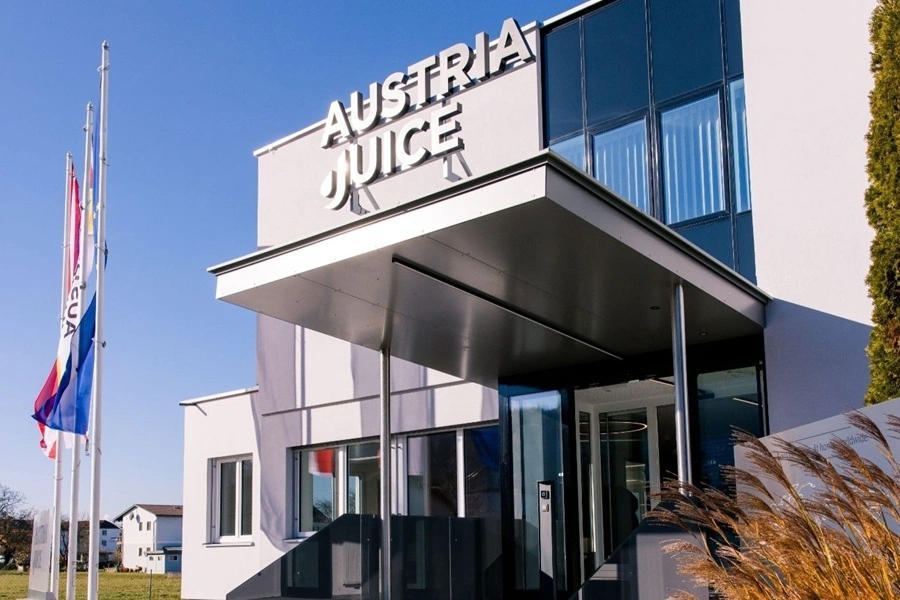 Austria Juice uses a patented fermentation technology to develop its reduced sugar juice concentrates with a “naturally fruit-forward” taste.“Our first reduced-sugar product combines two key Austria Juice strengths: the technology is based on our know-how in wine fermentation and our strong position in juice concentrates worldwide,” notes Antonius.
“We also draw on our leadership in ‘From the Named Fruit’ solutions (FTNF), spanning technology, application development, and production. This integrated expertise gives us an advantage in designing sugar-reduction-tech powered by fermentation, as well as our ability to maintain fresh fruity flavor in the juice.”
FTNF refers to the company’s approach to maintaining the authentic flavor and identity of the fruit used in their juice products, even after undergoing the fermentation process to reduce sugar content.
The process is “quick, streamlined, and precise,” which is why the company says it prefers it over other juice processing methods. It also prevents off-flavors and secondary notes in the beverage, ensuring the final product contains no undesirable alcoholic or fermented aromas.
Fermentation is also driving Cargill, dsm-firmenich, and MycoTechnology’s sugar reduction innovations, which the companies have previously discussed with Food Ingredients First.
EU regulations drive sugar reduction
The juice produced contains “at least 30% less sugar and a minimum of 30% fewer calories,” achieving the EU Breakfast Directive goals, says the company.
The amended EU Breakfast Directive was announced in June 2024 and officially introduced a new category: reduced-sugar fruit juice. The directives for this new category take effect on June 14, 2026, as manufacturers rework recipes to balance taste, texture, and compliance.
The revised guidelines increase transparency and ensure that reduced-sugar products are clearly identifiable. In this new category, juices with a minimum sugar reduction of 30% can be named “reduced-sugar fruit juice.”
Consumer demand for healthier juices
The EU change supports informed consumer choices, signaling a market shift driven by people demanding less sugar without sacrificing fruity mouthfeel and robust taste.
Amid the evolving EU market scenario for fruit juices, Austria Juice helps CPG brands “transform regulatory change into product opportunity,” says Cornelia Kerschbaumer, director of marketing and communication at Austria Juice.
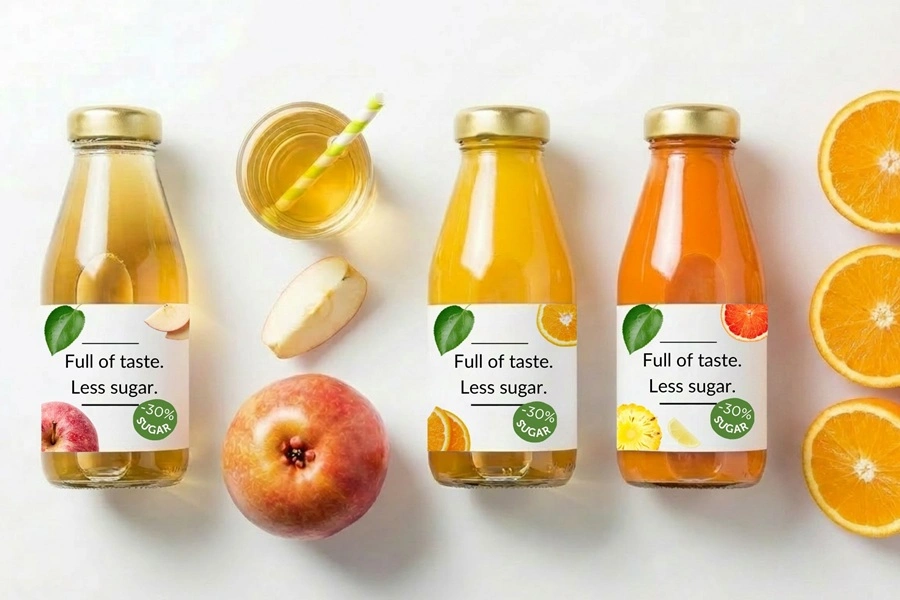 According to the EU Breakfast Directive, fruit juices may be labeled as “reduced sugar fruit juice” if at least 30% of the natural sugars have been removed.“These better-for-you reduced-sugar options are 100% natural fruit juice — for breakfast or on-the-go products. Our solutions help parents; instead of arguing with their kids about drink choices, parents can now give them what they want, just with 30% less sugar.”
Innova highlights juice’s primary barrier as “overcoming its high natural sugar content,” pushing most new sugar-reduced products to claim the less stringent “no-added sugar” instead of the sugar-free claim used by many new soft drinks.
In the US, over 66% of consumers are reportedly trying to reduce their sugar consumption, according to a survey by the International Food Information Council. Three in ten reported trying to limit or avoid added and natural sugars in foods.
Market-ready reduced sugar concentrates
Severin Guski, Austria Juice’s business development manager, describes the company’s reduced-sugar products as “market-ready.”
“Just add your brand and sell, or dilute for ready-to-drink goodness. We are set to serve key players seeking plug-and-play solutions to reduce sugars in beverages made from 100% fruit juice,” he says.
The ready-to-use assortment features three juice concentrates — apple, orange, and multifruit.



Upcoming webinars

Oat-Standing Ingredients - Showcasing Irish Grain Through Innovation
Tirlán Ingredients

2027 Food Safety Risks for Quality & Compliance Leaders
FoodChain ID

Formulating for function: Developing benefit-led beverages with natural colours, botanicals, and flavours
Givaudan Sense Colour