

GLP-1 nutrition and whey prices help lift Arla Foods Ingredients revenue 19.3%

Key takeaways
- Arla Foods Ingredients revenue rose 19.3% to €867 million (~US$1.01 billion), led by higher whey prices and protein demand.
- Value-added ingredient volumes rose 5.7%, while Arla Skyr and Arla Protein also recorded strong growth.
- Whey outperformed weaker dairy commodities amid high milk supply.
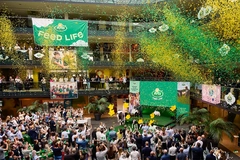
Arla Foods Ingredients posted a 19.3% year-on-year revenue increase in the first half of 2026, reaching €867 million (~US$1.01 billion), up from €726 million (~US$846 million) a year earlier. The results come as higher whey protein prices and sustained demand for value-added nutrition ingredients bolstered the dairy cooperative’s ingredients business.
Arla attributed the performance mainly to higher whey protein prices, which it said reflected continued strength in whey-based ingredient demand linked to health and nutrition trends, including nutrition demand associated with GLP-1 weight-loss medication use.
Value-added ingredient volumes rose 5.7% during the period, while Arla Foods Ingredients’ value-add share increased to 84.6%, compared with 82.9% a year earlier.
The ingredients division accounted for 11.4% of Arla’s total revenue in the first half.

The results underline a widening divide in dairy markets, with specialized whey proteins benefiting from strong nutrition demand, while conventional dairy commodities face downward pricing pressure amid abundant European milk supplies.
Protein demand builds across portfolio
The strength of the protein trend was also evident in Arla’s consumer business.
Arla Skyr recorded growth of 39.6%, while Arla Protein grew 34.4% across the group. In Arla’s European segment, Arla Protein delivered volume-driven revenue growth of 25.1%.
The company said consumer demand was strongest in protein and sports nutrition, areas where it sees dairy protein holding a natural advantage.
“Demand for nutritious dairy is healthy across the world, our brands have more than recovered, and consumers are responding to better value with real enthusiasm,” said Peder Tuborgh, CEO of Arla Foods. “This is the cooperative performing at its best, turning strong consumer demand into real growth for our brands.”
Arla’s strategic branded, volume-driven revenue growth reached 6.7% during the first half, rebounding from a 1.5% decline in the corresponding period last year.
Torben Dahl Nyholm, CFO of Arla Foods, pointed to nutrition and protein as key components of the recovery.
“What we are seeing is the underlying strength of our portfolio coming through. As prices normalized, consumers leaned into our brands with real conviction, into nutrition, into protein, into the products they trust,” he said.
“This is a broad-based recovery, across markets and across categories, and it is exactly what gives us confidence in the months ahead.”
Whey gains as dairy commodities retreat
Arla Foods Ingredients’ performance contrasted sharply with Arla’s Global Industry Sales business, highlighting differing dynamics within the dairy complex.
Global Industry Sales revenue declined 7% to €1.18 billion in the first half, driven by weaker prices for butter, skimmed milk powder, and Gouda. Arla said prices for the three commodity categories declined by an average of 27.3% compared with the same period last year.
At the same time, higher milk intake increased the volume available for commodity trading, particularly in Central Europe and Sweden. The proportion of Arla milk solids sold through Global Industry Sales climbed to 35.4%, up from 28.5% in the first half of 2025.
Arla said an abundance of milk across Europe had placed pressure on global commodity markets and commercial pricing.
Its performance price fell to 43.6 euro cents per kilogram from 57.5 euro cents per kilogram a year earlier, while the prepaid milk price declined to 40.7 euro cents per kilogram.
“This is the market doing what it should. High milk availability has brought prices down across the sector, and that is the reality our owners are navigating right now, but a lower milk price does not mean a weaker cooperative,” said Tuborgh.
The divergence between whey proteins and conventional dairy commodities suggests that value is increasingly concentrated in specialized nutrition applications, even as greater milk availability weighs on bulk markets.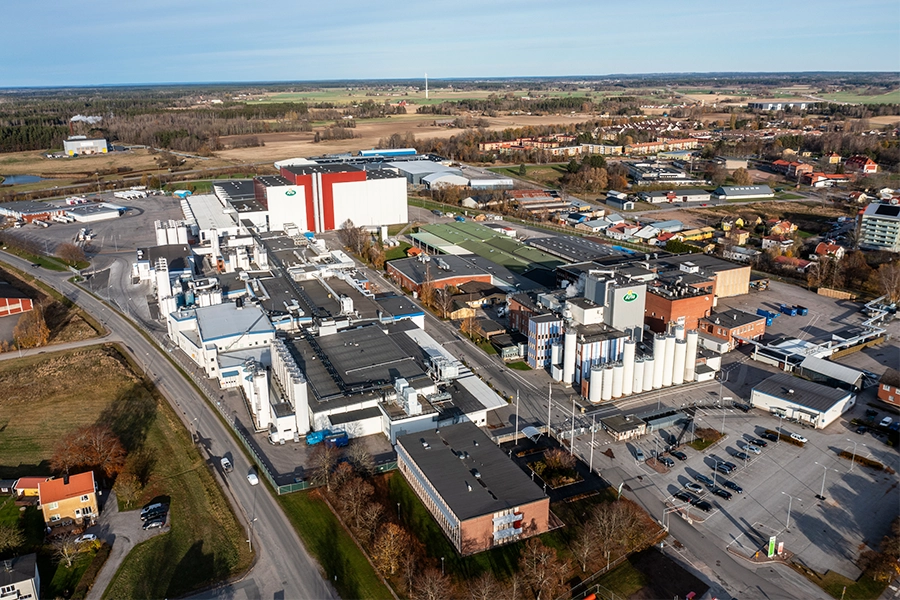 Arla has approved a €300 million (~US$349 million) investment in a new cheese dairy at its Götene site in Sweden.
Arla expands dairy capacity
Arla is backing its expectations for longer-term dairy demand with continued capital investment.
The cooperative invested €322 million (~US$375 million) during the first half and separately approved an approximately €300 million (~US$349 million) investment in a new cheese dairy at its Götene site in Sweden, the largest single investment in Arla’s history.
The facility is expected to roughly double milk intake at the site to around 1 billion kilograms annually, with production scheduled to begin in 2030.
“Global demand for reliable, nutritious protein continues to grow, and dairy has a vital role to play in healthy diets and resilient food systems,” said Tuborgh.
“When demand is this strong, the responsible thing to do is to build for it. We are investing at scale to create modern, efficient capacity that serves consumers, strengthens food security, and secures the future of our cooperative.”
Arla also completed its merger with German dairy cooperative DMK on June 1. One month of DMK activity was included in the first-half figures, contributing €409 million (~US$476 million) to group revenue. Arla cautioned that the merger affected most group-level figures, meaning they are not directly comparable with the first half of 2025.
Overall group revenue reached €7.6 billion (~US$8.85 billion), compared with €7.5 billion (~US$8.73 billion) in the first half of 2025, while net profit increased to €213 million (~US$248 million) from €158 million (~US$184 million).
Looking ahead, Arla expects high milk supply to continue weighing on global dairy prices, although the company said early signs of stabilization could point to a gradual market recovery later in the year.


Upcoming webinars

2027 Food Safety Risks for Quality & Compliance Leaders
FoodChain ID

Formulating for function: Developing benefit-led beverages with natural colours, botanicals, and flavours
Givaudan Sense Colour

Let's reveal the grain potential: Innovate
Meurens Natural