

Arla Foods and DMK clear regulatory hurdle for landmark dairy merger

Key takeaways
- The Arla Foods–DMK Group merger will create a farmer-owned dairy cooperative with significantly increased scale across European milk production and processing.
- The deal reflects accelerating consolidation in the European dairy sector, driven by rising sustainability costs, volatile markets, and the need for greater investment capacity.
- The combined group aims to strengthen food security, innovation, and supply chain resilience, while deepening its position in key markets, such as Germany and across Europe.
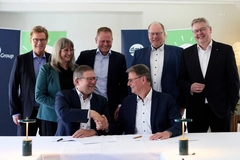
Arla Foods and Germany’s DMK Group have secured regulatory approval for their planned merger. The merger would create a farmer-owned dairy cooperative with more than €20 billion (US$23.2 billion) in combined revenue, as European processors seek greater scale to manage rising sustainability costs, volatile markets, and intensifying global competition.
The merger, which is expected to take effect on June 1, will form one of Europe’s largest dairy cooperatives, combining Arla’s global branded portfolio with DMK’s strong manufacturing and retail position in Germany.
The deal is expected to strengthen the companies’ innovation capabilities and market position, while supporting long-term food supply and international growth. The merger would combine 11,200 dairy farmers across seven European countries, with a combined milk pool of 19.4 billion kg annually.

The merged business will operate under the Arla name and maintain its headquarters in Viby J, Denmark. The merger has been cleared by EU and national competition authorities.
Strength through scale
For Arla, the merger significantly deepens its position in Germany, where DMK is the country’s largest farmer-owned dairy cooperative and a major supplier to food retailers. The deal also expands Arla’s capabilities across ingredients, cheese, infant nutrition, and private label production.
The companies say the merger will strengthen food security and create a more resilient cooperative model amid geopolitical and economic uncertainty, while increasing their ability to invest in innovation, dairy production, and more sustainable farming practices.
“This is a landmark day for our cooperatives, for the next generation of dairy farmers, and for European food production. We can move forward together to secure the necessary scale, long-term economic resilience, and investment capability required to contribute to shaping a food sector with a reduced impact on climate and nature,” says Jan Toft Nørgaard, chair of Arla Foods.
Peder Tuborgh, CEO of Arla Foods, adds: “Together, we will become one of the continent’s best dairy producers for the future. We aim to be among the most trusted partners in safeguarding European food production and in supporting farming practices that reduce our impact on climate and nature.”
Dairy sector consolidation
The announcement marks one of the largest cooperative mergers in the European dairy sector in recent years, and the deal also reflects broader structural changes taking place across the industry.
Rising production costs, volatile commodity markets, and increasing pressure on agricultural supply chains are pushing dairy cooperatives to pursue greater scale and operational efficiency. For farmer-owned organizations in particular, consolidation is increasingly being viewed as a way to strengthen resilience and secure long-term competitiveness.
Both companies say that food security, resilience, and geopolitical uncertainty are some of the key drivers behind the transaction, underlining how Europe’s dairy sector is increasingly positioning itself as strategically important to regional food supply.
Earlier this month, Arla Foods moved to acquire family-owned cottage cheese producer Brancourts, after investing €300 million (~US$354 million) to expand its cheese production facility in Götene, Sweden, to meet rising global demand for protein.


Upcoming webinars

2027 Food Safety Risks for Quality & Compliance Leaders
FoodChain ID

Formulating for function: Developing benefit-led beverages with natural colours, botanicals, and flavours
Givaudan Sense Colour
Let's reveal the grain potential: Innovate
Meurens Natural