
Ahold Delhaize Q2 results highlight ingredient opportunities in private-label innovation


Key takeaways
- Ahold Delhaize’s private-label penetration surpassed 40% of food sales in Q2, reinforcing retailers’ growing role in product development.
- Continued price investments across own-brand ranges are increasing demand for ingredient solutions that balance affordability, nutrition, clean label appeal, and sensory performance.
- The retailer’s expanding use of AI, loyalty data, and digital merchandising signals a more data-driven approach to private-label innovation and supplier collaboration.
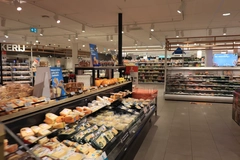
Ahold Delhaize’s second-quarter 2026 results suggest the biggest takeaway for ingredient suppliers lies beyond the retailer’s modest sales growth. While net sales rose 1.9% at constant exchange rates during Q2, the more significant development is the continued expansion of private label, with own-brand food penetration increasing by 0.7 percentage points to exceed 40% across the group.
In the second quarter of 2026, Ahold Delhaize reported net sales of €23.9 billion (US$27.6 billion), up 1.9% at constant exchange rates, supported by comparable sales growth of 3.7% excluding gasoline.
Underlying operating income rose 2.1% to €930 million (US$1.08 billion), while the retailer maintained an underlying operating margin of 3.9%. Diluted underlying earnings per share increased 7.2% to €0.70 (US$0.81), and online sales grew 8.6% overall, including a 14.5% increase in the US.
The food retail group reiterated its full-year 2026 guidance, citing continued momentum across its European and US businesses despite an uncertain consumer environment.
Private label becomes a strategic innovation platform
For ingredient manufacturers, formulation specialists, and private-label producers, the milestone reinforces a broader shift in the food industry: retailers are becoming increasingly influential product developers, taking greater ownership of product specifications, nutritional positioning, and innovation pipelines rather than relying primarily on national brands.
As private-label portfolios continue to expand, suppliers are expected to play a more collaborative role in helping retailers develop differentiated products that balance affordability with quality, health credentials, and consumer appeal.
The latest results also build on Ahold Delhaize’s broader health ambitions. At the end of 2025, 52.1% of the retailer’s own-brand food sales met its healthy-product criteria, supported by ongoing reformulation efforts to reduce sugar, salt, and saturated fat across its portfolio.
The figures suggest that health-focused innovation remains central to the company’s private-label strategy despite continued pressure on household budgets.
Balancing affordability with nutrition and performance
However, expanding private labels comes with growing commercial demands for suppliers.
Alongside its results, Ahold Delhaize highlighted continued price investments across multiple banners.
US retailer Stop & Shop has lowered prices on thousands of items, while Hannaford recently announced price reductions across more than 3,500 own-brand products.
Data-driven innovation
Despite these investments, the group maintained an underlying operating margin of 3.9%, underlining its focus on protecting profitability while strengthening its value proposition.
The retailer’s continued investment in digital capabilities also signals how future product development could evolve. Online sales increased 8.6% during the quarter, with US online sales growing 14.5%. Meanwhile, Ahold Delhaize is applying AI across merchandising, assortment planning, and personalized customer engagement.
Retailers equipped with loyalty program insights and AI-driven analytics can better identify which nutritional claims, flavor profiles, product formats, and price points resonate with specific shopper segments, allowing them to refine private-label innovation more precisely.
Health and plant-based remain key private-label opportunities
Healthy and plant-based products continue to feature within this strategy. Delhaize is promoting healthier own-brand products through its family loyalty program, while plant-based offerings remain part of its merchandising efforts, suggesting these categories continue to hold commercial relevance, even as consumers place greater emphasis on affordability.
The combination of consumer data, retailer-controlled product development, and expanding private-label penetration is reshaping relationships across the supply chain. As retailers increasingly define product specifications themselves, ingredient suppliers are becoming strategic development partners rather than simply raw material providers.
Frans Muller, president and CEO of Ahold Delhaize, says: “In the second quarter, we delivered another solid performance, demonstrating the resilience of our Growing Together strategy and the strength of our local brands in a challenging market.”
“Every week, millions of loyalty interactions help our brands understand customers in real time. Combined with data and AI, these insights have allowed our brands to personalize experiences, improve decisions and strengthen their connection with the communities they serve.”
“This summer marks the 10th anniversary of the merger between Ahold and Delhaize Group — a milestone that reminds us how much we have accomplished. What started as a belief that strong local brands become even stronger through international scale has become a proven model for profitable growth and market share expansion.”