
- Industry news
Industry news
- Category news
Category news
- Reports
- Key trends
- Multimedia
- Journal
- Events
- Suppliers
- Home
- Industry news
Industry news
- Category news
Category news
- Reports
- Key trends
- Multimedia
- Events
- Suppliers
Vow: Tapping cultured meat to address future food needs as regulatory frameworks evolve
19 Dec 2024 | Vow
Ellen Dinsmoor, COO of Vow, an Australian cultured meat company, discusses the evolution of consumer perception of cultivated meat, noting that many still associate it with plant-based products. With regulatory frameworks changing, Vow aims to create a category of sustainable, high-quality meat beyond its newly launched “Forged Gras,” a cultivated quail foie gras developed without animal intervention.
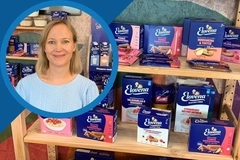
Hi, I'm Anvisha Manjal, senior journalist with Food Ingredients First.
Joining me today is Ellen Dinsmore, Chief Operating Officer at WO, a cultured meat company based in Sydney, Australia.
We'll talk about the evolution of the cultivated meat space, including the latest consumer trends.
It's great to have you with us, Ellen.
It's good to be here.
Thanks for making the time for it, for sure.
So Ellen, how has consumer perception of cultured meat evolved since Fo's inception?
You know, what's interesting, so Vo was founded a little over 5 years ago at this point, and I'm actually not sure consumer perception has changed that much in those 5 years.
I think that increasing numbers of folks are aware of Culture Meat, but 9 out of 10 times when I mentioned it to someone, the first thing I still get asked is, how is that similar to a Beyond Burger or Impossible?
I think a lot of folks still associate us with plant-based.
And I think the reason for that is that very few companies in our space have actually made it onto market and by that, gone through the regulatory processes to bring a product to market.
Vo is actually just one of 3 companies that has done this, but a bit of a humble brag for our team.
I think we've done it with about 10% of the capital and about half the time of the other groups.
So, right now, there really isn't as much widespread consumer perception as we'd love just because a lot of companies have struggled to scale and to bring again those regulatory processes to bear, but we're very much hoping to change that over the upcoming years.
Thank you for sharing.
Cultured meat production is still in its early stages.
What are some challenges in scaling production and how has WO addressed them?
Yeah.
This could be an entire podcast or book in its own right.
And I feel like with each stage of the journey, we're still just discovering new challenges.
Look, often when people think about cultured meat, and if you talk to anyone maybe who's worked in cell culture or who's worked in pharmaceutical manufacturing, They'll immediately mention a lot of different questions in terms of cost, and they'll immediately talk about how you do this by minimizing contaminations, how you bring all of this to bear again in a way that is just cost effective and meets the needs for food production and how you can do it all quickly enough.
What Vo has done is pretty different than any other company.
In that we've tried to take the approach of essentially vertically integrating and bringing a lot of our manufacturing in-house.
Pretty early on, we realized that you couldn't just rely on a lot of the other partners out there.
It's not to demean other folks that maybe were interested in co-manufacturing in this space, but there was just really no one who had experience in scaling up cell culture for food production.
And so with that being said, Val went out and intentionally took the approach of trying to learn as fast as possible, which meant that we brought this in-house at a point in time where that might not have seemed like the best decision.
We went out, bought an old bioreactor that was kind of in a closet almost of a supplier, and tried to bring that in-house and set it up actually within 3 months to scale our first pilot manufacturing line.
Since then, we've actually taken a lot of learnings from, say, a company like SpaceX.
SpaceX launches a lot of rockets, most of which blow up, but the reason they do that is because that optimizes their rate of learning, and that's what they're trying to do and learn so that they can build the rocket that does successfully launch as quick as possible.
That's the approach we've taken with our manufacturing.
That first line we brought in was not the most efficient.
It was not the easiest to scale.
By bringing that and forcing ourselves to learn how to operate it as quickly as possible, we could learn to scale more efficient manufacturing lines faster than anyone else out there.
So at this point in time, we have much more operating capacity than anyone else in our space, and a lot of that is because we have vertically integrated.
So we design our own bioreactors, we have them produced domestically here in Australia, and we actually have systems that operate them 24/7.
So we have full control over the manufacturing process, which again, I bring it back to that key point of having that full control.
Allows us to optimize our learnings as quickly as possible.
That might mean running into a lot of challenges every single day, but then it means we can face those head on and solve them quicker than anyone else out there.
With Singapore being the first country to approve cultured meat for commercial sale, how do you see the global regulatory frameworks evolving to support the cultured meat industry?
Yeah.
So, Singapore has been a really exciting country to work with.
The regulators there have been very collaborative and we were so excited to bring our first product to market there back in April and are continuing to work on different versions and new products with the regulators there as.
If I think about this from a global scale, right now, what's happening is you kind of see this patchwork kind of around the globe where I feel that there's almost different regulators that are kind of popping their heads up and starting to say, hey, this is interesting.
A lot of regulators have a process today for generally speaking, this broad category of novel foods.
Now, other proteins might fall into that completely other novel products can as.
It's kind of a catch-all framework.
So, the reality is at this point in time, for us to bring anything to market that is ensuring a very safe, high quality product, which is of the utmost importance.
Us, just as it should be to regulators.
We do have to go through a very collaborative process with the likes of Singapore.
We've been in discussions with Australia, the US, a number of other countries.
Essentially, there's a degree of co-creating these regulatory frameworks.
What we're all seem to also pushing and trying to encourage regulators to work towards is not just to work with us, but to work together.
So, where I envision this going ideally over 234 years' time, is that if you have a number of countries, be it Singapore, the US, Australia, maybe the EU that do have an early stage framework that they establish, there's a world where they start working together to create much more of a global.
Standard.
Eventually, you could see this getting towards something maybe similar to what the US has, what's called GRASS, which I believe stands for generally regarded as safe foods, where there's a sort of globally or at least domestically accepted standard that a lot of other countries recognize and approve as.
That's something that Vao is very much trying to be a part of this sort of global dialogue, not just us and regulators, but bringing everyone to the table to align on what makes the most sense.
Again, to ensure the safety and quality of this.
Super interesting.
Now, beyond foie gras, what other products or animal-derived ingredients is the company exploring and how do you prioritize which products to bring to market next?
Yeah So, this is a fun question and I actually really like the way you framed it, which is products and also ingredients.
What's really fun about cell call, it is, it's an ingredient, it's cells, and if you think about the biology that's inherent in cells, there's so many things you can do with them.
Whether it is a variety of ingredients, maybe a stabilizer, maybe a broth, all of these different opportunities, it also means you can create fully finished products like the foie gras that we just launched is.
So, the way I think about the next couple of years, our goal right now is to increase it and really double down on that brand we have live in market today, Forged, which is the one that the parfait and the foie gras products are being sold under.
To do that, we kind of have this balance of, first, what does the customer need?
What are we hearing from the restaurants we're selling with, the larger groups we're talking to, just consumers we're talking to every day on the ground, what needs exist and then how can we meet those with the technology that we have.
We're also at the same time trying to get input from consumers to better understand what needs they have, even if we can't answer them today.
So, some really interesting examples of this that are more on the R&D stage side of things still, would be a lot of interesting work that falls in the nutrition space.
So, forged and the products we have live now are all about this delightful, deliberately different experience.
They're about bringing you different taste and textures and flavors than what you could have imagined before.
With cell culture though, you can also bring nutrition differently to people's plates than they ever might have imagined.
You can have cells that you create, which have twice the protein content of something similar, say twice the protein of of chicken, but maybe in a quail cell, or you could have the omega-threes from salmon, but embedded in a different species in and of itself.
And there's a lot of work our team is doing based off a lot of consumer input we've seen for higher quality nutrition across the board as.
So, maybe to summarize, I, I think it's this really fun, delicate balance of what's out there, how can we solve and meet those needs today, specifically through that forged brand and providing really different tastes, textures and experiences to the consumers we have and ones we're in works with, as as trying to build out the other areas, if I mentioned better kind of on all fronts, a big one of which I think is nutrition and trying to use cell kind of cell culture to unlock that in a really meaningful way as.
Makes sense.
And where do you see cultured meat fitting into the broader F&B landscape over, let's say the next 5 years, and what role does WOW aim to play in reshaping how we think about meat?
Yeah, there's, there's actually a really interesting sort of analogy here, specifically to your last question there, which is kind of reshaping how we think about meat.
I remember one of the first conversations I had with Vo's founder.
He told me about the history of cereal, which I thought was a very interesting place to start for someone who's looking to join a meat company.
But he said, look, if you, if you would wind back the clock 100 years or so, cereal as we know it didn't exist.
It was a combination of raw ingredients, oats, millet, barley, corn, like, kind of these raw pieces.
And then actually in the 20s, 30s, 40s, there were a number of changes in food processing technology that allowed you to craft cereal as we know it today.
Things that allowed you to kind of Puff pieces up and create different texture or to meld together and fortify those different ingredients.
And now you walk down the cereal aisle in a grocery store, and you don't necessarily think of them based on the component ingredients.
You look at different levels of those shelvings and you see one that you might want to eat for breakfast.
You might see one that's targeted towards nutrition for someone who's aging, and you see a really bright, colorful one that a child might want.
We've shifted away from thinking about those things as the raw ingredients and you think of it as a category, which is cereal.
Now, I'm not saying we want to create cereal meat or anything along those lines, but I think that presents a really interesting comparison for how we think about cultured meat and the role that can play in making more types of really great, sustainable, delicious food for the world in the future.
Our goal is to define a wholly new category, which right now, yes, forged is focused on the luxury and premium space.
But we do want to move beyond that, and so trying to create, as we kind of touched on, this broader array of products which offer better taste, nutrition, flavor, texture, all of these things, and thinking about it in an unconstrained way beyond just chicken, pork and beef.
The reason we realistically eat those species is they're the things our ancestors had access to domesticate.
There's nothing to prove that those are the best things when it comes to taste or flavor or nutrition.
And so our products therefore strive maybe to anchor in some degree of familiarity.
That's why that first cell line is quail.
Most people might have had a quail, it reminds them of chicken, but constantly trying to stretch people to think about these products in a different way.
That's why the entire ethos of forage is delay.
Deliberately different to stretch people's imagination from the starting point we have today to move them in a direction of thinking about meat by way of how can this be an ingredient and many different types of products that meet a huge variety of consumer needs in ways differently and better than we ever could have imagined.
That was again, really interesting.
Thanks for sharing your insights with us, Ellen.
Course, thank you.