

- Industry news
Industry news
- Category news
Category news
- Reports
- Key trends
- Multimedia
- Journal
- Events
- Suppliers
- Home
- Industry news
Industry news
- Category news
Category news
- Reports
- Key trends
- Multimedia
- Events
- Suppliers
Tetra Pak and Lund University insights: Dairy alternatives set to surge by more than 25% by 2030
01 Oct 2020 | Tetra Pak & Lund University
A study from Tetra Pak and Lund University, Sweden, unveils four plausible scenarios that could impact the dairy industry landscape by 2030, including anticipation that dairy alternatives will grow by 25 to 65 percent by 2030, with lab-grown dairy potentially occupying up to 50 percent of the market. Bengt Eliasson, subcategory manager of dairy ambient at Tetra Pak, and Christian Koch, a postdoctoral researcher at Lund University, share their insights on these latest research findings.
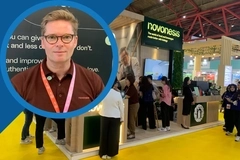
This is Benjamin Ferreir on behalf of Food Ingredients First.
I'm joined here today by Doctor Christian Koch.
He is a postdoctoral researcher at Lund University in Sweden.
And also we are joined by Bert Ellison, who is the subcategory manager of Dairy Ambient at Tetrapak Processing Systems.
Our speakers are here today to speak with us about their recent research study findings for the dairy industry transformation for 2030.
Hi both.
Hello, Benjamin.
Hello, Benjamin.
Nice to talk to you.
Nice to meet you.
Can I first start with one question?
What parameters did you set out in your research and what markets have you investigated?
Yeah, maybe I will start with that, with that question, having been the, the researcher, the main, researcher behind this project from Lund University side.
So Tetra Park asked us basically to, together with them, look into the future of the dairy industry.
And we, , conducted this a pre-study, a main study, and later scenario development.
But in the pre-study, we started out with basically three, global regions or very significant markets, which is the US, UK, China, India, Brazil, and Nigeria to have a, a very good global coverage of markets and regions.
And we looked at, , several trends that were really driving, the industry from really from, from farm to, to consumption.
And later on in this project, we reduced the, the coverage to, to 4, regional areas which were the US, UK, China, and India.
And we basically focused on three main mega trends that we, that we found that were really driving the industry going forward.
Forward, which is, dairy alternatives and food tech developments, environmental sustainability, impact, and, e-commerce advancements.
And these trends later led us to, to develop, scenarios basically of how, the future of dairy, might look like in 2030.
Bank, maybe you would like to add something from why actually Tetrapark and Lund University joined forces this year.
Yeah, I can add that it's, it, it, it, it was as a part of our work on our 2030 strategy, and really what we wanted was an outside in view.
On the dairy industry, also covering the whole value chain.
You know, from cow to consumer, basically, or, or maybe I should say from plant to consumer.
So that, that, that, that was our interest in this.
Yeah.
Yes, and your research spotlights four plausible scenarios that will make up the dairy industry landscape by 2030.
Can you provide us some detail on this?
Yeah, of course, that's my, my pleasure.
So as I mentioned, so we started with this, this pre-study and then the main study where we conducted a lot of stakeholder interviews, with the relation to the industry in some way or another.
So we talked to, , incumbents, you know, dairy industry players, but we also talked to many challengers of, current, dairy, players and we talked to consultants with expertise and , in food tech, proteins, sustainability, , NGOs, that have, , stake in, in food tech developments, top academic research institutions, and based on a quite, , massive amount of, of data, basically, we started to, develop for plausible scenarios of how the future of dairy, might look like.
And I, I, I think one important thing to, to underline here is that these are Plausible scenarios, you know, for the future, so we put ourselves in this plausible future.
It is not predictions that we do.
Exactly.
That was very clear from the start, what we wanted to do, to understand scenarios, not as a forecasting tool, not as a predictive tool, but to understand scenarios really as, as plausible and credible ways of emerging oneself in, in, in a future plausible outcome and by doing this to reframe, , strategic thinking.
Be perhaps proactive to change, and especially, you know, especially interesting, I found these disruptive forces that might That might actually bring a, bring big changes to the dairy industry.
Exactly.
And here we focused on , on two so-called critical uncertainties as Bank already mentioned, disruptive forces that could really have a very high degree of of impact on the industry, and from that perspective also from the entire value chain.
And here we, we, circled around, a technological transformation that could either, , play a role in a, in a rather weak way or a very strong way in terms of, , technological alternatives, being able, to, to, to be scalable, for, for instance, being able to , to be a substitute to traditional dairy products.
And on the other hand, we have another critical uncertainty, which is associate-environmental forces.
So it's more the idea of, governmental interventions, legislative ruling, consumer pressure, and Welfare policies that could either play out as low or very strong, and those two critical uncertainty dimensions that basically give the direction to the four very different but very plausible scenarios of how the future of dairy may look like.
Very interesting insights.
What, what do these research findings really entail for the traditional dairy producers out there?
This, of course, depends a lot on which, which, scenario, we would like to talk about.
But, one thing we can I think underline is that, in any scenario, this is about a certain degree of change.
And if we, , just, , talk about, you know, 11 scenario which is dairy evolution, where we see only a low socio-environmental forces, , happening.
At the same time, also rather low technological transformation.
Even this scenario is more than just a business as usual, scenario where we, see that there is an, a significant, plant-based growth, basically a continuation of what we, See already today or increased milk movements all over the world due to, several regions such as China or other places where they have a, a dairy deficiency, right now, and there is an urgent need for actually, getting this, the, the dairy proteins, , imported.
Mm.
Yeah, other, other forces of the, you know, global warming and , is it, will it be possible in the future to have cows all over, and, and of course, this, this will, will, will mean that the development of the dairy industry might be very different in different geographies.
Exactly, yeah.
So this is something that we also have been taking into account that we have developed obviously global scenarios, but they, of course, are, they need to be adapted perhaps also to some certain regional, , trajectories.
Regional characteristics.
But, , from these global scenarios, we can basically say that there is, they have each of those scenarios, they have, , a different impact on, the, the, the traditional, dairy players just by the, , just by looking at, at production consequences, for example, that we have, , almost, , half of the, half of the, the dairy, market being, served from, from fermentation-based, or lab-grown fermentation factories in the scenario we call Brave New Food.
Very interesting insights.
Thank you very much, both of you.