
- Industry news
Industry news
- Category news
Category news
- Reports
- Key trends
- Multimedia
- Journal
- Events
- Suppliers
- Home
- Industry news
Industry news
- Category news
Category news
- Reports
- Key trends
- Multimedia
- Events
- Suppliers
PLMA 2025: Döhler talks functionality in beverage innovation to unlock “soft drinks of the future”
30 May 2025 | Döhler
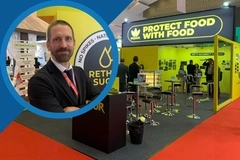
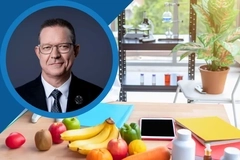
Döhler’s Oliver Hoffmann, head of Market Segment Retail & e-Commerce, gave us a lowdown on the company’s beverage portfolio at PLMA, highlighting protein-enriched, plant-based drinks and non-alcoholic beverages mimicking alcoholic ones. He said functionality and sustainability are a core focus for Döhler’s beverage innovation, with gut health, weight management, and plant-based proteins expected to become more prominent.
This is food ingredients first at PLMA.
We're here with Oliver Hoffman, head of market segment retail and e-commerce at Doula.
Thanks for speaking with us today, Oliver.
What are you presenting at PLMA this year?
Yeah, as you know, we are a provider and producer of technology driven ingredients, ingredient systems, and integrated solutions, so we have a.
For the food, beverage, and nutrition industry.
And so what we showcase here at is our solutions, of course, targeted towards retail customers and of course private label manufacturers at the end of the day.
So yes, so we have both in beverage and in food concepts here with us.
What are these concepts?
It's just a selection of what we do in general, but just to highlight some of them, it's all about added functionality.
It's about basically protein enriched products and plant-based drinks, but it's also about non-alcoholic beverages mimicking, you know, alcoholic beverages, yeah, so and vice versa, you know, alcohol-free, for example, ready to drinks, which we also hear up to healthy snacking in terms of freeze dried fruits, you are ready to snack or you can use as a topping.
We have some jellies here.
And we should never forget we also have a lot of spreads here, so plant-based spreads, you know, peanut butter, pistachio, hazelnut spreads, and so on.
They can be both for fillings for like croissants, for example, but also for spreads just to put on your bread and to enjoy.
Amazing.
And what consumer trends do you currently see driving innovation and functional beverages?
I think.
I think functionality in general is a big topic right now and it really runs across food and beverage categories a lot and also nutrition, of course.
And so what we do there coming from our portfolio, we have a lot of health ingredients.
What does it mean?
It's for example, for specific indications like we call them superheroes, for example, for gut.
Health.
We have functional in terms of added vitamins and minerals.
We have functionality in terms of high protein levels or fibers, high fiber levels, for example.
And one example, for example, is gut health sodas.
They are a big trend in the US.
They are popping over now to continental Europe as.
And there's a combination of pre and postbiotics inside and also some fiber blends to get a high level of fiber, so it's the more natural and more healthy carbonated soft drinks of the future actually.
What is Stoller's approach to balancing taste and nutritional performance in plant-based dairy alternative drinks?
Plant-based drinks and also spoonable products, for example, are very, I would call them volatile products.
It always starts with the raw material and the quality of the raw material.
And then what we do is again coming back, we are fully fledged integrated solution providers so we can work with natural flavors.
So for example, like milk flavor.
We mimic basically the taste and also nutritional profiles of milk.
It's been the reference for many people.
So that goes beyond the classical old and almond drinks which we also do, but in this case we call them the no milk approach.
We have a combination of the base like an oat syrup, for example, and we add milk flavors and more nutritional values to basically have the same profile like a milk.
Now alcohol-free cocktails are gaining momentum.
What challenges does Douler face in delivering the same complexity and mouthfeel as their alcoholic counterparts?
Very good question, because you know, as we all know, alcoholic is also a transmitter of mouthfeel and the body of a product.
So if you take it out, you usually have very I would almost call them watery products, so you lose in terms of the body of the products, and what we do is basically we work against it by saying we have a different base, de-alkalized base or a total 0.0, which has no alcohol inside, and then we add flavors in terms of brown flavors, for example, spirits flavors.
And we also have specific flavor solutions in terms of multi-sense flavors, so they help to boost also the alcoholic perception, being a non-alcoholic beverage, but it tastes like, and you have some examples behind me.
There's one that's a whiskey cola.
You cannot taste it right now, but if you will.
You will see that basically it tastes like a barreled whiskey, like a 10 year old barrel whiskey, yeah, and it has a lot of body as a product, so people are always surprised.
We sometimes do some blind tasting with it and say afterwards it's really non-alcoholic, yeah, it's alcohol free in this case.
So that's how we work it.
So it's a lot of working with the matrix of the products and the end should be as close to the.
Alcoholic products as possible.
Interesting.
And how is Doler integrating sustainable practices into its beverage innovation sustainably?
Sustainability plays a major role.
We are coming from nature, so our focus is really on natural ingredients and so it can be natural flavors.
It can be natural colors.
It's Juice and fruit and vegetables of course that we have, but also oat, almond, soy, so the best that has to offer.
So we see it on different levels.
We see it on company level.
First of all, we say sustainable by nature and we say good for people, good for the planet.
That's the future of nutrition that we're heading for as a target.
And then we have on product level.
Yeah, sustainability, we have it on, on a factory level and we have it on a company level of course as such.
So basically on different layers, but this is really a topic we are pushing forward because That's the future, and knowing where it comes from, we also do audits with our suppliers in terms of we have a lot of contract suppliers there around the world.
So basically there where products are grown and harvested so we're close by and really get the high quality of the products.
You've partially answered this, but what can we expect from beverage?
In the future for us, definitely a lot.
I have to say no really it's mid to long term thinking behind just to give an example, last year we founded our Future of Nutrition and Longevity Institute together also with people from academia and so on.
This is really to say what's going to be the next level.
And the future perception of nutrition.
So how can we get healthier products?
How can we get better nutrition, for example, and that always ends up in products at the end of the day, and product concepts, and this is how we drive it forward.
And so I think there will be a lot about natural functionality coming back to our super.
Heroes, for example, our health and texture ingredients, as we say, so it can be for gut health, it can be for beauty, it can be for weight loss, also very important, especially in the life science nutrition segment.
So I think there's a lot to come and I think.
Functionality plays a major role.
For example, also again, like proteins, plant-based proteins will play a major role definitely.
We see fibers going up.
We see basic functionality also still.
We should not forget about A, C, and E, juice strings, for example.
That's basic positive nutrition as in this case.
Thank you so much for your time today, Oliver.
Thanks for coming over.
Thank you.