
- Industry news
Industry news
- Category news
Category news
- Reports
- Key trends
- Multimedia
Multimedia
- Journal
- Events
- Suppliers
- Home
- Industry news
Industry news
- Category news
Category news
- Reports
- Key trends
- Multimedia
Multimedia
- Events
- Suppliers
NPEW 2025: How the organics market can weather the storm amid tariffs and cutbacks
18 Mar 2025 | Organic Trade Association
We speak to Matthew Dillon, CEO of the Organic Trade Association, about recent policy shifts made by the new US government. We discuss how international tariffs threaten organics trade and create opportunities for onshoring in the US. Dillon also explains how cuts to the USDA are creating chaos in the industry.
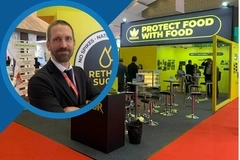
We're joined by Matthew Dillon, co-CEO of the Organic Trade Association.
Hi there.
Hey, you've been speaking about policy changes today.
Can you tell us a bit about what you've been speaking about?
Yeah, any time you have a change of administration, a new head of the USDA, a new Congress, there are bound to be shifts in policy priorities, and with those shifts in policy priorities on the ground impact for farmers and businesses.
And so today we've been discussing the Trump administration, the new Congress, the new USDA, and how their priorities differ from.
The Biden Vilsack priorities, and what the challenges are on the ground right now with farmers who are trying to implement conservation practices and need technical assistance who maybe have contracts already with the government that are not being met because of freezes and funding, it's a bit of a challenging time right now in how.
Fast and quick the policy shifts have occurred in this administration.
Brilliant.
And what would you say are the biggest changes that have occurred?
Yes, President Biden and Agricultural Secretary Tom Vilsack were very clear from the start that two of their top priorities were climate change and also trying to address some of the 150 years of racial inequity that has occurred at the US Department of Agriculture and so many of their grant programs, their technical assistance were.
Trying to integrate those two priorities even if it was about more traditional, conventional agriculture.
This administration is trying to decouple those policies from government funding as quickly as possible.
The grant freezes have in particular focused in on issues of race, gender, and orientation, as as climate, and that's making it very challenging for universities, public universities, nonprofits, and farmers who.
Developed programs and developed actions that were trying to meet the last administration's needs and priorities, and now they have a new administration that's saying no to those, but there's no real chance for at this point renegotiating contracts and agreements with the government.
And what do you think the biggest consequences will be for food industry businesses?
Yeah, the food industry has a lot of unknowns right now on top of like the, the shifts in policy priorities, President Trump's approach to tariffs, which have been suggested that they're more about bargaining and, and leverage now have come into full effect.
Today we, when, we for the first time today we have new tariffs on products from Mexico and Canada.
In the organic sector, 45% of our imports come from either Mexico or Canada.
A lot of fresh produce from Mexico, a lot of grains from Canada, but also US firms co-manufacture in Canada and then reimport back into the US.
Similarly, 75% of our exports go to Canada or Mexico in the US, 75%.
Organic exports go to Canada or Mexico, so big trading partners and organic and already organic brands are feeling the impact because Canadian retailers have started to drop the placement for US made products on their shelf, and that has an impact on your on your business and your margins so it's very uncertain times for.
Especially emerging brands in the consumer goods space that are dependent on cross-border trade with our two biggest trading partners, and what can the organics industry do to weather the storm at this point?
Yeah, I think it's, it's a mix between buckle up and hold on because we're not going to find solutions right off the bat, but we also have to work together.
There's a time for competition in business and there's a time for collaboration.
When it comes to telling our story to policymakers and to this new administration, we have to work together to Share the value of organic, what it does for rural communities, for farmers, for the next generation on this planet.
We have to tell that story across party lines, show the economic value we create in the marketplace.
We're a 70+ billion dollars dollar industry in the US alone, and, and help policymakers understand.
That we're a voluntary set of regulations as opposed to compulsory.
We're not forcing farmers to go organic.
We're creating opportunities for farmers who want to diversify and serve a consumer marketplace.
That story has to be told over and over.
Education is primary and we at the Organic Trade Association, that's what we do we bring together businesses of different types, different segments in the in the marketplace from fiber to produce to dairy to tell their stories and educate lawmakers on why organic has value for our rural communities and our economy overall.
And what would your message be to foreign governments in their response to the tariffs?
I think with foreign governments, I certainly understand why there is a retaliatory approach.
I guess I would say to all leaders, the US leaders as as foreign leaders, let's figure out a way to create a fair and equitable marketplace that is not about punishing with heavy sticks like tariffs because they're just too indiscriminate.
And create disruptions in a marketplace that's already always vulnerable.
Agricultural and food marketplaces and fiber are vulnerable to weather, to unpredictable disease epidemics.
There's so many variables and challenges that our farmers face.
Let's not let international trade be one more variable that our farmers need to worry about when they're just trying to hold on to their family farms and in the case of organics, certainly leave them better for the next generation.
And you've spoken a bit today about new opportunities which have arisen through onshoring and so on.
Could you tell me a bit about that?
Yeah, in the US we're still very dependent upon organic imports, some of which will remain dependent upon cacao, coffee, bananas.
We don't grow those all that in the US, in the, in the continental US, but we also are very dependent upon soybeans for animal feed, corn for feed, beef production.
And regardless of the administration at the Organic Trade Association, we've been trying to figure out how to onshore organic opportunities for domestic production in feedstuffs and in animal agriculture to capture that opportunity for our farmers, but not in a way that's against.
Imports of any type more in a way of like we want our farmers to have that opportunity and and our rural communities to thrive from the premium that organic can drive.
So if you have one message for the organic sector today, what is it?
I think for the organic sector globally we're working really together to try to create better trade relationships, harmonization between countries.
We have some challenges with renegotiation, renegotiating organic harmonization and equivalency agreements right now.
We have to keep working together and see ourselves as a singular sector that's trying to transform agriculture domestically.
You know, it and really even to our across the globe when it comes to organic things are going to be a little chaotic for a while and we just have to stay persistent in telling our value proposition to those with influence and believing that it will move through.
I think it will.
I think that we're we're we're in the earliest stages of administration that is very chaotic and eventually in the next few months we'll see some stabilization.
And hopefully some wins for organic as the year plays on.
Brilliant, thank you so much.
Yeah, thank you.