- Industry news
Industry news
- Category news
Category news
- Reports
- Key trends
- Multimedia
- Journal
- Events
- Suppliers
- Home
- Industry news
Industry news
- Category news
Category news
- Reports
- Key trends
- Multimedia
- Events
- Suppliers
The Future of Food Production 2025: Regulatory red tape threatens Europe’s competitive edge in biomanufacturing
05 Dec 2025 | Formo
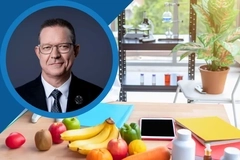
The EU’s system for approving novel foods ensures safety, but the process is slow, often taking over two years. Germany-based Formo, a seven-year-old precision fermentation company focused on dairy proteins, is ready but awaiting approval. Christian Poppe, senior director of global affairs and spokesperson for Food Fermentation Europe, advocates for smoother regulation to keep Europe competitive with other global powers.
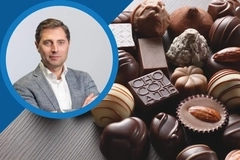
This is Missy Green with Food Ingredients first.
I'm here with Christian Popa, who is the senior director of global affairs at Formo.
Formo is a precision fermentation company.
Is that right?
Yes, ma'am.
OK, could you tell us a little bit firstly about Homo.
What do you produce with precision fermentation and where are you now in the In the process of that company, yeah, yeah, absolutely.
So formal, classic and very, very early move of precision fermentation company based out of Berlin and Frankfurt, we've been founded 7 years ago by Rafael Woolgenzinger, early vegan, became vegan at 16, and huge cheese lover, obviously, so his pain point was always that he wasn't able to find a cheese replacer that.
Did manage to cater to his cheese cravings, so I started 7 years ago and worked on a number of different milk proteins, essentially doubled down and are still working mainly on recumbentant cases.
So that's our core focus on a B2B level.
So we do develop and scale up bioidentical case proteins which is.
The most important and highest functional milk protein for cheese making.
So cheese making is the main application that we are looking at.
We're looking at also deploying our tech, the ingredients left and right in different application fields, but yeah, we're coming from the cheese making corner.
We want to enable large dairy corporates and cheese makers to make amazing animal-free cheeses that truly deliver on consumer.
Expectations on animal free cheeses unlock the flexitarian market.
We also want to partner and work with classic fermentation players that are eager and keen to work with our ingredients.
So at the end of the day it's case that is the silver bullet, and that's what we are excited about and what we are scaling up and industrializing at a fast pace.
Is that ingredient today on the market?
Not on the market yet, largely due to regulatory reasons.
So we are all about geographically diversifying when it comes to regulatory.
So in Europe, of course you have the infamous novel Food regulation that we are working on improving its implementation of the regulation itself is fit for purpose.
It ensures a high food safety standard, which is something we Committed to as formal and as an industry with our trade association Food Fermentation Europe.
However, there are actual problems and challenges which are relating to how fast is this implemented.
The process takes too long.
We're looking at 2+ years from submission to approval, so the timelines, especially for startups, are super challenging.
So we work with the European Commission with the European Parliament to speed up that process without altering the standards or altering the legislation itself, but part of our strategy is always to look at different geographies as.
So we are really, really keen to enter the US, grasp something that we are doing at the moment which will enable us to commercialize fast with partners in the US.
We also work with regulators across Asia.
To, yeah, market there, it's a, it's a space that is a growing market for dairy-free products, so yeah, always, always looking left and right.
The Emirates are also super, super interesting space.
So yeah, key to diversify.
So how are you in practice, helping to move along that regulation in the EU?
Yeah, it's a really good question.
So right now everything that is bio manufacturing and industrial biotechnologies is something that has been recognized by the European Commission and the member states of the EU as a strategically critical technology, much on the level like you would recognize quantum computing and AI as strategically critical when it comes to resilience and sovereignty of the continent of its member states.
Reducing the risks that we are seeing in terms of supply chain dependencies, import dependencies from certain food goods, and we are in active conversations with the relevant European Commission policymakers and look into clearly the shortcomings and the delays that we are seeing for high quality dossiers such as precision fermentation dossiers for.
Where actually the standards and the food safety requirements regarding documentation and data requirements are very clear and it could be very straightforward if there was an option to do what we call a pre-submission advice meeting that not only relates to formality conversations but also looks into the scientific and data part of the dossier.
So what we as companies benefit.
We have a regulator, a desk officer in the European Food and Safety Authority that can take the time, become sort of a caseworker for our specific dossier, gives us feedback as we work on the dossier, as we finalize it, as we do our scaling up runs and collect the data through doing our regulatory badges, just to ensure that we don't go on with the process or don't go on with scale up badges.
Using, for example, an asset that would be a potential issue in examining the food safety of an ingredient.
So that's something that we continuously with trade associations on a Brussels level are raising.
We have great champions across different units of the European Commission that are recognizing the need to become more competitive and also comparison to other geographical powers.
The US, China, and others that are moving much faster when it comes to bio manufacturing and building new value supply chains that promise and have high potential to reduce these dependencies.
So we are currently developing a framework within the context of what's called the EU Biotech Act, the EU Biotech Act 2, the EU Life Science strategy, and another file that is called the Omnibus for Food and Feed that is all about cutting red tape.
And regulation that slows down innovation across Europe.
We are making our voices heard.
We are submitting positions, recommendations, how smart policy, innovation enabling policy can look like.
And yeah, it's resonating super.
Biotech is being recognized as key for Europe's future, so we are really seeing lots of momentum, and I'm excited to continue working with these guys.
So is this the result of your work with Food Fermentation Europe?
100%.
So it's been an instrumental organization.
We founded it 3 years ago now.
It's based out of Brussels.
It has grown tremendously in terms of membership, and what's great about it is it's so united in terms of how we look at innovation, how we look at precision fermentation, but also.
Bios fermentation, so food fermentation Europe covers both of the fermentation pillars, biomass and precision fermentation, and we've been managing to onboard great companies like the Reva Group, also Dairy players, which is a super important signal to the policymakers that this is not something that just startups and innovators care about, but that There is a great recognition of major incumbent players that are betting on this technology as something that can unlock future momentum and future growth for European economies.
So yes, Food Fermentation Europe has been helping us build relationships with key stakeholders, influential policymakers.
It's been huge to win over champions, to win over.
As an actual partner, so it managed to open up an active communication channel with the.
They also invited us to Parma, where the headquarters is, to do an extensive workshop where we brainstormed on how can we improve the processes around the novel food regulation.
And what's unique in Europe is That European policymakers much prefer to talk with industry bodies rather than single individual companies, which is why we created this vehicle and some organization that can represent the entire industry.
So we also encouraging everyone who might watch this.
Who is passionate or wants to support or dip its toes or is already invested and has some skin in the fermentation game to reach out to Food Fermentation Europe and get involved.
Let's have a chat about how you can contribute, make your voice heard, and bring your expertise on the table to the table to improve.