
- Industry news
Industry news
- Category news
Category news
- Reports
- Key trends
- Multimedia
- Journal
- Events
- Suppliers
- Home
- Industry news
Industry news
- Category news
Category news
- Reports
- Key trends
- Multimedia
- Events
- Suppliers
In its latest “Renaissance of Cocoa” launch in Venice, Italy, Barry Callebaut showcased a new generation of redesigned chocolate that features 60-80% more cocoa and no masking agents. At the event, Bas Smit, global vice president of marketing, told FoodIngredientsFirst this reformulation fits into the synbiotic lifestyle choices consumers are making.
Good afternoon.
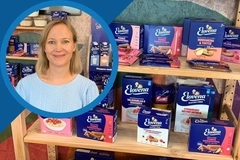
This is Indi Jung here in Venice for the Renaissance of cacao, hosted by Barry Callebaut.
I'm here with Bos Schmidt, the global vice president of marketing for Barry Callebaut.
Good afternoon, Mr.
Schmidt.
Could you define for us what the 2nd generation chocolate is?
Yes, very happy and proud to do so.
The 2nd generation chocolates is chocolate which is based upon a complete new design principle.
It puts cocoa first, sugar last, and it's made of just 2 or 3 ingredients, depending on whether it's a milk or a dark chocolate, all with the purpose to have the purity of cocoa flavors coming alive.
Could you tell us a bit more about these ingredients and how they come together?
Yes, I can.
So for dark chocolate, it's just made of cocoa and sugar.
And milk chocolate is just cocoa, milk and sugar, nothing more, nothing less.
No vanilla added, no lecithin added, no other ingredients added, which normally is the case if you think about the first generation dark and milk chocolates.
So were there any R&D challenges and how were these overcome?
There are a massive amount of R&D challenges.
It has been a journey for almost 2 decades.
The cocoa bean has a massive amount of fantastic flavors.
Compounds precursors, and we need to understand these first of all.
Are they presented in the bean?
So we had to develop new detection technologies.
The moment you know what the flavors are about, we had to adapt the fermentation.
The moment we had the fermented bean, we had to adapt the roasting.
So it's basically making sure that each of the critical steps in the making of chocolate were aligned and designed.
And therefore what we say is , the 2nd generation chocolate is only possible because of the redesign of the making of chocolate, based upon a different product design principle.
So tell us from which regions do you harvest your cacao, and are there adverse conditions that are affecting the harvests?
Tell us a bit more about that.
So what you've been tasting today, these are made from beans coming from Latin America, but the 2nd generation of chocolate in the future will be made from beans wherever we are sourcing them.
So how is your plant-based selection coming along, specifically the vegan chocolates, because we hear it's one of the fastest growing claims, especially among Gen Zers.
Yes, absolutely.
What we've spoken about today is about consumers who want to live a symbiotic life.
A symbiotic life is to be in harmony with yourself, with your mind and body, but it's with the world around you.
Completely right, Gen Z, but by the way, not only Gen Z, as , the parents, they appreciate products which satisfy this needs, and plant-based, like sugary juice, but plant-based is absolutely serving this needs.
We launched last year, as you know our next generation of plant-based chocolate made with different kinds of ingredients what used to be the The development of it, I think, is still in the early stages, in the early years.
Like with any product which is basically exploring new types of ingredients, you have to learn to get an optimal taste profile.
So we are absolutely happy with where we are at this stage.
Is this the final stage where we're in be in plant-based chocolate for sure not.
But what would you say are the most important aspects to consider with this innovation?
What, what would you like to share with the public?
The 2nd generation chocolate being full of flavor, simplest label ever, 2 or 3 ingredients in cocoa or first sugar last, leading to 50% less sugar than the most consumed chocolates in the world.
It doesn't exist until today.
So I have a bit of a controversial question.
Are there factors that are influencing the pricing of raw materials, and would you like to tell us a bit more about that?
There are always factors influencing the pricing of raw materials, like we live in a dynamic market.
If you ask about is this chocolate a more expensive chocolate than the first generation, then to make this chocolate, yes, absolutely it is, because there is more cocoa in it, 60 to 80% more cocoa versus the most consumed darker milk.
Cocoa is more expensive than sugar.
However, since it's a flavor proposition.
Instead of a more sweety proposition, consumers don't want to consume as much of it.
It's not because they like it, because it's about the flavor, and you know, if it's about flavor, about quality, it's less about quantity.
So flavor propositions, it's about the experience and the intensity of the experiences and the roundness of the experience versus you want to have a lot of it like chips full of salt.
You want to have a lot of chips, chips, candies full of sugar is a seductive ingredient, makes you consume more.
In the case of quality like we now already see with quality chocolate bars in the supermarkets, these bars are not 100 g, they have 70 80 g.
So the consumers know that if I am in a quality experience, it doesn't mean that my out of pocket money is bigger.
Because the amount of chocolate I consume at the end of the day doesn't necessarily be that much as I used to do if it was more of that sugary flavor I got.
Excellent.
Thank you so much for your time.
Thank you as.