



How sugar reduction and fortification put natural colors to the test
GNT, Oterra, and ADM experts explain how acidity, ingredient interactions, and processing shape natural color stability

Key takeaways
- Cutting sugar or adding protein and fiber can change how natural colors look and hold up over shelf life.
- ADM, Oterra, and GNT show how adjusting acidity, changing the point of addition, and stabilizing pigments can preserve color.
- Shade, label requirements, shelf life, and cost per serving determine whether a natural color works at commercial scale.
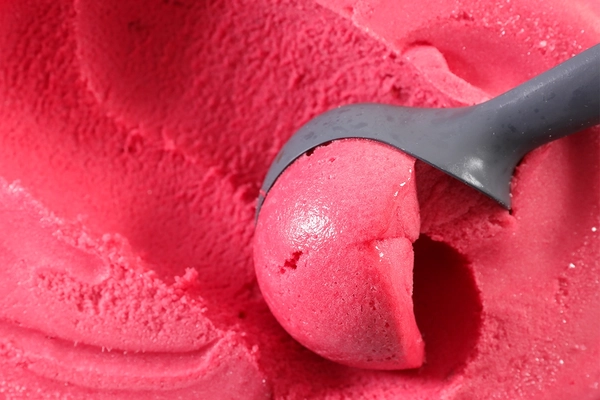
A strawberry ice cream can lose some of its red color during pasteurization. A reduced-sugar drink can change shade if a formulator adjusts its acidity to rebalance the taste. And adding fiber can make a beverage look duller even when its pigment remains intact. Each problem calls for a different fix.
As food and beverage manufacturers cut sugar and add protein or fiber, they are changing the conditions natural colors have to withstand. Suppliers speaking to Food Ingredients First say choices about acidity, ingredients, and processing can determine whether a shade holds up in the finished product.
Kyle Shadix, head of application for EMEA at Oterra, makes the case for involving color specialists early.
“The main point is that natural color needs to be considered from the beginning of reformulation. Reducing sugar or adding protein and fiber changes the environment the color has to perform in, so it’s rarely just a matter of replacing one color with another,” he says.
How reformulation changes the shade
Sugar reduction can affect color indirectly. Sonja Scheffler, head of global product management at GNT Group, points to beverages where manufacturers cut sugar without using a high-intensity sweetener. They may also reduce acidity to keep the flavor balanced, raising the pH and potentially reducing the stability of some plant-based colors.
Jessica Kidwell, vice president of creation, design, and development, Global Colors at ADM, says some colors derived from fruits and vegetables contain sugars. Using a more concentrated color can limit how much sugar it adds while delivering the desired intensity. She also flags that reducing sugar in the recipe can affect the performance of some beta-carotene dispersions.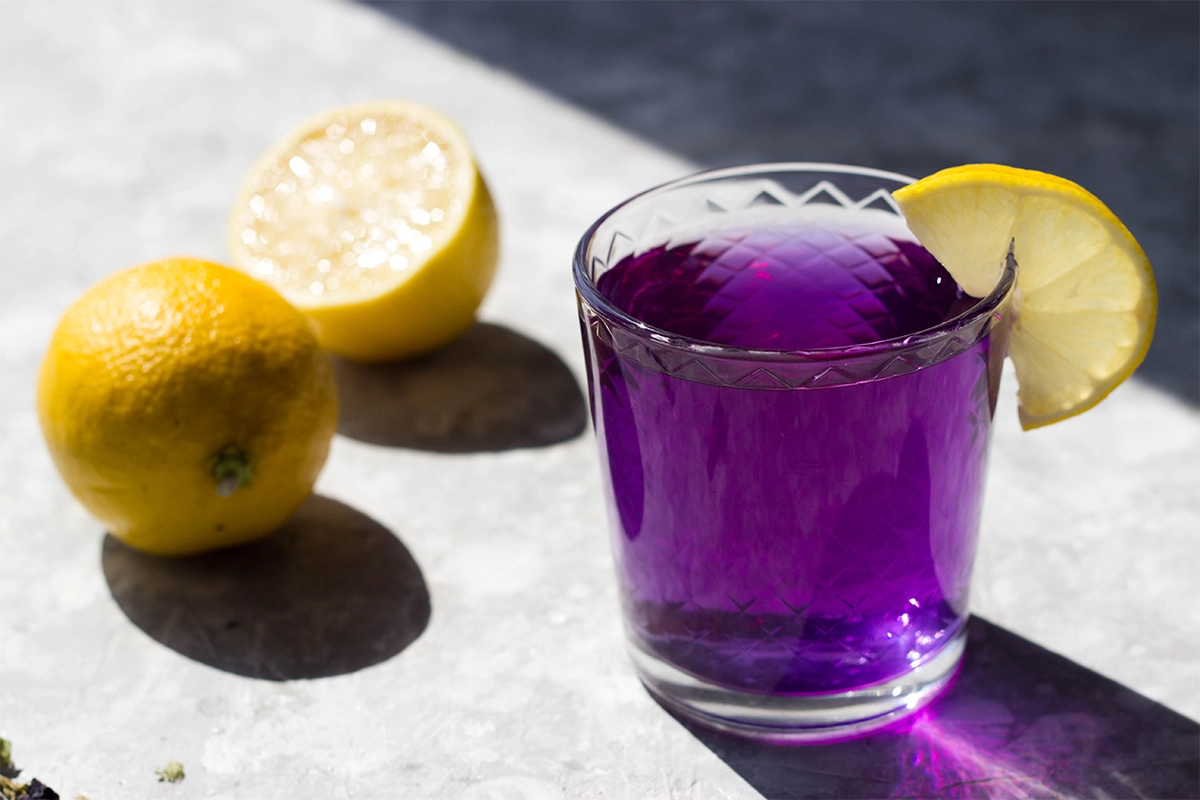 Combining ADM’s huito-derived blue with anthocyanins can create vivid purples.
Shadix points to another variable when manufacturers use a high-intensity sweetener. It can restore sweetness, while sugar’s contribution to bulk also changes. Depending on the pigment and the recipe, reducing sugar can make the color less stable.
The interactions multiply as manufacturers fortify products. Kidwell points to anthocyanin reds, which work best in acidic conditions and can shift shade in some higher-pH dairy or protein formulations. She says even vitamin C can affect pigments in different ways.
“Ascorbic acid, for instance, may accelerate the degradation of anthocyanin-based reds and purples over time, even though it can help stabilize carotenoids-based color emulsions against light exposure.”
Shadix says proteins can protect a pigment in some formulations and change its shade or physical stability in others.
Fibers can change viscosity, opacity, or dispersion, and some bring a beige or brown tint of their own. Identifying whether the pigment has degraded, dispersed unevenly, or simply looks different against the new base helps determine whether to change the color or adjust the recipe.
Finding the right point of addition
Even when a pigment suits the finished formulation, the production process can expose it to conditions it cannot tolerate. Shadix at Oterra recalls a strawberry ice cream project in which Oterra added beetroot red after pasteurization of the mix to limit heat exposure.
“Sometimes, changing when and how the color enters the process is more effective than increasing the dose. Any post-pasteurization addition must also fit the manufacturer’s validated food safety procedures.”
ADM’s Kidwell describes a similar approach in confectionery. Where spirulina supplies the color, adding acids separately and incorporating the pigment as late as possible can reduce degradation. In beverages, the company has worked with manufacturers to make small changes to acid levels, moving the pH into a range that brings out the shade and improves stability while preserving the intended taste.
Some applications call for a pigment suited to the existing process. Oterra recently launched ColorFruit Red Radish Powder as a Red Dye 40 alternative for US cereals, snacks, and baked goods. The supplier says the powder maintains a bright red at neutral pH and can withstand baking and extrusion.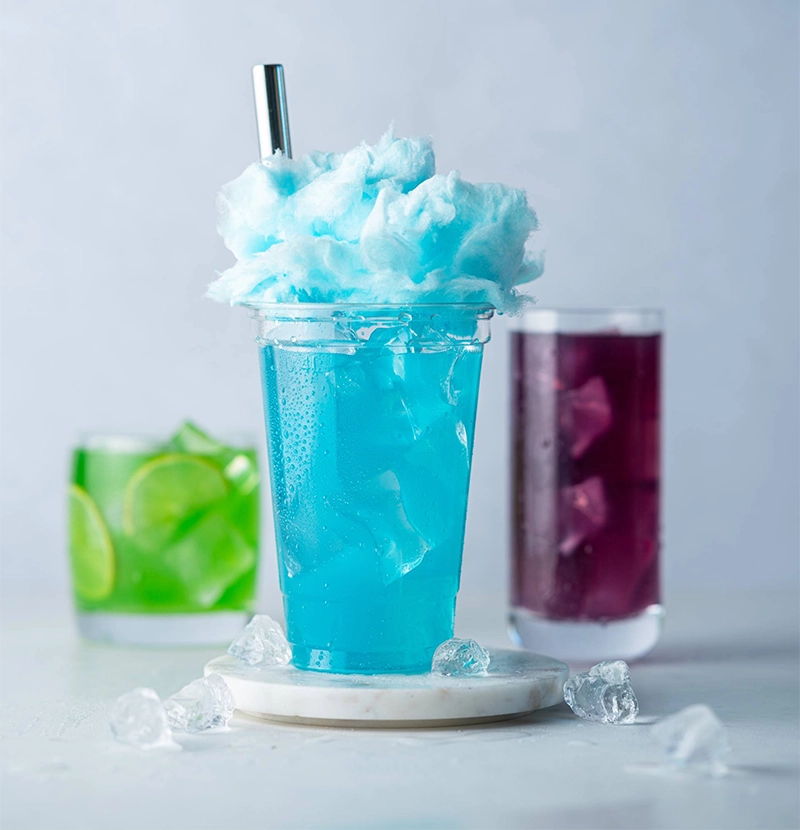 GNT uses hydrocolloids to stabilize spirulina blue in acidic, shelf-stable drinks (Image credit: GNT Group).
Stabilizing blue in acidic drinks
Acidity, heat, light, and salts can affect the structure of phycocyanin, the protein that gives spirulina its blue color. This can cause the color to fade or the pigment to clump. Scheffler says GNT’s Exberry Blue for Beverages technology stabilizes the pigment for use in acidic, shelf-stable drinks, such as carbonated soft drinks, energy drinks, and enhanced waters.
“Our patented technology uses hydrocolloids to stabilize the pigment through complexation. This was a complex task, because the pH level, ratio of hydrocolloids to phycocyanin, hydration conditions, and order of addition all play important roles.”
Scheffler says the system can get close to Brilliant Blue FCF (known in the US as Blue 1) and extend the palette to greens and violets.
ADM has taken a different route with a blue derived from Amazonian huito fruit. Kidwell says combining it with anthocyanin pigments can produce vivid purples. The huito-derived color is commercially available in North America, and parts of the Middle East and Eurasia.
Balancing shade, shelf life and cost
A familiar shade can be part of what consumers expect from an established product. In ADM’s 2025 global lifestyle survey, 63% of consumers said the color of food and beverages affects their perception of taste and quality. The closer a brand needs to stay to its original shade, the more important it becomes to define how much that shade can vary through shelf life.
Label requirements can narrow the options. Kidwell says insect-derived carmine can provide a stable red under demanding processing conditions, while vegetable-derived options may need higher doses or recipe adjustments. Adapting a water-soluble pigment to a fat-based application can also add cost. These decisions are among the cost and performance trade-offs facing US brands in the shift from FD&C dyes.
Scheffler says GNT starts by asking which requirements the manufacturer needs to prioritize, from an exact shade or specified shelf life to a particular ingredient declaration or cost target. GNT then tests the chosen solution in the actual application.
“For instance, a very vibrant shade may require a higher dosage or a different color system; the cleanest label option may require changes to the formulation or process; and the most technically robust solution is not automatically the most cost-efficient one.”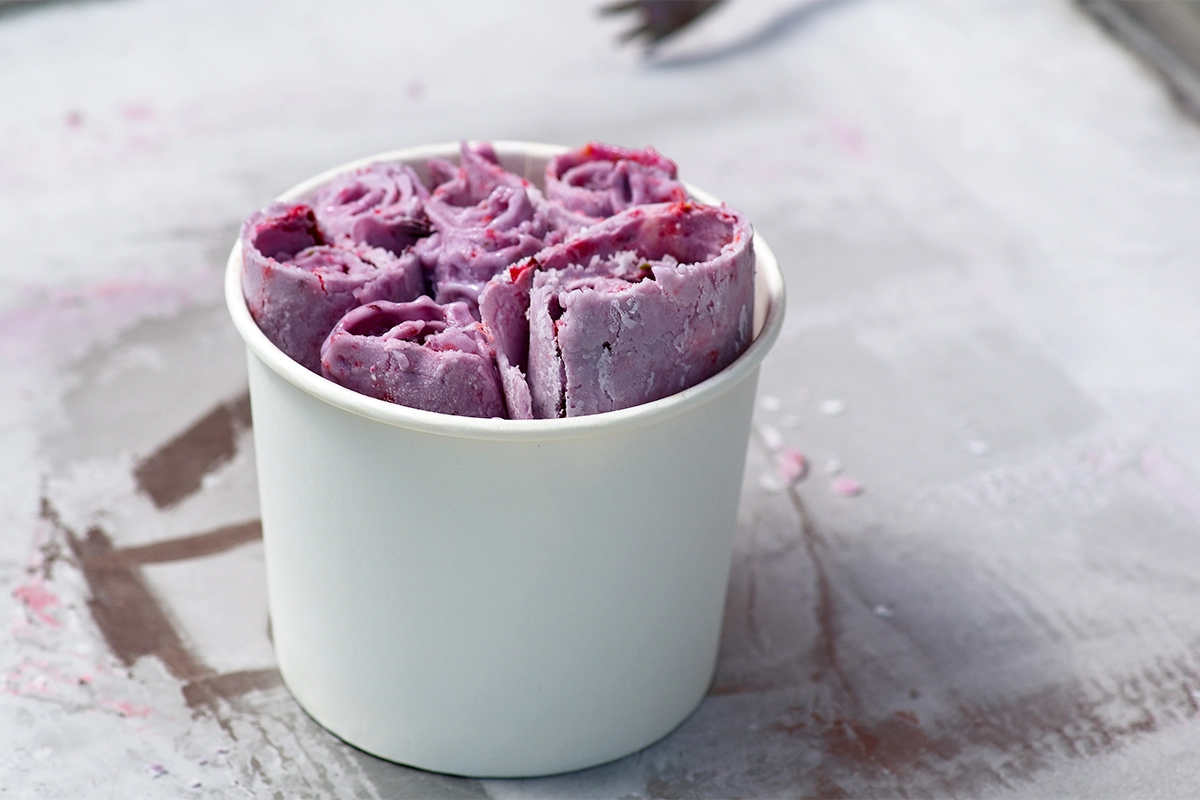 Oterra added beetroot red after pasteurization to limit heat exposure in strawberry ice cream.
Oterra’s Shadix also recommends testing color in the intended packaging against an agreed shade range and tracking how it changes over time. If the brand has room to move within that range, a small adjustment to the target shade may yield a more stable product. Where the shade is fixed, a different pigment system or packaging choice may justify the extra cost.
“I’d also encourage manufacturers to compare cost per finished serving rather than price per kilogram of color. Dose and performance determine the real economics.”
Where natural colors still need to improve
Even with advances in pigment sourcing and stabilization, some combinations of shade, processing, and storage remain difficult. Oterra sees an opportunity for vivid blues and greens that tolerate acidity, heat, and extended ambient storage in the same product. Shadix says protein enrichment can make that combination harder to achieve, particularly in functional drinks.
GNT is exploring formulation approaches, fermentation, and new processing technologies to make intense blues, greens, and purples more reliable under demanding processing and shelf life conditions.
ADM is also working on more cost-effective whitening and opacity systems for products, such as gummies, coatings, and functional beverages.
For ADM, another priority is heat-stable red at neutral pH. Kidwell points to yogurt, frozen desserts, confectionery, and bakery as categories where progress could give formulators more options.
“One key area of focus for ADM’s R&D teams is continuing the development of highly stable red pigments that maintain their vibrancy under neutral-pH and high-temperature conditions while supporting vegan and allergen-related formulation requirements.”
For formulators, the test is whether the shade still looks right in the finished product at the end of its shelf life, with the label and cost the brand can take to market.