

Tackling food waste: Ingredient innovators unlock business opportunities through upcycling and AI


Key takeaways
- F&B companies are turning food waste reduction into a business opportunity through preservation, upcycling, and smarter formulation strategies.
- Shelf life extension technologies, including fermentation and predictive tools, help manufacturers reduce losses and improve product performance.
- Upcycled ingredients and AI-driven solutions are creating new value streams from underused resources.
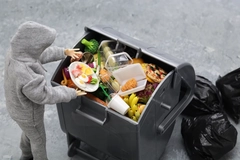
Food waste presents complex challenges for F&B manufacturers, driven by factors spanning raw material utilization, product stability, and consumer acceptance. Industry experts point to a shift from waste management to prevention as ingredient innovation becomes a key focus area.
Shelf life extension, preservation technologies, upcycled ingredients, and smarter product development strategies are helping manufacturers reduce losses while maximizing the value of resources already invested in production.
United Nations Environment Programme (UNEP) figures estimate that food loss and waste cost the global economy approximately US$1 trillion annually. By 2030, the organization’s Food Waste Breakthrough initiative aims to halve food waste and cut up to 7% from methane emissions linked to food systems.
For ingredient suppliers, formulation innovation is increasingly becoming linked to tackling food waste. Methods such as fermentation-derived preservation, functional ingredients, and predictive technologies are helping manufacturers reduce spoilage and food wastage.
Food Ingredients First speaks with experts at Kerry, Tate & Lyle, Corbion, IFF, and Upcycled Foods, to understand how ingredient companies are tackling the food waste problem — viewing it as both a sustainability and commercial opportunity.
Food waste reduction as a business opportunity
Environmental responsibility and business growth are “increasingly inseparable,” says Sibeal Bird, sustainability director at Kerry. Bird at Kerry notes that food waste reduction is a profound opportunity to create long-term value for manufacturers.
“Across the food industry, we see that decisions delivering positive environmental outcomes, like reducing food waste, also strengthen long-term business performance for food manufacturers and producers.”
Rather than viewing waste reduction as a constraint, Kerry approaches it as a way to create value by helping manufacturers build “greater resource efficiency and more resilient supply chains.”
IFF similarly views waste reduction as both a sustainability responsibility and a driver of innovation.
“For manufacturers, reducing waste can improve resource efficiency, lower write-offs and returns, and increase distribution flexibility through extended shelf life,” says Ksenija Uroic, global product marketing manager, Food Protection, Food Ingredients at the company.
“At the same time, the need to keep products fresh, safe and appealing for longer continues to drive innovation across ingredient technologies, including cultures, fermentation, preservation, hydrocolloids and emulsifiers.”
Tate & Lyle approaches food waste reduction by looking upstream, transforming underused resources into functional ingredients.
“Raw material availability is also critical. For example, we produce Genu Pectin and Nutrava Citrus Fiber using citrus peels, an abundant by-product of the juice industry,” says Anna Pierce, director of Sustainability at the company.
However, she stresses that ingredient innovation must also meet commercial realities. Manufacturers need ingredients that are “available at scale, offer a reliable supply, and consistently deliver the quality and functionality” required in finished products. Pierce from Tate & Lyle states that food waste reduction is broader than upcycling alone, helping products maintain quality for longer.
Food waste remains an industry challenge
Consumer interest in preventing surplus food waste is growing alongside industry efforts to reduce losses. Innova Market Insights research suggests that two in three consumers are prepared to pay more for products designed to tackle food waste. In the past year, many consumers have reported taking actions such as reducing waste (46%) or recycling/upcycling items (39%).
However, demand alone is not enough to scale solutions.
Daniel Kurzrock, co-founder and CEO of Upcycled Foods, points to untapped opportunities in upcycling, as many surplus food streams with nutritional or functional value remain undervalued by conventional markets.
“Instead of finding their highest-value use, they tend to follow the path of least resistance toward lower value uses or disposal.”
For Kerry, the biggest challenge is a lack of a “systems-based approach,” Bird tells us.
“Food waste touches on climate, nature, water, and livelihoods, which are deeply intertwined. Meaningful progress cannot be delivered by one team or sector alone — it requires holistic solutions.”
“Kerry believes we need a much closer partnership between ingredient suppliers, manufacturers, producers, and retailers to align targets and share data openly.”
Shelf life extension and preservation technologies
Companies are addressing food waste from different points across the value chain. While Corbion and IFF focus on preserving finished product quality and extending shelf life, Kerry emphasizes collaboration and data-driven approaches.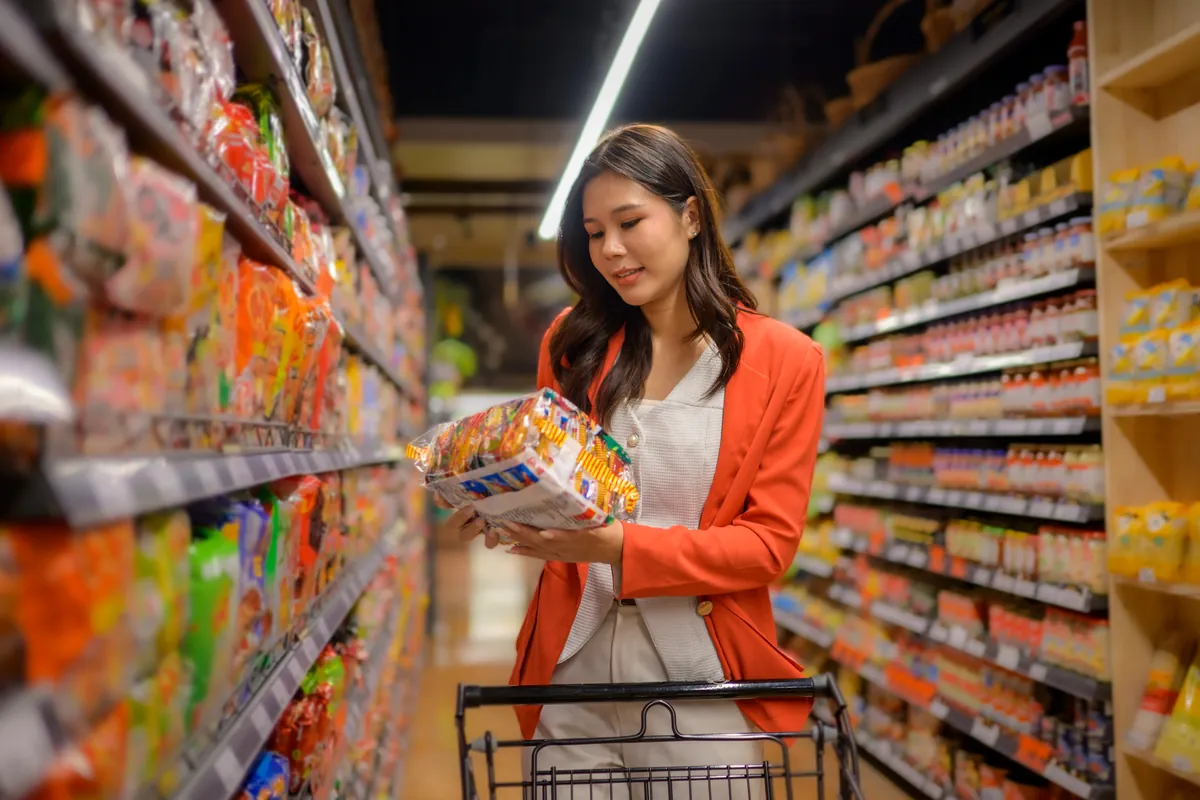
Shelf life extension goes beyond time — it is about protecting taste, texture, and freshness.
Corbion combines fermentation-based ingredient technologies with microbiological expertise, formulation capabilities, predictive modeling, and application support, Saffiera Karleen, business development manager at Corbion, tells us.
“Modern fermentation-based preservation systems can support microbial control through mechanisms including pH management and the inhibition of spoilage organisms and pathogens. Complementary technologies such as antioxidants can help protect flavor, color, and texture throughout shelf life.”
IFF’s waste reduction solutions include multifunctional fermentates, antimicrobials, hydrocolloids, emulsifiers, and stabilizers.
“Natamax, our naturally occurring antifungal, has demonstrated shelf life benefits in selected dairy applications and under specific test conditions in dairy dips, helping control spoilage yeasts and molds while maintaining quality,” Uroic tells us.
Meanwhile, Kerry applies its technological capabilities and data in collaboration with manufacturers to improve resource efficiency and reduce food loss.
Bird says that “the pace of this innovation” is creating new opportunities to address food waste, with challenges around product longevity that “once seemed difficult to solve” now being approached through collaboration, new perspectives, and capabilities.
These advances can help deliver “interconnected value” for producers and the wider sustainable food system, she emphasizes.
Upcycling ingredients into new value streams
Tate & Lyle and Upcycled Foods focus on extracting more value from underused raw materials and processing streams.
“We have developed a patented citrus fiber process designed around circularity. It produces Nutrava Citrus Fiber, a minimally processed, recognizable food ingredient that can be used across a wide range of F&B applications,” Chloé des Courtis, Global Hydrocolloids marketing director at Tate & Lyle shares.
“We transform citrus peels, a by-product of the juice industry, into a multifunctional ingredient that provides water binding, texturizing, and emulsification in a single, nature-based solution.”
Uroic at iff says reducing food waste can improve resource efficiency and lower product returns.
Kurzrock highlights Upcycled Foods’ “whole-crop model,” which identifies nutritional and functional value in underused parts of crops and processing streams.
However, these materials often require additional processing.
“They may be wet, unstable, variable, mixed with other materials, or prohibitively expensive to transport. Drying, milling, separation, fermentation, enzymes, extraction, and other preservation and conversion technologies can stabilize these materials or separate them into more useful components.”
Slashing food waste through smarter formulation
Reducing food waste also requires manufacturers to consider cost, efficiency, and product performance.
Des Courtis highlights that manufacturers need to get more value from the ingredients, energy, and processing time already invested.
“Improving yield, reducing rework, and protecting product quality can all contribute to affordability without simply cutting formulation costs.”
“Our starches, for example, can help maximize saleable output by improving yield, stabilizing viscosity, and protecting texture during processing.”
However, Des Courtis warns that cheaper formulations can become a “false economy” if they create more waste, reduce consistency, or compromise consumer expectations.
“Smarter formulation looks across the whole product and production process, identifying where value can be created through higher yields, more efficient manufacturing, reduced waste, and stronger product performance.”
The CEO and co-founder of Upcycled Foods says an upcycled ingredient still has to deliver on functionality, quality, and economics.
Turning waste solutions into opportunities
Corbion similarly highlights that manufacturers are increasingly looking beyond ingredient price toward total cost-in-use.
“A well-designed preservation strategy can reduce waste, improve production consistency, increase distribution flexibility, and lower the risk of recalls, creating value that extends beyond formulation costs alone,” says Karleen.
Kurzrock points to the industry’s growing toolbox of ingredient technologies, which he says is creating new opportunities to improve resource efficiency and reduce food loss.
However, scaling these solutions will depend not only on what can be produced, but on whether they solve a market need, he argues.
“Sometimes the most important innovation is not a new machine. It is a business model that aligns the material owner, technology provider, ingredient supplier, and end customer before significant capital is committed.”
AI and data drive food waste prevention
Looking ahead, Karleen at Corbion sees the next food waste reduction advancements coming from predictive technologies, AI, and advanced microbiological modeling.
“For decades, manufacturers have often relied on conservative shelf-life assumptions designed around worst-case scenarios,” she says. Karleen at iff says future food waste reduction will rely on smarter preservation powered by AI and predictive tools.
“Increasingly, predictive tools will allow the industry to move toward more precise, risk-based decision-making, helping reduce unnecessary over-formulation, avoid failed development trials, and improve overall resource efficiency.”
IFF’s Uroic points to advanced microbiology, predictive modeling, and data-driven product development as key future technologies for reducing food waste. These technologies help “shorten the time from identifying a consumer’s need to launch a commercial solution,” she adds.
For Kerry, transparency and data are critical.
“Ultimately, while data and frameworks are essential for measuring progress, it is the people empowered by this data who drive change.”