



UK deforestation rules raise traceability stakes for food ingredient suppliers


Key takeaways
- The UK is preparing mandatory due diligence rules to stop forest-risk commodities linked to illegal deforestation from entering the UK’s food and consumer goods supply chains.
- Ingredient suppliers handling cocoa, coffee, soy, palm oil, and related inputs will face growing pressure to provide farm-level traceability, legality checks, and audit-ready documentation.
- The move comes alongside EUDR implementation, making deforestation compliance a market access issue for food businesses operating across the UK, Northern Ireland, and the EU.

The UK government is preparing mandatory due diligence rules to prevent food and consumer goods sold in the UK from being linked to illegal deforestation. The move could reshape sourcing expectations for ingredient suppliers handling cocoa, coffee, soy, palm oil, and rubber-derived inputs.
Announced during London Climate Action Week, the proposals will use powers in the Environment Act alongside reforms to the UK Timber Regulation. Defra (Department for Environment, Food and Rural Affairs) says the policy will require businesses trading in commodities sourced from rainforest regions to check that supply chains are not contributing to illegal forest clearance.
Ingredient supply chains in focus
For F&B manufacturers, the implications are likely to extend well beyond finished supermarket products. The commodities named by the UK government sit deep inside ingredient systems: cocoa powders, butters, and liquors used in confectionery and bakery; coffee extracts and concentrates for beverages and flavorings; soy protein, lecithin, and oils; palm fractions, emulsifiers, and texturants; and rubber-linked packaging or processing materials.
The announcement comes as Europe’s deforestation compliance landscape enters another year of adjustment. Under the EU Deforestation Regulation (EUDR), large and medium operators must comply from December 30, 2026, while most micro and small operators follow on June 30, 2027.
The EUDR applies to cattle, cocoa, coffee, palm oil, rubber, soy, wood, and certain derived products, requiring operators and traders to prove products are deforestation-free, legal under the laws of the country of production, and covered by due diligence documentation.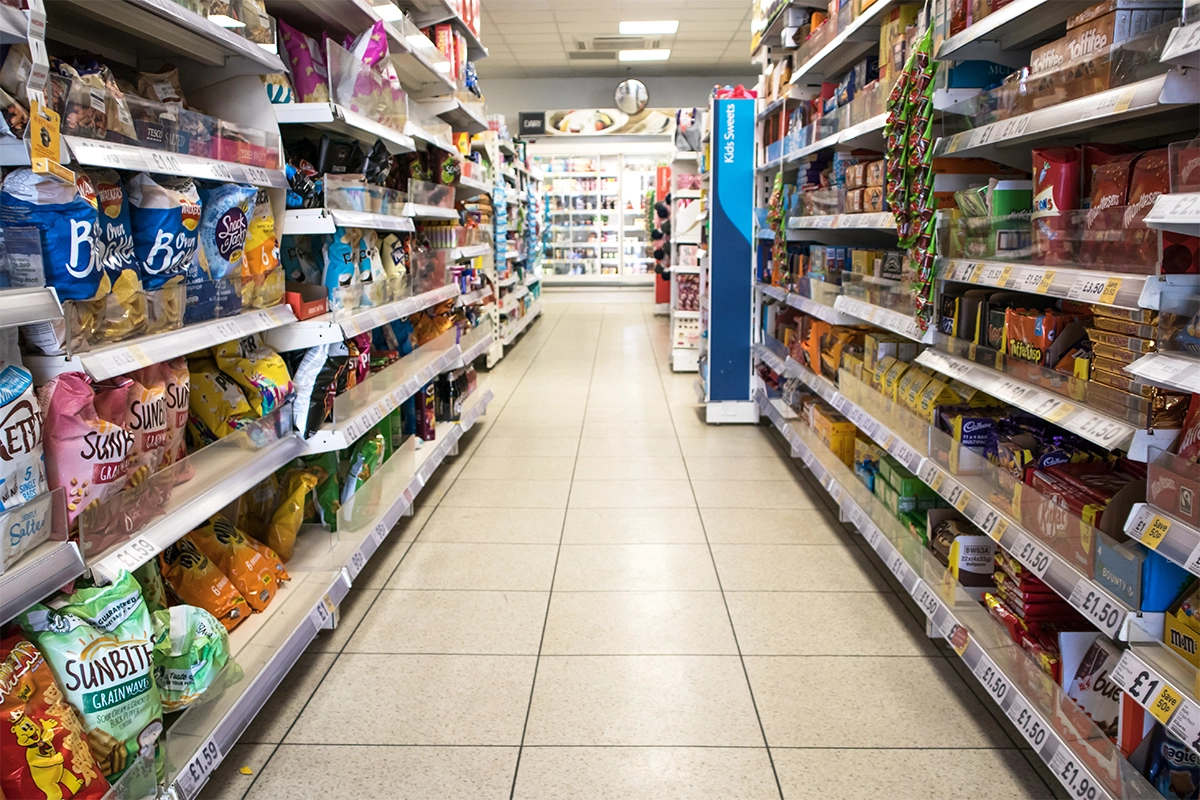 UK food and ingredient suppliers face rising pressure to verify that cocoa, coffee, soy, and palm oil supply chains are not linked to illegal deforestation.
Alignment with EUDR
Northern Ireland will follow EUDR rules in phases from December 30, 2026, under arrangements preserving its access to both the UK internal market and the EU single market.
The UK government says its upcoming consultation for Great Britain will propose covering the same core commodities and underlying information requirements as the Northern Ireland regime, a step intended to reduce administrative duplication and support businesses exporting to the EU.
That alignment will be closely watched by food ingredients companies operating across Great Britain, Northern Ireland, and the EU. While the UK proposal is framed around illegal deforestation, and the EUDR uses a broader “deforestation-free” standard, Defra says its longer-term ambition is to transition toward a deforestation-free standard. This suggests suppliers may need to build systems that can satisfy both legality checks and plot-level deforestation risk assessments.
Traceability pressure mounts
The pressure point for the sector is traceability. Ingredient supply chains often involve aggregation at cooperative, mill, refinery, trader, and processor level before materials reach formulators. This can obscure farm-level origin, especially for bulk commodities, such as cocoa, palm oil, and soy.
EUDR preparations have already pushed many buyers to request geolocation data, supplier declarations, segregation controls, and evidence that risk mitigation has taken place before goods are placed on the market.
For UK food manufacturers, the new proposal could turn those requests from customer-led expectations into a domestic compliance requirement. Ingredient houses may be asked to provide more granular origin data, audit trails, and documentary evidence to support customers’ due diligence files.
Suppliers that cannot verify provenance may face tougher commercial questions, even before the UK rules are finalized.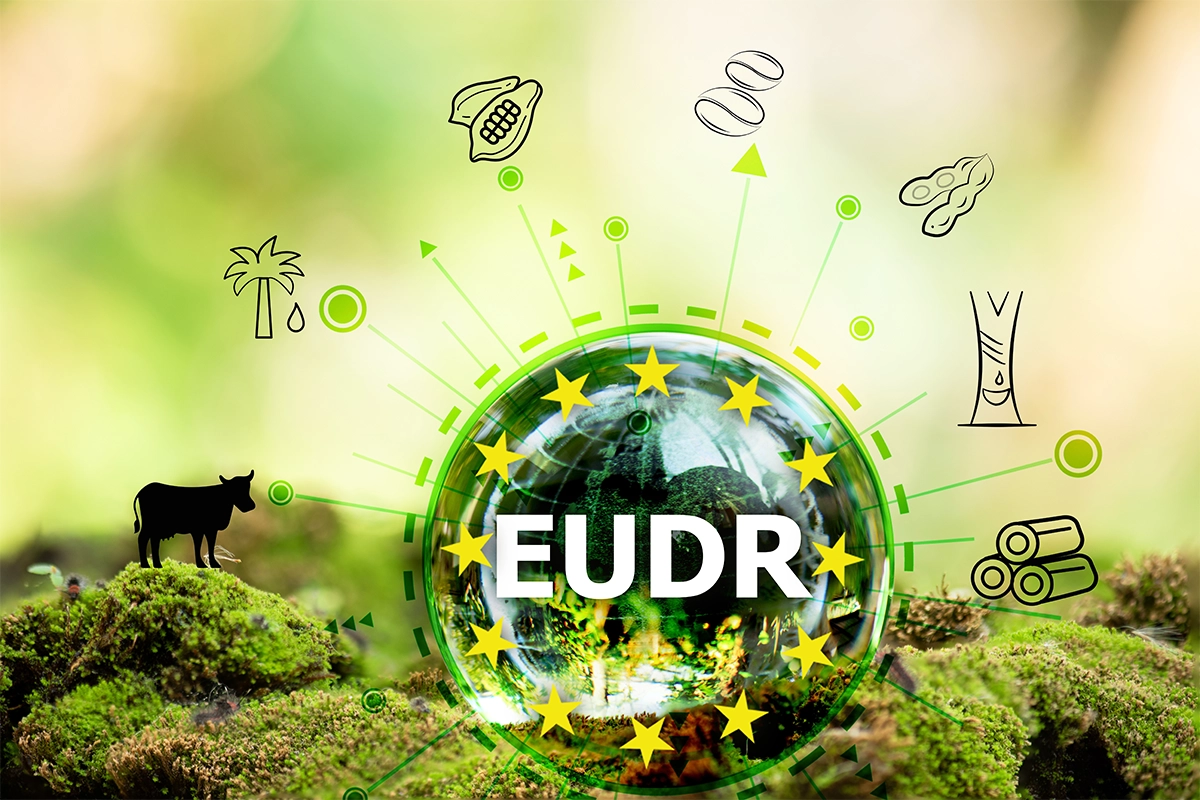 As EUDR deadlines approach, traceability is shifting from a sustainability claim to a market access requirement for forest-risk ingredients.
Retailers and NGOs respond
The British Retail Consortium welcomed the announcement, saying retailers have long called for UK deforestation regulation to support forest conservation and alignment with the EU, where possible. However, the group also called for pragmatic enforcement because EUDR obligations will begin applying in Northern Ireland at the end of 2026.
WWF said the move should reduce the risk that shoppers in the UK continue to drive rainforest destruction through everyday purchases, while noting the strategic importance of forests for food and climate stability.
Defra estimates that UK consumption of forest-risk commodities in 2023 was associated with approximately 29,000 hectares of deforestation worldwide and 9.4 million tons of related carbon emissions. It also notes that around 90% of global deforestation is driven by agricultural expansion, much of it linked to internationally traded commodities.
Compliance becomes commercial priority
The business case for readiness is therefore increasingly practical rather than purely reputational. Global food companies have already invested heavily in no-deforestation commitments, satellite monitoring, farmer mapping, and supplier engagement.
Smaller ingredient companies now face the challenge of integrating comparable controls without adding disproportionate cost or excluding smallholder suppliers that lack digital infrastructure.
For buyers, the near-term priorities will be supplier mapping, gap assessments against EUDR data fields, contract updates, record retention systems, and escalation routes for high-risk origins. For suppliers, the commercial opportunity lies in providing verified, regulation-ready ingredients that reduce customers’ compliance burden.
The UK government will consult businesses, civil society, and international partners later this year on the details of the GB deforestation policy. Until those details are published, food ingredient companies are likely to treat EUDR readiness as the benchmark.