
Tetra Pak positions equipment upgrades as faster route to dairy decarbonization

Key takeaways
- Tetra Pak says dairy producers can cut emissions by 40–49% by upgrading existing processing lines, while also reducing water use and product losses.
- The independently reviewed study frames retrofits as a scalable, near-term decarbonization pathway.
- The approach targets incremental upgrades, such as heat pumps, filtration, and process integration, allowing producers to improve sustainability using technologies on the market.
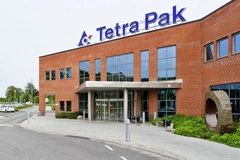 (All image credits: Tetra Pak).
Tetra Pak analysis has revealed that dairy producers can achieve significant decarbonization and efficiency gains by using its equipment, and without necessarily requiring a full-line overhaul. Modernizing existing dairy processing equipment can reduce GHG emissions by 40–49%, depending on the type of line, according to the new study.
The Dairy Processing Impact Assessment, independently reviewed by the Carbon Trust, uses a methodology aligned with leading international avoided emissions frameworks and quantifies the gains available from upgrading existing liquid dairy processing lines. The study compares 2019 best-practice lines with potential emissions savings based on a modeled global roll-out of upgraded lines in 2025.

The study shows that modernizing existing equipment delivers substantial efficiency gains, with average reductions of 47% in GHGs, 45% in water use, and 57% in product losses. Tetra Pak says that if these modernizations were implemented across global dairy production, they could lead to global carbon savings of up to 12.7 MtCO₂e (equivalent to taking three million cars off the road).
Implementing water saving and recovery solutions, such as advanced filtration and “cleaning in place” systems, could reduce water use in dairy production lines by up to 455 million m³ a year globally.
Rodrigo Godoi, VP for processing portfolio management at Tetra Pak, says: “For many dairy producers, improving efficiency while managing costs is a daily challenge. Our study shows that practical improvements to existing lines can reduce energy, water, and product loss, helping customers strengthen performance and lower total cost of ownership without major disruption.”
“And with supportive policy frameworks and access to targeted financial incentives, these improvements can be scaled even further, helping producers overcome upfront investment barriers and accelerating progress across the dairy sector.”
Business case for more sustainable dairy
The promise of avoiding full capex-heavy plant overhauls, while still delivering meaningful decarbonization, aligns with current industry pressures: tight margins, aging infrastructure, and rising ESG scrutiny.
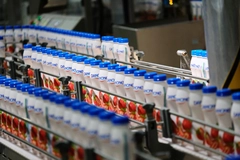
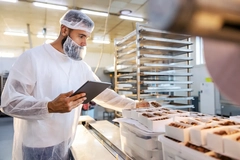
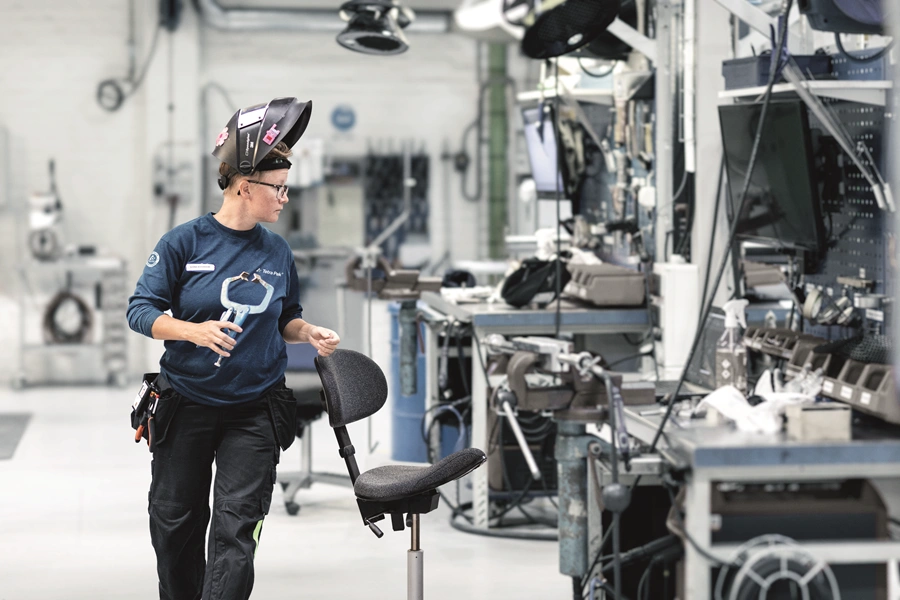 Upgrading existing dairy processing lines can significantly cut emissions, water use, and waste without full plant overhauls.The global dairy sector plays a critical role in global food systems through the food and beverages it provides and the livelihoods it supports worldwide. At the same time, it is a significant user of water and energy and was responsible for 2.7% of GHGs in 2023.
Tetra Pak sees this context as a significant business opportunity. By optimizing existing processing lines with solutions available on the market, producers can enhance efficiency, reduce costs, and strengthen environmental performance without waiting for new technologies or undertaking full line replacements.
“Our food systems offer significant decarbonization opportunities,” says Veronika Thieme, associate director for Europe at the Carbon Trust. “Assessing avoided emissions is a powerful way to understand the carbon savings these solutions can deliver. By quantifying the avoided emissions from new solutions that can help the agricultural industry cut emissions, we create the evidence base needed to scale them.”
Dairy ingredient suppliers are deploying new technologies to meet converging consumer demands, from stabilization systems that alter the mouthfeel of high-protein formulations to postbiotics engineered to survive pasteurization. However, environmental sustainability remains a priority for consumers globally.
Food Ingredients First recently interviewed Dr. Monika Zurek, leader of the Food System Transformation Group at the University of Oxford, UK, about the urgent transformations needed for sustainable global food systems.



Upcoming webinars

2027 Food Safety Risks for Quality & Compliance Leaders
FoodChain ID

Formulating for function: Developing benefit-led beverages with natural colours, botanicals, and flavours
Givaudan Sense Colour
Let's reveal the grain potential: Innovate
Meurens Natural