

Less salt, same saltiness: Inside Landa Labs’ novel approach to sodium reduction

Key takeaways
- Landa Labs reduces sodium by reshaping salt into ultra-thin flakes that dissolve faster, delivering the same saltiness with less sodium.
- Its LOT technology improves “salt efficiency” by ensuring more of the salt is actually tasted, enabling significant reduction while maintaining flavor.
- The solution targets dry applications like snacks and is scaling commercially as a cost-effective alternative to traditional sodium reduction methods.
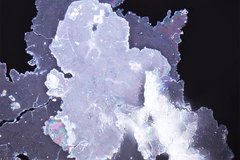
As pressure grows to cut sodium without compromising taste or label simplicity, Landa Labs takes a different approach by redesigning salt’s physical structure rather than replacing it. Its LOT technology transforms sodium chloride into ultra-soluble flakes that dissolve faster and deliver the same salty taste with less sodium — without additives or formulation complexity.
Consumer and regulatory demand for salt reduction is increasing, with the World Health Organization linking excessive sodium intake to high blood pressure and cardiovascular diseases. However, typical salt substitutes like potassium chloride, as well as flavor enhancers and masking technologies, can bring their own challenges, including higher costs and label complexity.

Landa Labs claims to have overcome these challenges with its fundamentally different approach to sodium reduction. The Israeli innovator uses proprietary ultra-soluble salt technology to essentially change how salt behaves, rather than replace or chemically modify it.
LOT technology transforms conventional granular salt into high-aspect-ratio flakes. These flakes are big and small at the same time: one dimension is very thin, enabling rapid dissolution and high salt sensation, similar to very small particles, while the other, larger dimension enables easy handling and no caking, similar to large powder particles.
“The proprietary process transforms standard salt into an ultra-soluble flake form without the use of additives, carriers, or any change to its chemical composition, making it a truly clean label solution,” Guy Fefferman, CTO at Landa Labs, tells Food Ingredients First.
“In standard salt, many salt crystals do not fully dissolve before being swallowed, meaning a significant portion of the sodium is never actually tasted — it’s effectively “wasted” sodium that still enters the body. By reshaping salt into high-aspect-ratio flakes that are significantly thinner than conventional crystals, we enable near-instant dissolution in the mouth.”
“This creates a stronger salt sensation, allowing for substantial salt reduction while maintaining the same great taste of regular salt. We’re not tricking the tongue, we’re just making the salt much more ‘efficient’ by ensuring every milligram contributes to the salt perception.”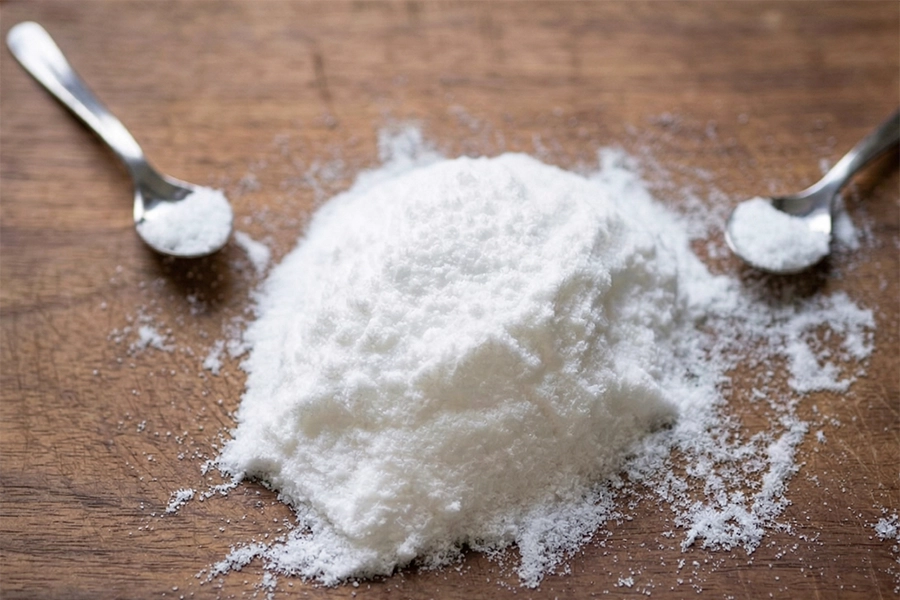 Ultra-thin salt flakes dissolve instantly on the tongue, delivering stronger saltiness with less sodium.
Landa Labs: Real-world impact
As consumer demand for clean label, healthier foods continues to rise, food manufacturers are looking for ways to reduce sodium without compromising the eating experience. Innova Market Insights found that a quarter of global consumers view low salt as essential to making indulgent foods feel healthier. Almost half say they avoid salt to age more healthily.
LOT technology is most effective in dry applications, particularly savory snacks, where the rate at which salt dissolves in the mouth directly drives perceived saltiness. In wet systems, like soups or brines, where the salt is already fully dissolved, the flake’s physical structure has no impact.
“Our technology offers clear benefits for ingredient and flavor companies, as well as CPG brands, who are seeking effective, clean label solutions to reduce sodium without compromising the taste of regular salt,” explains Fefferman. “Many brands still struggle to lower salt content in a cost-effective way — and our LOT technology was specifically developed to address these challenges.”
“As formulations simplify, the ingredient list becomes a battleground. Unlike potassium chloride or masking systems, we don’t add anything — no new ingredients, carriers, or additives. It’s still pure sodium chloride, just in a different crystal form. In terms of formulation, it’s very simple: we are replacing salt with salt. That means brands can significantly reduce sodium while keeping ingredient lists short, familiar, and clean.”
Sugat, one of Israel’s leading food conglomerates and the country’s top salt producer, recently ordered the first full-scale industrial production line using LOT technology. The new line will produce commercial volumes of LOT salt, initially supporting extensive evaluation processes by Landa Labs’ customers worldwide, and later supplying LOT salt across the region.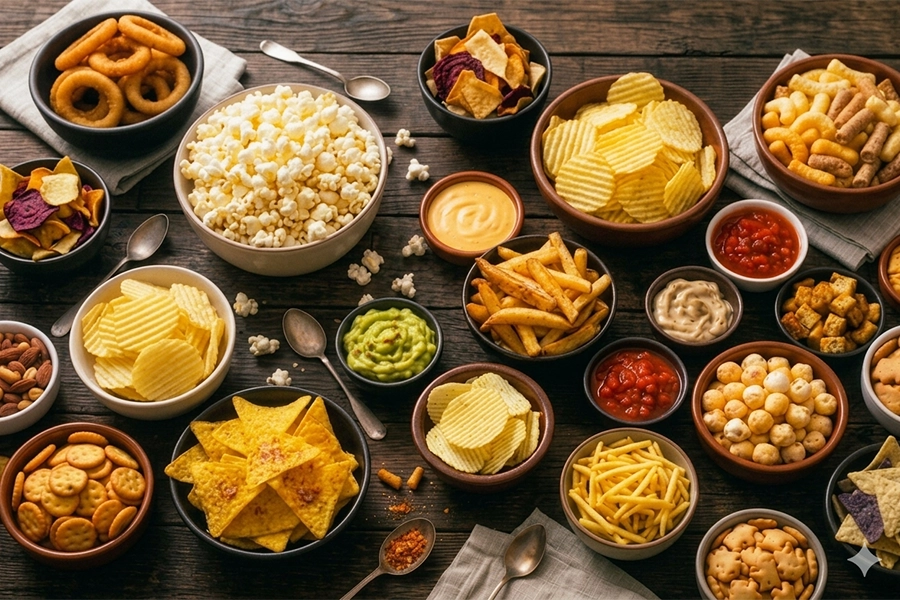 By reshaping — not replacing — salt, Landa Labs enables clean label sodium reduction without additives or off-notes.
LOT as an ingredient platform
LOT can also be viewed as an ingredient platform. It can combine multiple ingredients into a single particle, using salt as a delivery system for flavors or other functional ingredients, creating opportunities for more efficient flavor delivery.
“The technology is not limited to sodium chloride,” says Fefferman. “Ingredients, such as sodium acetate, diacetate, citrate, and carbonate, can also benefit.”
“More broadly, the same ultra-solubility principle can enhance any application where dissolution rate limits functional performance. Take, for example, powder laundry detergents — slow-dissolving constituents can leave white residue or reduce cleaning efficiency in cold-water and eco-cycles. Transforming powders into ultra-soluble forms resolves these issues, significantly boosting performance.”
Food Ingredients First recently explored how approaches to salt reduction are changing. What once focused solely on lowering sodium content is now evolving into a broader and more sophisticated strategy centered around flavor optimization.
Governments and health organizations are ramping up efforts to tackle excessive sodium intake, amid growing health concerns. Initiatives like the Healthier Food and Food System guidelines and front-of-package labeling are putting more pressure on food manufacturers to reduce sodium in their products.
“What excites us most is that LOT is not a compromise solution,” Fefferman adds. “For too long, the industry has been forced to choose between health, taste, cost, and clean label. LOT shows that it is possible to have all four at once.”
“We are now focused on scaling through strategic licensing and industry partnerships so the technology can drive broad commercial use.”



Upcoming webinars

2027 Food Safety Risks for Quality & Compliance Leaders
FoodChain ID

Formulating for function: Developing benefit-led beverages with natural colours, botanicals, and flavours
Givaudan Sense Colour
Let's reveal the grain potential: Innovate
Meurens Natural