



Fighting meat waste: RFID tech targets US$94B loss in retail industry


Key takeaways
- Meat waste could cost global retailers US$94 billion in 2026 due to manual inventory.
- Most retailers still use error-prone manual processes, despite meat being their biggest food waste challenge.
- Radio Frequency Identification (RFID) technology provides digital footprints to help retailers transition from reactive to proactive waste management.
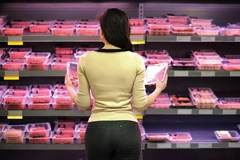
Avery Dennison reveals that meat waste is projected to cost global retailers US$94 billion this year, making it the single most expensive food waste category — ahead of fresh produce and bakery. The data comes ahead of the UN’s International Day of Zero Waste and coincides with growing pressure on retailers to meet the 2030 Sustainable Development Goal (SDG) 12.3 to halve food waste.
The materials science and digital identification solutions company points out that 62% of retailers report that they manage meat inventory manually, while 72% of retailers find meat-related food waste to be their single greatest challenge. Moreover, the company estimates that the total food waste bill is US$540 billion, globally.

“Modernizing inventory management is one of the most immediate levers retailers can pull to help reduce both financial losses and the environmental impact of food waste,” says Julie Vargas, VP and GM of enterprise intelligent labels growth at Avery Dennison.
“Consumer health trends like the boom in protein can put pressure on retailers to pivot assortments quickly, often without clear visibility of how long demand will last, resulting in over-ordering and preventable waste.”
Manual processes, mounting losses
According to Avery Dennison, the root cause of the problem is largely operational. Despite the scale of the financial exposure, two-thirds of retailers still manage food inventory through manual processes — systems that industry leaders widely acknowledge as labor-intensive and error-prone.
Three-quarters identify meat-related waste as their single biggest operational challenge, and 79% state that investment in inventory innovation is a necessary step to unlock savings.
Moreover, the report highlights that demand unpredictability is making the problem harder to manage. A quarter of retailers say they are struggling to keep pace with rising consumer appetite for meat. This is driven in part by the growth of high-protein diets, which is creating conditions where over-ordering is difficult to avoid.
Moreover, the company states a further 30% of retailers say shoppers’ reluctance to buy meat that is approaching its expiration date increases the waste accumulating at the shelf end of the chain. At the same time 74% of leaders reported that inflation is making demand forecasting harder. This means that the margin for error in ordering decisions is narrowing at the exact moment when forecasting accuracy matters most.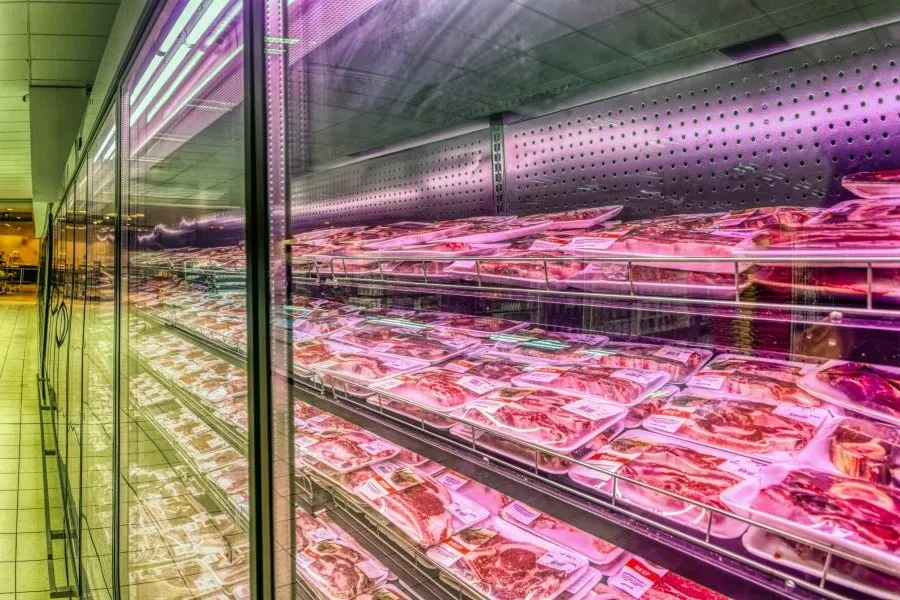 Walmart recently integrated RFID-enabled labels across its meat, bakery, and deli departments.
The financial trajectory
Avery Dennison’s report also estimates that, if current trends continue, the cumulative food waste costs across the supply chain will reach US$3.4 trillion between 2025 and 2030. Additionally, more than a quarter of retail leaders admit they will not be able to meet the 2030 UN SDG deadline.
More alarming, the report shows that one in ten have paused waste reduction projects entirely.
“Amid growing volatility and higher consumer expectations, every inefficiency in the food supply chain — every wasted pallet, unsold shipment, or stockout — is felt more sharply than ever,” explains Luna Atamian Hahn-Petersen, the senior manager for sustainability strategy at Accenture.
“In this environment, retailers are uniquely placed to orchestrate a system that unlocks value for all involved. We are sitting on a US$540 billion opportunity to transform the grocery sector, and many of the answers already exist. By monitoring food products through every stage of the value chain, we can turn data into action and proactively prevent waste.”
Bridging the “visibility gap”
Avery Dennison highlights that the industry-wide push toward automation recently reached a milestone through a partnership between the company and Walmart. Walmart adopted Avery Dennison’s “first-of-its-kind sensor technology,” and integrated RFID-enabled labels directly into its meat, bakery, and deli departments. The global cost of food waste from 2025–2030 could total up to US$3.4 trillion.
The companies state that the move directly addresses the “visibility gap” which has long plagued the sector and moves the needle from “error-prone” manual counts toward real-time, item-level intelligence.
In essence, the technology gives every product a unique digital footprint, and provides a level of inventory precision that was previously impossible. With digital use-by dates accessible to retailers and managers, companies can oversee product rotation with surgical accuracy and make data-backed markdown decisions before a product reaches the point of no return.
Avery Dennison notes that this turns the reactive process into a proactive strategy, and helps to ensure that high-demand items stay stocked while cutting down on the volume of unsold food. As the industry faces increasingly strict global reduction targets, solutions like this could move from being a competitive advantage to an operational necessity for resilient food supply chains.
“By giving food items a digital footprint and supporting human decision-making with real-time item-level inventory intelligence, retailers can shift from reactive to proactive waste management,” adds Vargas. “Businesses will find it easier to reclaim value that would otherwise be lost.”
“Technology is able to turn uncertainty into actionable insight, enabling teams to anticipate demand, intervene earlier, and protect both margin and supply chain resilience.”



Upcoming webinars

Oat-Standing Ingredients - Showcasing Irish Grain Through Innovation
Tirlán Ingredients

2027 Food Safety Risks for Quality & Compliance Leaders
FoodChain ID

Formulating for function: Developing benefit-led beverages with natural colours, botanicals, and flavours
Givaudan Sense Colour