


Novonesis strengthens dairy culture fermentation supply chain with US expansion


Key takeaways
- Novonesis has expanded its Wisconsin dairy culture facility, increasing fermentation capacity and packaging capacity at the site.
- The investment strengthens the production of cultures used in yogurt and other fermented dairy products to improve texture, consistency, and shelf life.
- The expansion reflects the growing role of microbial cultures as manufacturing tools that support efficiency and healthier dairy formulations.
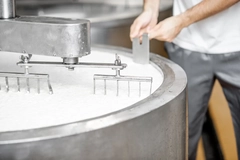
Novonesis has scaled its North American dairy culture fermentation capacity by 66% amid industry pressure to improve yield, process control, and shelf life. The move expands the production of dairy cultures used in cheese, yogurt, and other fermented products.
Packaging capacity at the company’s West Allis, Wisconsin, production site has increased by 17% as part of the expansion. Novonesis says the additional capacity makes the site “one of the world’s largest lactobacillus production facilities.”
The production, which opened in 1929, supplies dairy cultures to manufacturers across North America. It is Novonesis’ North American “center of excellence for food cultures,” says Theis Bacher, senior VP, Food & Beverage at Novonesis North America.
“This expansion builds on that legacy, strengthening our ability to continue delivering the biosolutions our customers rely on while investing in the people, manufacturing capabilities, and technology that will help shape the future of dairy.”
The site allows dairy manufacturers to produce nutritious, high-quality foods more efficiently and sustainably, he emphasizes.
Financial details of the investment have not been disclosed.
Scaling dairy culture production
For the dairy industry, cultures play a role beyond nutrition and health positioning. They also function as processing tools in cheese, yogurt, sour cream, quark, kefir, and other fermented dairy products, and impact fermentation, texture, consistency, and shelf life.
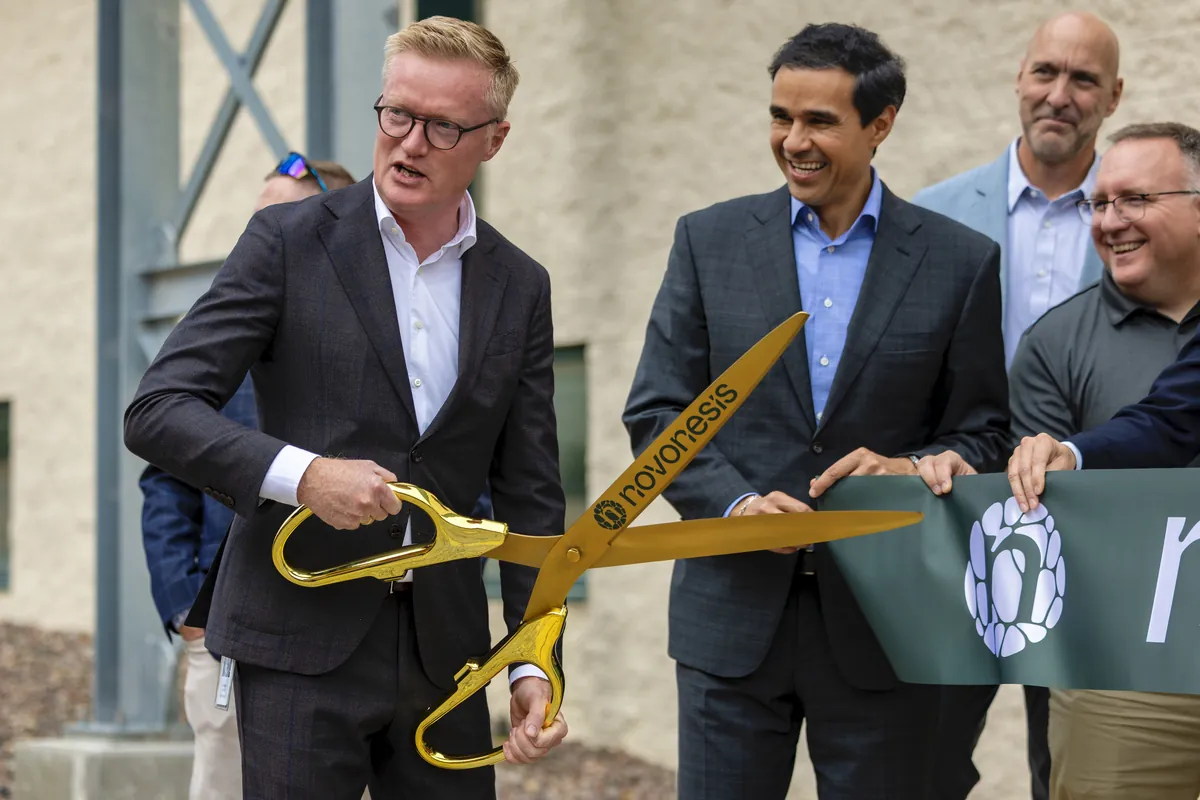 Anders Lund, chief operating officer and executive VP at Novonesis at the West Allis dairy culture fermentation site ceremony.Novonesis says its fermentation site expansion adds jobs and production capacity while leaving room for further growth through existing infrastructure, automation, and robotics.
John Umhoefer, executive director of the Wisconsin Cheese Makers Association, says that investments in advanced dairy manufacturing capabilities “help strengthen the infrastructure our cheesemakers rely on.” They also reinforce Wisconsin’s ability to advance dairy production, he adds.
The fermentation site also includes energy-efficient equipment, water reuse, and waste heat recovery to reduce the site’s operational footprint and strengthen biosolutions supply for food manufacturers.
Novonesis’ dairy culture portfolio includes solutions targeting shelf life and texture in fermented dairy products. BB-12 Bifidobacterium collections of dairy cultures can be used in infant formula and fermented milk products. Lower-lactose/lower-sugar dairy formulation produced via enzymes and cultures can help manufacturers formulate healthier-positioned products.
Cultures move deeper into F&B manufacturing
Novonesis’ investment highlights the growing role of cultures as manufacturing tools, rather than simply fermentation starters.
Culture and fermentation suppliers are increasingly targeting manufacturing efficiency and output, such as through fermentation technologies that help dairy culture producers improve yields and culture performance.
Food Ingredients First recently spoke with Novonesis about a €600 million (US$699 million) enzyme production facility in India and how enzymes and microbial cultures can help manufacturers unlock more value from raw materials.
The company has also explored broader applications for lactic acid bacteria. Last year, Novonesis partnered with the Technical University of Denmark on research showing that selected strains can help reduce off-flavors in plant-based dairy alternatives.



Upcoming webinars
Oat-Standing Ingredients - Showcasing Irish Grain Through Innovation
Tirlán Ingredients

2027 Food Safety Risks for Quality & Compliance Leaders
FoodChain ID

Formulating for function: Developing benefit-led beverages with natural colours, botanicals, and flavours
Givaudan Sense Colour