



How insect protein scale-up is reducing costs and carbon as feed adoption grows


Key takeaways
- Innovafeed and Protix argue that industrial-scale insect protein can lower production costs and carbon emissions.
- Innovafeed says it has cut production costs sevenfold and reduced carbon intensity fivefold since 2022.
- Circular feedstocks, waste heat, and industrial integration can reduce the footprint of black soldier fly protein.
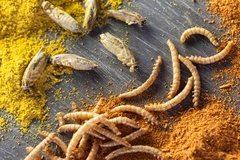
Innovafeed and Protix argue that insect protein for animal feed can achieve a lower carbon footprint than pilot scale production once production reaches industrial scale. Amid continued sustainability scrutiny of insect-derived ingredients, the companies have collaborated on a new white paper highlighting that many existing assessments do not capture benefits gained from higher production volumes, circular feedstocks, and industrial integration.
Innovafeed and Protix — competitors and industrial producers of black soldier fly-derived ingredients — point toward the growing commercial interest as protein diversification and reduced reliance on conventional feed ingredients become growing industry priorities.
“We are competitors, but we are also building a new industry together,” Maye Walraven, chief business officer at Innovafeed and co-author of the whitepaper, tells Food Ingredients First.
“We want to generate robust and credible scientific data that enables the market to assess the value of insect ingredients, particularly the contribution they can make to decarbonizing feed and food value chains.”
Insect protein reaches commercial scale
Walraven points to a “new stage of maturity” in the insect protein ingredients industry.
“We are now able to provide significant volumes of insect meal — estimated at more than 15,000 metric tons globally — at a stable quality, with consistent crude protein levels, high protein digestibility, and preserved bioactive properties.”
“These ingredients have been tested across a wide range of livestock and pet food applications and have demonstrated multiple functional benefits, including palatability, antimicrobial effects, and performance benefits.”
After a decade of transitioning from pilot projects to industrial-scale production, she states that the industry now meets the criteria for inclusion in aquaculture and pet food formulations.
“This comes at a time of significant pressure on protein supply, and we are, therefore, seeing growing market interest and adoption.”
 Maye Walraven: After a decade of scaling from pilot projects to industrial production, insect protein is gaining traction in aquaculture and pet food amid mounting pressure on protein supply.
Scale cuts production costs
The companies say scaling production has also translated into significant improvements in the commercial economics of insect protein.
Walraven says that, as in any industry, producing at scale has played a major role in improving unit costs. “We have increased our production volumes tenfold over the past three years.”
At the same time, Innovafeed has also “significantly improved” its plant economics and reduced production costs sevenfold through a combination of levers — including operational excellence, zootechnical improvements, and energy optimization, she tells us.
Circular models lower insect protein’s footprint
Recent research has questioned whether industrial insect farming delivers on its sustainability promise, particularly when insect protein is used in feed rather than directly replacing meat. Industry representatives have pushed back, arguing that such assessments rely too heavily on outdated or pilot scale data and overlook improvements at commercial scale.
The Protix and Innovafeed white paper points to a fivefold reduction in Innovafeed’s carbon intensity since 2022 and peer-reviewed Protix data showing emissions declining as production scales.
“Economies of scale, combined with optimized processes and synergetic industrial integration, have already brought the carbon footprint of some industrial-scale black soldier fly protein systems to levels competitive with several conventional protein sources, on a curve that continues to bend downward as output grows,” reads the paper.
Walraven describes “feedstock and energy” as the two largest contributors to the carbon footprint of black soldier fly production.
“Selecting by-products as feedstock for our insects is therefore critical to reducing the impact of the resulting ingredient. This circular approach also ensures that we do not place additional pressure on natural resources beyond what already exists today.”
The paper also highlights industrial symbiosis — such as using waste heat and wet co-products — which can cut the footprint substantially compared with a non-symbiotic industrial model. It states that co-locating with industrial partners allows Innovafeed to use waste heat and wet starch by-products, cutting the carbon footprint of its insect meal by 80% versus a non-symbiotic industrial producer.
Walraven points to Innovafeed’s industrial symbiosis model in Nesle, France, where the company uses existing industrial heat sources to reduce energy demand and associated emissions.
“Produced at scale and in a circular way, insect protein can already deliver a 50–60% lower carbon footprint than conventional protein alternatives.”
Meanwhile, Protix LCAs show that large-scale black soldier fly production can achieve emissions competitive with conventional proteins, with a 2025 follow-up reporting further reductions as output increased, according to the study.
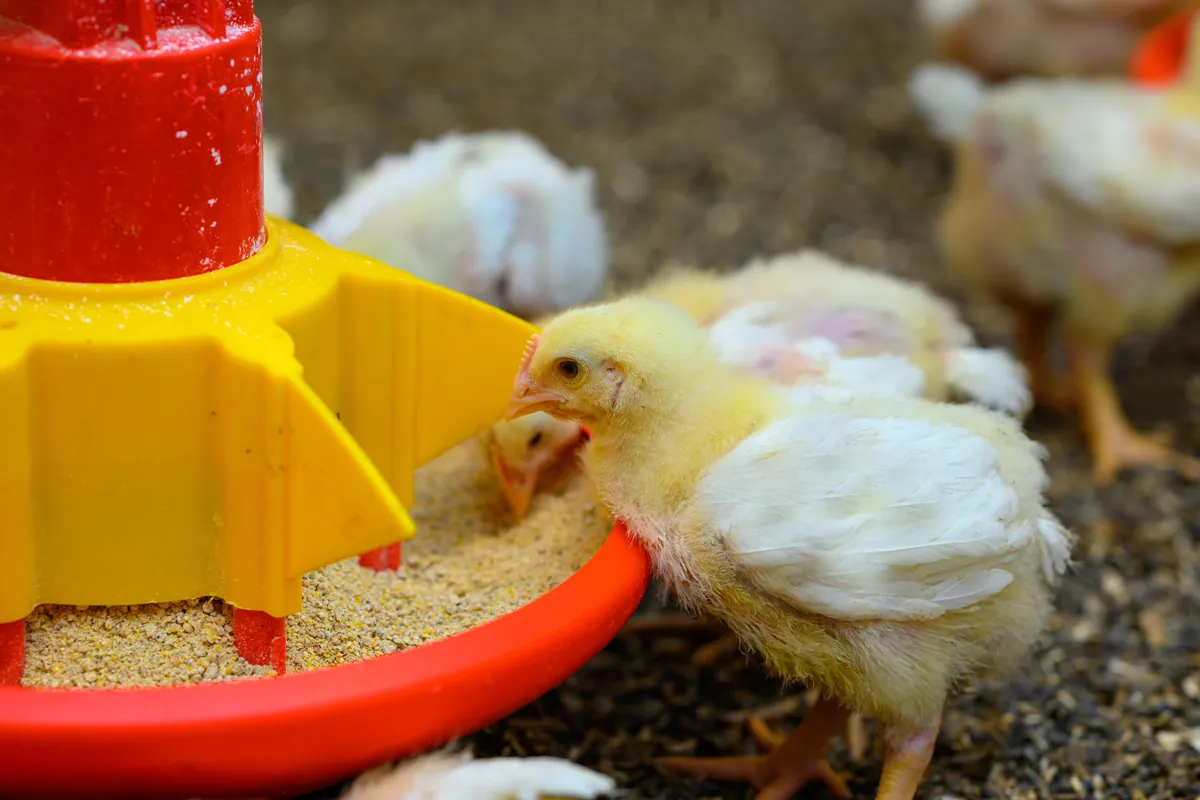 Insect-derived ingredients can support feed efficiency and performance in poultry and other monogastric species.
Insect protein sustainability
For insect proteins, the key sustainability question is not just how insect protein performs today, but how its footprint changes as production scales and operating models become more efficient.
The paper points to external validation behind the companies’ sustainability claims — Innovafeed’s Global Feed LCA Institute (GFLI)-listed, third-party-reviewed data put its 2025 footprint at 1.2 kg CO2 e/kg protein. Protix’s emissions trajectory is supported by peer-reviewed LCA research published in the Journal of Cleaner Production.
“What we highlight in the paper is that at-scale production of alternative ingredients can have a significantly lower carbon footprint than what can be measured at pilot scale. Food companies, therefore, need to look at the dynamic picture rather than a fixed view,” Walraven emphasizes.
“We have divided our footprint intensity by ten as fixed carbon costs are spread across larger production volumes, and we expect this to continue as we scale.”
The paper says further reductions are expected as production scales, with Innovafeed targeting around 0.6 kg CO2e/kg protein by 2030.
However, the environmental impact of insect protein remains dependent on factors including feedstock choice, energy sources, system boundaries, and the conventional protein source against which it is compared.
Walraven acknowledges that some production models are more efficient than others. She argues that sustainability claims should be supported by peer-reviewed LCAs “conducted within recognized methodological frameworks such as GFLI, in order to be credible.”



Upcoming webinars

Oat-Standing Ingredients - Showcasing Irish Grain Through Innovation
Tirlán Ingredients

2027 Food Safety Risks for Quality & Compliance Leaders
FoodChain ID

Formulating for function: Developing benefit-led beverages with natural colours, botanicals, and flavours
Givaudan Sense Colour