


Infant formula crisis spreads to Lactalis and Danone as casualties mount and regulatory gaps emerge

Key takeaways
- Lactalis becomes fourth manufacturer to recall infant formula over contaminated ARA oil, joining Nestlé, Danone, and Hochdorf.
- Danone shares plunge 8–10%, as France investigates a baby’s death and Brazil confirms two infants ill.
- No EU threshold for cereulide exists, and testing limitations make confirming cases nearly impossible.
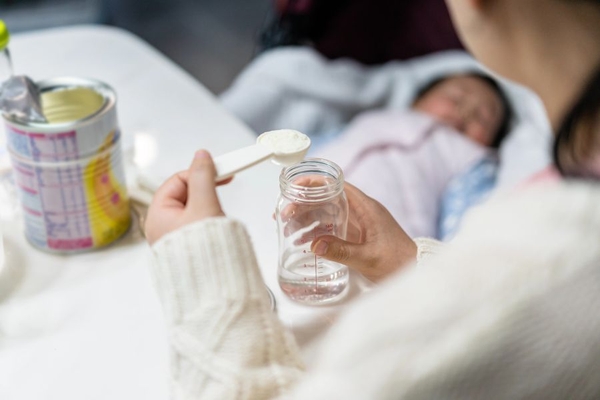
French dairy giant Lactalis has become the fourth manufacturer to recall infant formula over contaminated arachidonic acid (ARA) oil, joining Nestlé, Danone, and Hochdorf in a crisis that has wiped billions from market valuations and prompted investigations into the first reported casualties.
The company announced today (January 21) that it is recalling six batches of Picot brand infant milk across 18 countries due to cereulide in an ingredient from “an international supplier.” A spokesperson reportedly told Reuters the company “acted without waiting for results of the investigations conducted at the supplier.”
Danone shares fell 8–10% following a recall directive in Singapore — one of its sharpest single-day drops outside the March 2020 COVID-19 crash — while Cabio Biotech, a Chinese ARA supplier linked to the contamination by market analysts, saw shares plunge nearly 12%.

Singapore’s Food Agency directed Danone to recall its Dumex Dulac 1 formula on January 17 after detecting cereulide. The batch “may have used the same raw ingredient supplied by the same source,” according to the agency.
In a statement shared with Food Ingredients First, Danone says: “All controls confirm that our products are safe and fully compliant with international and local regulations and no irregularities or deviations in relation Bacillus cereus and Good Manufacturing Practices have been identified,” adding it blocked the Singapore batch at the request of authorities.
French authorities are investigating the death of a baby who consumed Nestlé’s Guigoz formula, Singapore has confirmed one case “likely associated with cereulide exposure,” and Brazilian health authorities have reported two ill infants.
Though the number of alleged incidents is increasing, Nestlé maintains that “no cases of illness have been confirmed” — a claim critics say is technically defensible but structurally misleading given the near-impossibility of proving causation.
Swiss manufacturer Hochdorf has recalled approximately 10,000 packs of Bimbosan goat milk formula, tracing the contamination to ARA oil from a former supplier.
The supplier question
Nestlé has traced the contamination to ARA oil from an unnamed “leading supplier” but declines to identify the company. Market indicators and reporting by Chinese outlet Yicai Global have potentially linked the contamination to Cabio Biotech, a Wuhan-based supplier. A person at the board secretary’s office told Yicai Global that the company has sent products to be tested and said it plans to announce the results when received.
Cabio Biotech stated in its 2024 annual report it was “developing its relationship with major clients such as Nestlé,” according to Reuters.
Radio France’s investigative unit also reported the contaminated oil came from a Chinese supplier.Lactalis joins Nestlé, Danone, and Hochdorf in recalling infant formula over cereulide-contaminated ARA oil.
dsm-firmenich, another major ARA producer, has publicly stated its products are unaffected.
First casualties emerge
Singapore’s Food Agency confirmed one case with “mild symptoms likely associated with cereulide exposure,” noting “there are no definitive clinical laboratory tests to confirm cereulide poisoning.”
Brazilian authorities confirmed two infants experienced “persistent vomiting and diarrhea” after consuming recalled formula — announced the same day Nestlé CEO Philipp Navratil released a video asserting “no confirmed cases.”
In France, authorities are investigating a baby’s death. “The imputability of the death to the consumption of the milk has not been established,” France’s national health ministry told Radio France. A British infant was also hospitalized with meningitis after consuming recalled SMA formula, according to Sky News.
Nestlé disputes any connection, stating “cereulide does not lead to meningitis.”
Why “no confirmed cases” may be misleading
Nestlé’s assertion has drawn criticism from advocates who argue confirmation is structurally impossible. According to Radio France, only one French laboratory can test for cereulide, access requires bureaucratic approval, and no lab can detect the toxin in patient samples.
“A baby drinks a bottle every three hours, and prolonged consumption of milk contaminated with this toxin significantly increases the risk of poisoning,” food safety lawyer Nathalie Goutaland told the outlet.
Netherlands-based food watchdog FoodWatch has accused Nestlé of a “serious breakdown” in transparency. “Why did we only find out in January 2026 that 60 countries were ultimately affected, when there were only nine in December?” says Nicole van Gemert, director of FoodWatch Netherlands.
“There must be real consequences. Without strong sanctions and penalties that truly deter companies, these failures will keep happening,” she previously told Food Ingredients First.
Timeline under scrutiny
Radio France’s investigation reconstructed significant delays. Dutch authorities were notified December 9; Nestlé confirmed cereulide at its French Boué factory on December 26 and blocked 838,000 boxes — but public recalls weren’t issued until January 5–6, more than ten days later.
Austrian authorities described the recall as “the largest in Nestlé’s history,” stating the company conducted a “silent recall” over Christmas before issuing public warnings.
Nestlé CEO Navratil addressed delays in a January 14 video: “We collaborated closely with the authorities and followed their guidance. This meant that the recalls were announced locally one by one as planned.”
Regulatory gaps exposed
The crisis has exposed that no established food safety threshold for cereulide exists in infant formula — neither at EU level nor in most national frameworks. While EFSA recommends B. cereus bacteria be kept below 100 CFU/g in powdered formula, there is no limit for the heat-stable toxin itself, which cannot be destroyed by boiling water or standard preparation.
Vietnam has taken the most aggressive stance, halting all sales of Nestlé’s Beba and Alfamino brands regardless of batch number.