


dsm-firmenich flags widespread mycotoxin co-contamination in animal feed

Key takeaways
- Eighty-five percent of 10,410 feed samples contained multiple mycotoxins, with East and Southern Asia recording the highest risk levels.
- Several regions saw year-on-year increases, including Europe, sub-Saharan Africa, and Central and South America.
- dsm-firmenich urges broader testing and stronger sourcing, storage, and supplier controls to reduce animal health risks.
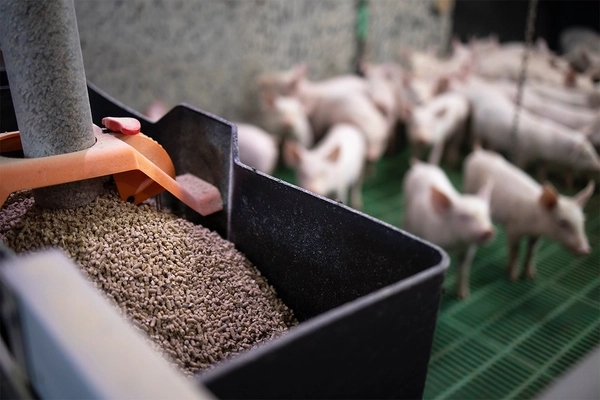
A global dsm-firmenich survey of more than 10,400 animal feed samples has found that 85% contained multiple mycotoxins. The findings highlight persistent risks for ingredient sourcing, animal health, feed quality, and livestock productivity.
The company’s H1 2026 World Mycotoxin Survey covered 10,410 samples from 78 countries and 59,180 individual analyses conducted between January and June. Fumonisins, B-trichothecenes, and zearalenone were the most prevalent mycotoxins worldwide. East Asia and Southern Asia recorded the highest overall risk levels, at 97% and 92%, respectively.
The high rate of co-contamination is significant because animals are often exposed to several toxins simultaneously. Even when individual toxins are present at relatively low concentrations, their combined effects can impair gut health, immunity, liver function, and reproduction, according to dsm-firmenich. This can reduce feed efficiency and animal performance, with potential consequences for meat, dairy, and egg supply chains.

Regional year-on-year increases
Several regions recorded notable year-on-year increases. In Europe, fumonisin prevalence rose from 42% to 56%, while B-trichothecenes increased from 71% to 79%. Sub-Saharan Africa saw zearalenone rise from 60% to 78% and fumonisins from 62% to 74%.
In Asia, ochratoxin A prevalence climbed from 37% to 51%, although B-trichothecenes declined from 49% to 36%. Aflatoxin prevalence in Central and South America increased from 33% to 44%. Mycotoxin prevalence in North America remained broadly stable, with B-trichothecenes edging up from 81% to 82%.
Targeted monitoring helps reduce exposure
The findings underline the importance of testing both raw materials and finished feed for a broad range of contaminants, rather than monitoring individual mycotoxins in isolation. They also point to the need for stronger quality controls around commodity sourcing, transportation, and storage, particularly in regions experiencing elevated risk.
“Mycotoxin exposure can vary considerably between regions and individual feed materials, so relying on general assumptions can leave producers vulnerable to unexpected risks,” says Ursula Hofstetter, head of mycotoxin risk management at dsm-firmenich.
She adds that contamination cannot always be completely prevented, but exposure can be reduced through regular testing, improved storage practices, careful ingredient sourcing, and proactive risk management.
The survey also examines masked, modified, and emerging mycotoxins through multi-mycotoxin analytical methods, offering producers a broader view of contamination patterns.
For ingredient buyers and feed manufacturers, the results reinforce the value of location-specific monitoring and supplier verification, as climate variability and storage conditions continue to influence contamination risks.
A comprehensive risk profile can support earlier interventions, limit rejected materials, and help producers maintain consistent feed performance across increasingly complex global supply networks.