


Biofach 2026: Clean label, climate pressure and organic F&B’s next phase


Key takeaways
- Organic F&B brands are focusing on innovation, digestibility, and clean labels as consumers become more selective and health-driven.
- Cost pressures, climate risks, and mainstream accessibility remain key challenges shaping the organic sector.
- At Biofach 2026, the global organic industry gathers to showcase organic F&B products and strategies.

The organic F&B sector is facing a period of adjustment shaped by cost pressures, changing consumer priorities, and sustainability and transparency expectations. As organic products move further into the mainstream, companies are focusing on innovation and differentiation to stay competitive.
In the EU, organic food and farming has grown year-over-year in the last three decades. In the region, organic farmland covered about 17.7 million hectares in 2023, with the organic retail market reaching about €46.5 billion (US$54.9 billion), according to IFOAM Organics Europe.
The US has also shown strong consumer demand for organic products, with sales reaching nearly US$71.6 billion in 2024, growing more than twice as fast as the overall food market, says the Organic Trade Association.
Against this backdrop, the global organic industry is set to gather at Biofach 2026 in Nuremberg, Germany, from February 10–13, where companies will showcase new products, ingredients, and strategies driving the future of organic F&B. The “next-gen organic” event is expected to host nearly 35,000 trade visitors and over 2,200 exhibitors.
Food Ingredients First speaks with German organic juice producer Voelkel and Dutch organic ice cream brand Happy Goats Goodness to explore where the organic sector is innovating, where new opportunities are emerging, and where the industry still needs to step up.
Ole Müggenburg, Voelkel’s head of communications, observes a “fundamental shift” in consumer’ behavior toward organic F&B.
“The personal benefit is taking over the driver’s seat — ‘my body, my family’ — versus global sustainability. In the face of a world that feels threatening and overwhelming, people are focusing on one thing they can control — themselves,” he tells us.
“This means consumers are handing over the burden of being responsible for ‘saving the world’ to institutions and brands. Our new products not only guarantee fair and clean production, but help consumers in their daily routines.”
According to Victor Boone, founder of Happy Goats Goodness, organic consumers are becoming much more conscious and selective.
“They still care deeply about sustainability and origin, but at the same time, they no longer want to compromise on taste or enjoyment. There is also a clear shift toward products that feel easier to digest and more inclusive for people with sensitivities.”
Tapping clean label demands
Happy Goats Goodness’ Biofach offering responds directly to those shifts, says Boone.
“At Biofach, we are presenting our organic goat milk ice cream, which reflects key organic trends by combining clean label simplicity, transparent sourcing, and a natural alternative to cow’s milk with a distinctive, premium taste.” Ole Müggenburg, Voelkel’s head of communications: Consumers care about but are no longer willing to compromise on taste.
“Our ice cream has a very mild, neutral flavor — it doesn’t have the typical ‘goaty’ taste that some consumers associate with goat dairy.”
The ice cream is also suitable for consumers with lactose intolerance, according to the company’s research on digestibility conducted in collaboration with Wageningen University, the Netherlands.
“This combination of great taste and improved digestibility aligns perfectly with what today’s organic consumers are looking for,” says Boone.
Goat milk’s digestibility and hypoallergenic properties have increased its popularity in infant formula products — a category traditionally dominated by cow milk, according to Innova Market Insights.
Expanding organic beverage concepts
Voelkel will showcase its organic beverages at the event, responding to current trends and consumer demands in healthy beverages.
“The mega-trend of ‘health/longevity’ is a particular focus. With four new 95 ml ‘shots’ in Matcha, Immune, Iron, and Fiber varieties, we will be entering the dietary supplement market for the first time,” says Müggenburg.
The shots come in various sizes for convenient consumption and aim to ”provide the body with vitamins, minerals, caffeine, and fiber in no time — all naturally derived from fruit, plants, mushrooms, and lichens.”
The company will also exhibit its RAW Kombuchas in Grapefruit Hops and Blueberry Lavender flavors, and two low-calorie RAW Water Kefirs in Raspberry Rose Blossom and Ginger Lemon flavors to offer “significantly more flavor variety in the refreshment and fermented food category,” says Müggenburg.
“Like all our RAW Kombuchas, the new RAW products are not pasteurized after fermentation, ensuring the microorganisms remain alive in the product.”
Overcoming organic sector challenges
Amid ongoing organic F&B innovation, the threat of climate change still poses challenges to manufacturers, who are reformulating to overcome these hurdles.
“The climate catastrophe is already a reality today. In the future, the question will no longer be at what price one can get a product, but whether one can get it at all. We must remove the extremes from the market and not adopt the destructive market mechanisms of conventional trading,” Müggenburg says.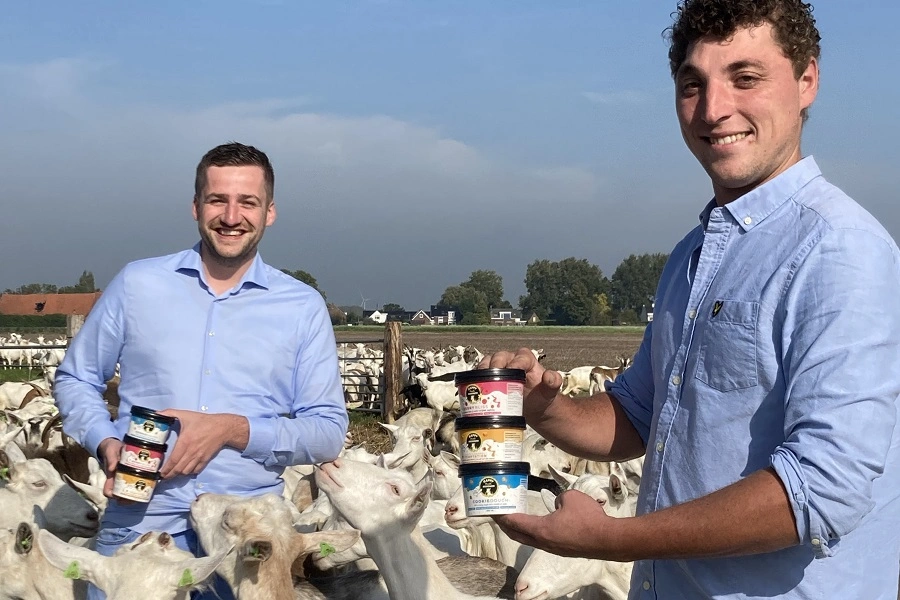 Victor Boone, founder of Happy Goats Goodness (left): Organic consumers have become more conscious and selective.
Long-term partnerships with cultivation partners, dialogue at eye level, and round tables with farmers and trade partners can help overcome these challenges.
Meanwhile, Boone at Happy Goats Goodness explains the business hurdles of surviving in the organic goat dairy market.
“At the moment, we are the first and only large-scale supplier of goat milk ice cream in Europe for supermarkets and organic specialty stores. From the start, we made the conscious decision to make our product organic, while conventional goat milk ice cream doesn’t really exist.”
“Being first in the market comes with challenges. It can be difficult to get listings with retailers, since there is little market data available, and our product is often compared to the top cow milk ice cream brands. But we see this as part of pioneering a new category and shaping the market for organic goat milk ice cream.”
Escaping the “organic pitfall”
As consumer F&B preferences evolve, Boone expects shoppers to become even more conscious about what they eat — whether it’s processed or natural — and how it affects their health.
“We also expect more high-quality, affordable organic alternatives to enter the market, competing successfully with non-organic products,” he says.
Boone emphasizes the need for organic business to set “realistic” goals. “Companies shouldn’t assume that consumers automatically want to pay more just because something is organic. Over the next decade, organic products will simply become more accessible and affordable for most people.”
He also expects the stigma or skepticism around organic to continue to “fade” as consumers make more conscious choices about their eating habits.
Meanwhile, the organic juice market needs to escape the “organic pitfall,” says Müggenburg.
“It needs to capture the so-called ‘60% potential’, involving people who are fundamentally committed to sustainability but don’t want to make a binding commitment with every purchase they do.”
“We need to conquer the mainstream, not only with facts but with enjoyment and passion. Sustainability will become a hygiene factor. Many organic pioneers still stick too much to their old routines with regard to distribution, product range, and communication.”
“There will be a strong consolidation in the market. The theme will be ‘innovate and co-operate or disappear,’” Müggenburg concludes.




Upcoming webinars

Oat-Standing Ingredients - Showcasing Irish Grain Through Innovation
Tirlán Ingredients

2027 Food Safety Risks for Quality & Compliance Leaders
FoodChain ID

Formulating for function: Developing benefit-led beverages with natural colours, botanicals, and flavours
Givaudan Sense Colour