



Mondelēz earnings nearly halve as record cocoa costs overshadow revenue growth


Key takeaways
- Mondelez grew revenues 5.8% to US$38.5 billion, but earnings nearly halved as record cocoa costs pushed production expenses up 25%.
- Volume declined 3.7% across all regions, as pricing increases of 8% drove consumer pushback, with Europe and North America hardest hit.
- The company expects flat-to-2% organic revenue growth in 2026, citing stabilizing cocoa costs but flagging geopolitical and trade uncertainty.
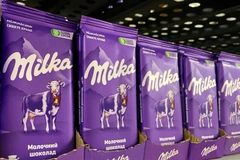
Mondelēz International grew full-year net revenues by 5.8% to US$38.5 billion, but record cocoa costs wiped out much of that progress. Earnings nearly halved — down 44.7% — while the cost of producing its snacks surged nearly 25% to US$27.6 billion, driven by cocoa prices that hit a record high of US$10.75 per kg in January 2025.
Gross profit margin dropped more than ten percentage points to 28.4%, down from 39.1% the previous year. For 2026, CEO Dirk Van de Put points to stabilizing cocoa costs, but the company outlook remains cautious at flat-to-2% organic revenue growth.
The full-year results mark the culmination of what Mondelēz described in its Q3 report as a year of “record-high cocoa cost inflation.” Organic net revenue grew 4.3% in 2025, but that was driven almost entirely by 8% pricing increases, while volume and product mix declined 3.7% across all regions. Europe bore the heaviest burden, posting 13.9% full-year pricing alongside a 5.3% volume decline — a pattern that intensified in Q4, when European pricing hit 15.7% against a 7.4% volume drop.
“While unprecedented cocoa cost headwinds impacted our profitability, our teams remained focused on what they can control to best position us for sustainable, profitable growth,” says Van de Put. He adds that Mondelēz is “executing clear plans to create multi-year shareholder value through improved volumes, brand investments, structural cost savings, and disciplined capital allocation, coupled with stabilizing cocoa costs.”
North America was the weakest region, with organic net revenue declining 1.9% for the full year. Adjusted EPS fell 14.6% on a constant currency basis to US$2.92, while the company returned US$4.9 billion to shareholders through dividends and buybacks — even as net debt climbed US$2.7 billion to US$19.1 billion.
Volume pressures reflect wider market dynamics
The volume declines mirror a broader industry trend. Barry Callebaut’s recent Q1 results showed a 10% drop in chocolate sales volumes, while cocoa grindings fell 7.2% year-over-year in Europe during Q2 2025, according to J.P. Morgan — reflecting what analysts describe as historic demand destruction.
Innova Market Insights data suggests the decline may not be permanent. According to the market researcher, US chocolate volumes are falling in volume terms, but consumers aren’t intentionally cutting back — they’re responding to prices, and could return if the market stabilizes. Gen Z and Millennials remain the category’s most engaged consumers, with up to a third increasing their chocolate intake, driven largely by innovation and novel experiences.
Cocoa prices have since fallen sharply from their January 2025 peak, with futures recently trading around US$4,000 per ton — down nearly 60% year-on-year — as improved supply forecasts ease pressure on the market. But they remain well above the US$2–3 average of pre-2022, and Mondelēz has been vocal about the regulatory pressures compounding cost challenges — calling for a 12-month delay to the EU Deforestation Regulation to enable “practical, inclusive” implementation.
Stabilization ahead?
The company’s 2026 guidance is cautious, with organic revenue growth expected at flat–to –2% and adjusted EPS growth of flat–to–5%. Mondelēz flagged “greater than usual volatility” from geopolitical, trade, and regulatory uncertainty, adding that the outlook doesn’t account for potential US tariff changes.
Innova Market Insights data shows 56% of global consumers snack daily, and the market researcher's cocoa trends research highlights growing interest in alternatives — from carob and fermented compounds to upcycled cocoa byproducts — as brands seek to reduce dependency on climate-sensitive crops.
For Mondelēz — which derives a significant share of revenue from its chocolate portfolio, including Cadbury, Milka, and Toblerone — balancing cocoa exposure with innovation will be central to its recovery path.