
Avery Dennison reveals commercial opportunities in fighting food waste
Meat emerges as the biggest food waste challenge, accounting for a disproportionate share of value loss

Key takeaways
- Global food waste is rising sharply, with losses forecast to reach US$540B by 2026.
- Meat is the most costly category, driving a disproportionate share of waste and margin erosion.
- Avery Dennison urges retailers to reframe food waste as a commercial opportunity.
The global food waste bill continues to rise, threatening the UN’s goal to halve global food waste by 2030. New research by Avery Dennison reveals that over a quarter of global retail leaders say they will not meet the 2030 deadline, while meat was found to be the most challenging category for waste. However, the report stresses that food waste should be viewed as a business opportunity.
The economic cost of food waste across the global supply chain is forecast to reach US$540 billion by 2026, up from US$526 billion last year, according to the Centre for Economics and Business Research, which partnered with Avery Dennison on the “Invisible Visible: Unlocking the Hidden Value of Food Waste to Drive Growth and Profitability” report.

On average, food waste costs were found to be equivalent to 33% of total revenues in the food retail supply chain each year, from post-farm to the point of sale.
“Food waste has become an accepted cost of doing business, but it doesn’t have to be. Innovation exists today to help overcome the complexity of food waste by unlocking new possibilities and transforming a historic operating cost into measurable value across the global retail supply chain,” says Julie Vargas, VP and general manager for Enterprise Intelligent Labels Growth at Avery Dennison.
“The retail ecosystem is changing, but not enough retailers are changing with it. The biggest challenge is what we can’t see. From transit to shelf, blind spots are silently eroding margins. With the right innovation, we can turn this loss into measurable value and shift the conversation on food waste, from being purely seen as a sustainability issue, into a business-critical one. This is about unlocking efficiency and growth across the entire supply chain.”
Supply chain visibility issues
The extensive research, involving 3,500 global food retailers and supply chain leaders across seven countries, shows that despite growing awareness, 61% of businesses say they still lack full visibility into where food waste occurs across their operations.
Limited influence over the most waste-intensive areas of the supply chain is a common challenge, which Avery Dennison says highlights the urgent need for targeted innovation and cross-supply chain collaboration.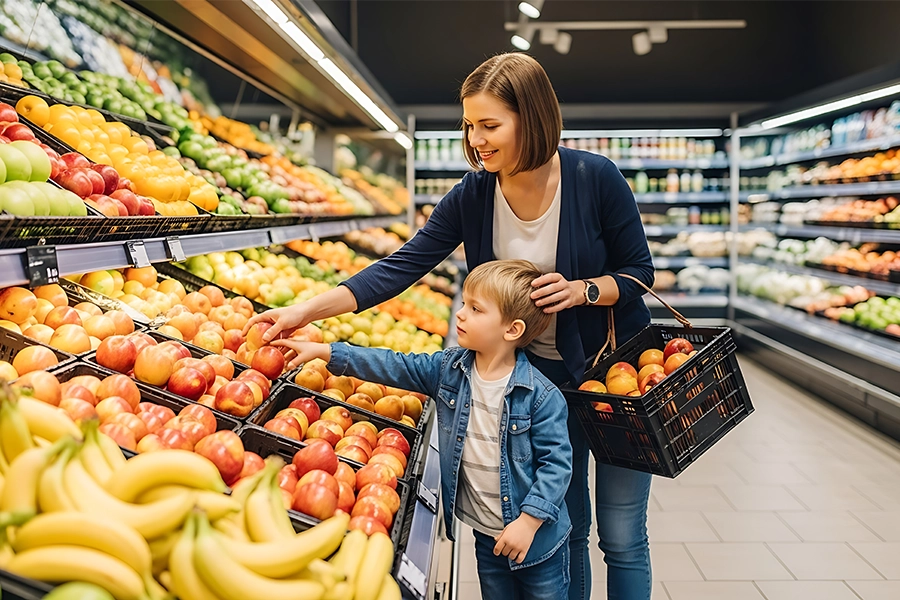 New research from Avery Dennison reframes food waste reduction as a business-critical opportunity.
The data highlights how leaders are consistently challenged at various points throughout the supply chain and most specifically across perishables. When asked to identify the three most difficult categories for waste, half pointed to meat (50%), 45% cited produce, and 28% said baked goods.
Over half (51%) of business leaders reported that inventory management and overstocking significantly contribute to food waste within their operations. Avery Dennison says tackling this challenge will require a combination of solutions, including item-level inventory visibility, demand forecasting, and real-time shelf life management.
The lack of visibility when transiting perishable goods is a significant problem. Over half (56%) of companies report that they lack a clear understanding of the amount of food waste generated during transportation.
A meaty problem
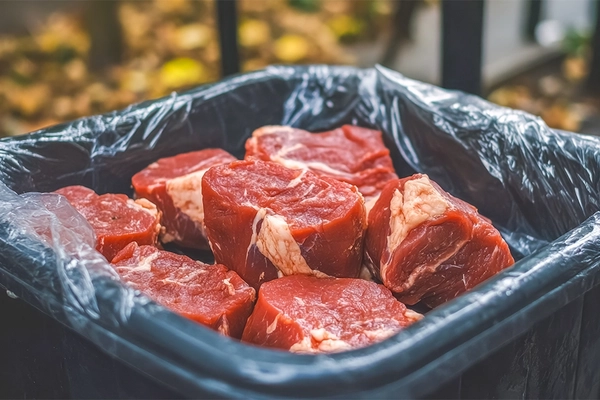
Meat has emerged as one of the most difficult categories for waste management, with 72% of supply chain leaders citing it as their biggest challenge.
Avery Dennison says that, given the category’s high unit cost in grocery and food retail, small reductions in waste can yield considerable financial gains. Economic modeling suggests meat waste will amount to US$94 billion in lost output across the global supply chain in 2026, almost one-fifth of the total cumulative loss across the year. Fresh produce follows closely behind at US$88 billion.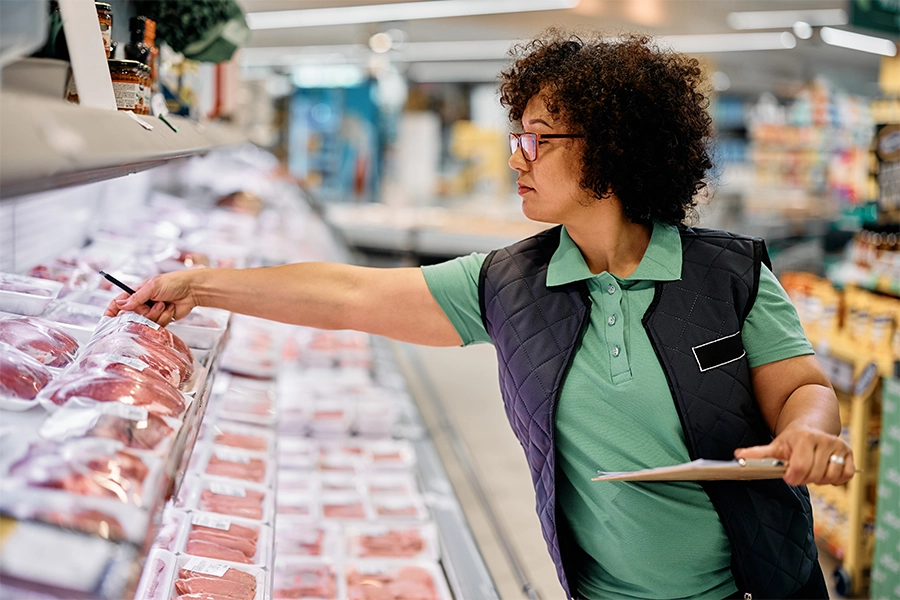 Food waste is set to hit US$540B by 2026 — and meat is the biggest margin killer.
The report reveals that over two-thirds of businesses (67%) were predicting that meat waste during the holiday season was expected to noticeably reduce their margins and that managing this issue over one of the busiest times of the year had become a bigger operational concern than before (69%).
For retailers, pressures presented by economic volatility, poor adaptability to market-related shocks, and difficulty adjusting to shifting consumer demands are exacerbating systemic food waste issues, says Avery Dennison.
Almost three-quarters (74%) of retailers admit inflation is making it harder than ever to predict demand for fresh meat, and 73% report a rising demand among consumers for smaller meat portions or alternatives.
Avery Dennison has partnered with Walmart to advance the use of radio-frequency identification labels in meat packaging to help track inventory and tackle food waste.
UN food waste goal in jeopardy
Avery Dennison warns that, if current trends continue, the cumulative cost of food waste from 2025 to 2030 is expected to reach US$3.4 trillion, coinciding with the 2030 deadline for the UN’s Sustainable Development Goal 12.3, which aims to halve global food waste.
Despite this goal, the report uncovered that over a quarter (27%) of leaders said that they would not meet the 2030 deadline.
Food waste as a business opportunity
Avery Dennison encourages food companies to view the food waste challenge as a business opportunity — not just an ethics or environmental sustainability issue.
Michael Colarossi, VP for head of enterprise sustainability at the company, says: “For too long, food waste has been positioned almost exclusively as a sustainability and societal issue. We must recognize it as the business opportunity it truly is.”
“In fact, over seven in ten (73%) business leaders told us that they see tackling food waste as a growth opportunity. That’s why the US$540 billion in lost value should be a clear call to action for the food retail supply chain to cut waste and boost efficiencies.”
“Only by uncovering the blind spots in the chain can we take meaningful steps to reduce loss, build resilience, and create lasting value for both businesses and the planet.”