


Atlante: How the UK-EU reset could transform food trade and sourcing
Key takeaways
- The UK-EU reset could significantly reduce border bureaucracy, certification requirements, and trading costs, improving efficiency and predictability across food supply chains.
- Closer trading ties could create new sourcing opportunities, broaden product choice, and support smaller food producers.
- With implementation expected in March 2028, food businesses should start reviewing supplier networks, product specifications, and logistics strategies to prepare for the changes.

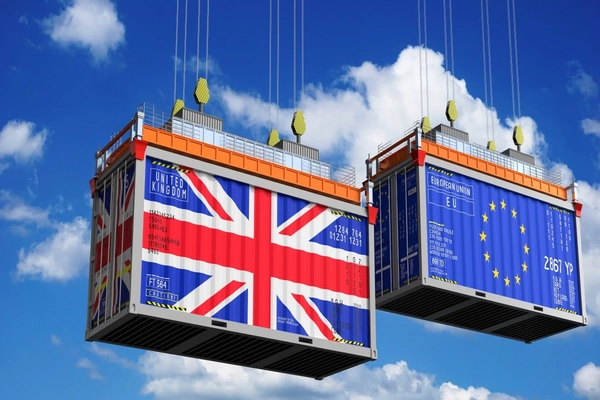
Following the new UK-EU deal, the food and beverage industry faces the prospect of a significant shift in the way products are traded between the two markets. With reduced border checks, simplified certification requirements, and closer regulatory alignment on the horizon, the new Sanitary and Phytosanitary (SPS) agreement could help ease many of the challenges businesses have faced since Brexit.
But what will it mean in practical terms for food manufacturers, retailers, importers, and suppliers? And will the benefits outweigh the potential costs and complexities of closer alignment?
Atlante is an international food sourcing, distribution, and product development company, headquartered in Bologna, Italy. In this interview with Philip Durham, UK business unit director at Atlante, we explore the likely impact of the agreement on supply chains, sourcing strategies, operating costs, and consumer choice, as well as the implications for smaller producers and businesses sourcing from outside the EU.
With implementation expected in March 2028, Durham also considers how businesses should prepare now and whether the deal could ultimately strengthen the competitiveness of the UK F&B sector.
What will the UK-EU reset deal change most significantly for the F&B industry in practical terms?
Durham: The most significant change will be the removal of much of the administrative and operational burden that has become embedded in UK-EU food trade since Brexit. The reduction in health certification requirements, SPS border checks and associated paperwork will be particularly welcome for businesses moving products of animal origin, including meat, dairy, and certain composite food products. Beyond the paperwork itself, the greatest benefit will arguably be predictability. For businesses supplying chilled and short shelf life products, uncertainty at the border can be just as damaging as the direct financial cost of compliance. More reliable transit times will allow businesses to plan production, transportation, and retail deliveries with greater confidence. While customs formalities will remain, the agreement represents an important step toward restoring the efficiency of an interconnected European food supply chain.
Will the reduction in border checks, paperwork, and certification translate into meaningful cost savings for food businesses?
Durham: While there are opportunities for meaningful savings, we should look beyond the immediate cost of certification and inspections. Some of the more significant savings could come from indirect operational efficiencies, including reduced vehicle waiting times, improved transport utilization, lower administrative overheads and reduced food waste. Over recent years, businesses have had to build additional contingency into their supply chains, whether through longer lead times, additional stockholding or alternative transport arrangements. These measures all come at a cost.
Removing some of that uncertainty could allow businesses to operate leaner, more efficient supply chains. There is also a promising opportunity around consolidated shipments, where products from multiple manufacturers are transported together. Simplifying the documentation and compliance requirements associated with these movements could make smaller, more frequent shipments commercially viable again, particularly for specialist food producers.
How might the deal reshape food sourcing between the UK and EU?
Durham: We could see renewed interest in European sourcing opportunities that have become less commercially attractive in recent years. In some instances, the additional complexity of importing has influenced sourcing decisions as much as the quality or price of the product itself. Europe has an incredibly diverse manufacturing landscape, with specialist producers offering regional expertise, authentic products, and strong innovation capabilities. Reducing barriers could make it easier for UK retailers to access these suppliers, particularly when developing distinctive private-label ranges or bringing new products to market.
However, I would not expect businesses to reverse their wider diversification strategies. Recent geopolitical upheavals, climate-related disruption, and commodity volatility have highlighted the importance of maintaining resilient, geographically diverse supply chains. The agreement should provide businesses with greater sourcing flexibility, rather than encourage renewed dependence on any single market.
Will consumers actually see any benefits in terms of food prices, availability, and choice?
Durham: Consumers should ultimately benefit, although I would be cautious about suggesting that the agreement will immediately translate into lower shelf prices. Indeed, food prices are influenced by a complex combination of factors, including agricultural commodity prices, energy, labor, packaging, and exchange rates, many of which remain beyond the control of individual businesses. In a highly competitive UK grocery market, any sustainable reduction in supply chain costs will help retailers and manufacturers manage inflationary pressures. That may mean limiting future price increases rather than delivering outright price reductions. Perhaps the more tangible consumer benefit will be improved availability and choice.
What are the potential downsides of closer regulatory alignment with the EU? Could new requirements create additional costs or complications?
Durham: Closer regulatory alignment inevitably involves a trade-off between greater trading efficiency and reduced regulatory flexibility. While a common framework should simplify many aspects of UK-EU trade, businesses will need to remain responsive to evolving European legislation, including requirements relating to ingredients, product authorizations, pesticide residues, and food labeling. This could be particularly complex for businesses sourcing internationally, where products currently compliant with British requirements may need to be reassessed against EU standards. For some manufacturers, this could entail reformulation, additional testing, changes to packaging, or adjustments to their supplier base.
How might the agreement affect smaller food producers and independent manufacturers compared with larger retailers and multinational suppliers?
Durham: Smaller businesses arguably have the most to gain from a reduction in cross-border trading barriers. Larger organizations generally have the infrastructure, technical expertise, and economies of scale to absorb complex administrative requirements, whereas the same costs can make international trade commercially unviable for a smaller producer. Streamlining these processes could lower the barriers to entry for British manufacturers looking to export and European producers seeking access to the UK market. This could also create opportunities for retailers to collaborate with a broader range of innovative and specialist suppliers.
With implementation not expected until March 2028, how should F&B businesses prepare now? Where do you anticipate the biggest operational challenges during the transition?
Durham: March 2028 may appear some way off, but in food manufacturing and retail, where product development, sourcing agreements and commercial planning often operate across lengthy cycles, it is relatively close. Businesses should begin mapping their exposure to regulatory changes across their product portfolios and supplier networks, identifying where specifications, ingredients, packaging, or sourcing arrangements may need to change. There is also an opportunity to reassess logistics models, procurement strategies, and stockholding requirements in anticipation of a more efficient trading environment. One of the biggest challenges will be managing the transition while maintaining business continuity. Businesses must continue to comply with existing requirements while preparing for new ones, without introducing unnecessary costs or disruption.
How do you expect the UK-EU trading relationship to evolve?
Durham: I would expect the agreement to support a gradual rebuilding of commercial confidence between the UK and EU, fostering longer-term investment, stronger supplier relationships, and collaboration around product innovation. Overall, we should see it as an important enabler of competitiveness rather than a solution to every challenge facing the food industry. Climate change, agricultural productivity, energy costs, labor availability, and geopolitical uncertainty will continue to exert significant pressure on global food supply chains. The real opportunity is to remove an avoidable layer of complexity at a time when businesses are already navigating considerable external pressures.