


How Unilever is using AI to stay visible in a new era of food discovery

Key takeaways
- AI reshapes how food brands are discovered, with visibility now increasingly determined by AI-driven search, voice tools, and large language models, not just traditional search engines or in-store presence.
- Unilever actively optimizes content and product development using AI, including restructuring recipes for better machine readability and accelerating innovation cycles through digital testing and simulation.
- Despite AI’s growing role in insights and recommendations, human expertise remains central, with chefs and R&D teams still responsible for final decisions on flavor, creativity, and product quality.
The battle for consumer attention is no longer confined to supermarket aisles or search engine results. Increasingly, it is taking place inside AI-powered search tools, voice assistants, and large language models that are shaping what consumers cook, buy, and eat. For global food manufacturers, that shift is creating a new challenge — ensuring brands are not only visible on store shelves, but also recommended by the algorithms consumers increasingly rely on for inspiration and decision-making.
At Unilever Foods, artificial intelligence is becoming a key part of that strategy. The company is using AI across marketing, product development, and customer engagement, with applications ranging from improving recipe discoverability to accelerating innovation pipelines.
According to Olivia Kirby, director of integrated demand generation at Unilever Foods, the rise of AI-driven searching is fundamentally changing how brands think about visibility.

In an in-depth interview with Food Ingredients First, Kirby discusses how AI is reshaping product discovery and the growing need for brands to be easily found, trusted, and recommended across AI-driven search, voice, and conversational platforms. She highlights the importance of understanding how products and content are presented by AI tools and adapting digital strategies to improve visibility and relevance.
The shift reflects a broader evolution in digital marketing. While food brands have spent years optimizing content for traditional search engines, AI-generated answers are increasingly becoming a first point of contact for consumers looking for meal ideas or product recommendations.
“AI is changing discoverability by raising the bar on how we show up,” she explains. “Brands need to be relevant, visible, and recommendable within AI ecosystems, while serving consumers in the moments they’re asking questions across search, voice, and large language models (LLMs).”
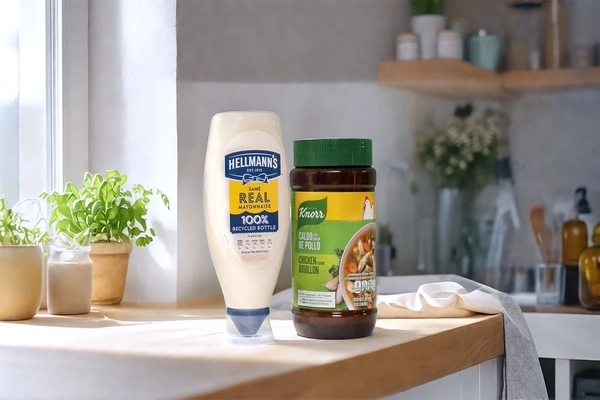
“For Knorr and Hellmann’s, that means using AI visibility tools to track performance, spot gaps, and optimize content to earn recommendation. In practice, we’re redesigning recipes and site content with stronger keywords, clearer structure, and AI-friendly formats, meaning it’s useful for consumers and more likely to be surfaced in AI-driven journeys.”
Identifying gaps and refining digital content strategies
A notable example occurred ahead of the Super Bowl 2026 in the US, when Hellmann’s spotted low visibility for the search query “Game Day sandwich recipes.”
The brand traced this gap to a lack of listicle-style content and quickly updated its website by adding a dedicated “Game Da sandwich” listicle, optimizing descriptions with relevant keywords, reformatting existing content into AI-friendly lists, and expanding its recipe section.
This led to a ten-position improvement in visibility rankings and nearly doubled its overall visibility score from the 10% benchmark, increasing the likelihood of being recommended in relevant recipe searches.
“Being unmissable means brands go beyond traditional shelf visibility and are also highly visible and recommended within AI-driven search and discovery systems. As algorithms increasingly shape what consumers search for, see, and buy, brands must be present both physically in-store and digitally within search results, AI answers, and recommendation engines,” Kirby emphasizes.
“This requires continuously monitoring and optimizing how content appears across large language models, refining formats, keywords and structure, so brands are surfaced in relevant queries that guide consumer choice.”
Speaking specifically about the Super Bowl example, she adds: “AI helped pinpoint why our content wasn’t structured for how LLMs rank results. We moved fast, creating and restructuring recipe content into more AI-friendly formats (like listicles), improving keywords, and descriptions. The result: a double-digit lift in visibility score and stronger rankings where it matters most.”
 AI spots trends, but human expertise is still critical for interpreting them.
Streamlining the innovation cycle
Another example is how Unilever cut in half the development time for Knorr’s Fast & Flavourful Paste, where AI was used to rapidly explore and test a wide range of recipe formulations digitally before progressing to physical trials.
“By simulating different ingredient combinations and outcomes, teams were able to identify the most promising recipes early on, significantly reducing the need for traditional trial-and-error in the kitchen, lab, or pilot plant,” Kirby tells us.
As a result, chefs and R&D teams could focus their efforts on refining and optimizing the best-performing concepts, rather than starting from scratch with each iteration.
“This not only reduced the number of physical trials required, saving time and resources, but also accelerated the overall development timeline, helping to cut development time by half. More broadly, AI also supports teams in analyzing consumer preferences and predicting product performance, enabling faster delivery of relevant, high-quality innovations to market.”
AI-optimization for reshaping recipe strategies
With algorithm-driven discovery playing a larger role in how consumers find cooking inspiration, brands are adjusting how they structure and present their recipe content.
“AI is reshaping our content and recipe strategy by balancing what resonates with people with what also performs well in AI-driven search environments. We’re using AI tools to understand how our brands appear across AI-powered search and large language models, identifying where we’re visible, where we’re not, and why,” says Kirby.
“A key shift is toward creating more structured, machine-readable content that AI systems can interpret, compare, and prioritize. Formats such as clear, list-based recipes, well-labeled ingredients, identifiable claims, and step-by-step instructions are more easily interpreted and prioritized by AI systems. As a result, we’re adapting our content to be more AI-optimized while ensuring it remains useful, engaging, and inspiring for consumers.”
Unilever Food Solutions (UFS) is the business unit of Unilever, operating as Unilever’s dedicated foodservice arm, supplying professional kitchens (such as restaurants, hotels, and catering businesses) rather than retail consumers.
UFS is also leveraging AI to deliver “hyper‑personalized customer recommendations” to help foodservice operators gain a competitive edge.
Kirby explains how AI is being used to transform large volumes of UFS proprietary data, including market research insights and around 35,000 chef‑authored recipes, together with customers’ online signals such as their websites, menus, reviews, and relevant public social content, into practical, tailored recommendations for chefs and foodservice operators.
“Through tools like the UFS AI‑powered digital experience platform, operators can input key parameters such as their target customer, menu focus, or operational constraints and receive personalized guidance via a simple, conversational interface,” she says.
“This ranges from trend-led recipes and product suggestions informed by the UFS annual Future Menus industry trend research to insights on menu relevance for Gen Z diners. Powered by extensive global intelligence, including millions of search signals and contributions from UFS professional chefs worldwide, UFS AI translates this data into actionable ideas, helping operators create menus that are relevant, commercially viable, and aligned with current dining trends, while confidently introducing new, on‑trend dishes.”
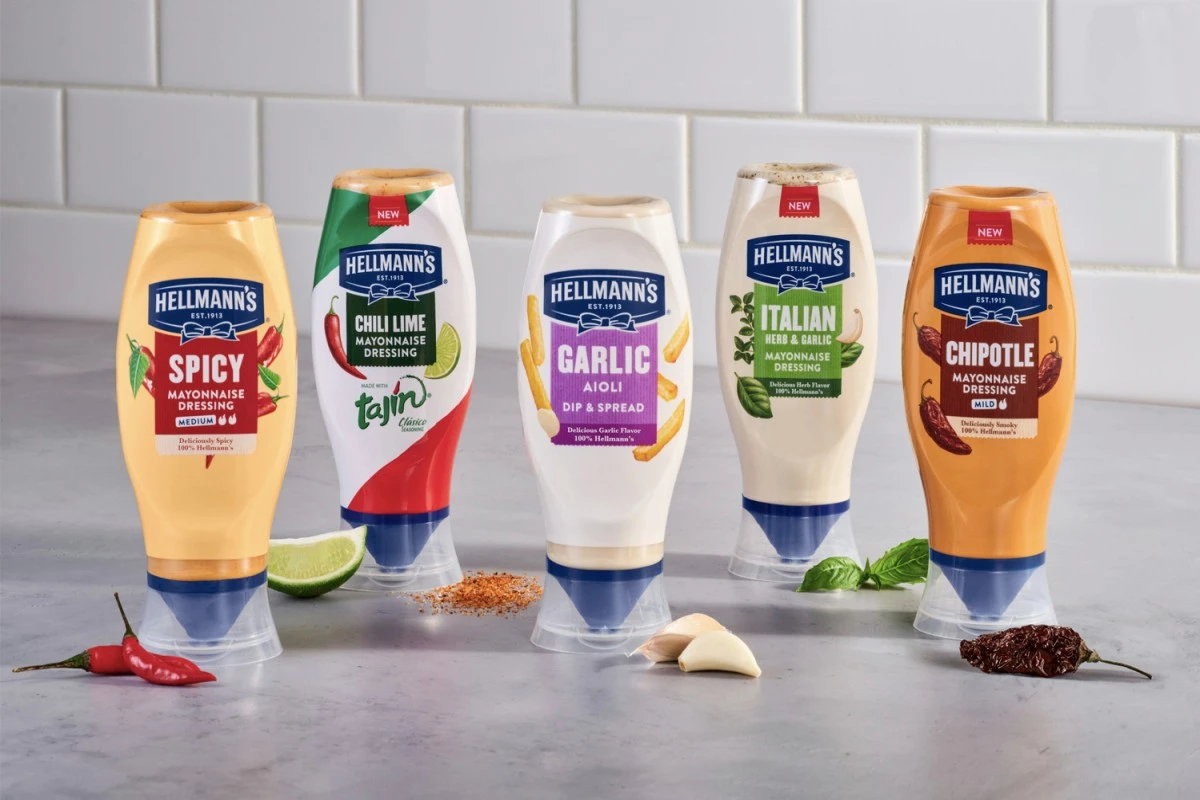 Range of Hellmann's flavored mayonnaise from Unilever.
Blending algorithmic insight and human expertise
Without doubt, AI delivers major benefits to food brands., Nnevertheless it is not a replacement for human creativity. AI is a tool that gives product developers back the time they need to explore their culinary creativity.
“Food trends are evolving much faster than before. Rather than emerging over years, they now move at the pace of cultural conversation, often shaped by what people are searching for, sharing, and asking in real time,” Kirby says.
“Algorithms are becoming increasingly good at spotting patterns and predicting emerging trends, especially at scale, but food and flavor are deeply emotional and cultural, so human intuition and expertise still play a critical role in interpreting those insights.”
“In simple terms, algorithms can tell you what people might like next, but you taste things with your mouth, not a model,” she asserts.
“The technology gets you 80% of the way there. The real advantage comes from combining both, using data to guide direction while culinary creativity brings it to life in a way that feels authentic and enjoyable.”
“Ultimately, you need both science and human insight and instinct to create flavors that people will love and come back to. We use AI and advanced technology to move faster and explore more possibilities, but the final judgement on flavor is still human.”