



Leaft Foods positions Rubisco plant protein as “whey Plan B” amid supply squeeze


Key takeaways
- Tight whey supplies and rising costs are driving manufacturers toward hybrid protein formulations.
- Leaft Foods’ Rubisco protein offers foaming, gelling, and emulsification properties across bakery, dairy fortification, and acidic protein beverages.
- The New Zealand-based company claims Rubisco can reduce formulation risks, replace eggs in bakery, and offer cost savings to manufacturers.
 Leaft Foods’ CEO Ross Milne (right) with alfalfa grower Tim Ridgen (left) and Daniel Te Raki (center) from Foodstuffs South Island.
Tightening whey supplies are increasing costs and procurement risks for F&B manufacturers, incentivizing them to look for solutions that diversify protein sourcing. New Zealand-based Leaft Foods is positioning Rubisco protein — derived from alfalfa leaves — as a potential solution. The protein can be combined with dairy proteins for hybrid formulations.
Leaft Foods describes Rubisco as “nature’s most abundant and nutritious” protein. The food tech start-up says the ingredient’s functional properties enable applications across bakery, dairy fortification, and protein beverages, particularly acidic formats.
“Rubisco can compete head-to-head with whey and egg on the things that matter most in formulation — it foams, gels, and emulsifies, and it carries a superior essential amino acid profile with very strong digestibility,” Leaft Foods’ CEO Ross Milne tells Food Ingredients First.
“Our Rubisco Protein Concentrate is stable at pH values as low as 3. Low pH is one of Rubisco’s strongest suits, and it’s solving a big formulation problem for the beverage industry.”
Rising urgency for whey replacement
Last week, the US Department of Agriculture described whey protein concentrate (WPC) 34% inventories as “extremely tight,” with constrained production and “little product available outside contracts.” The monthly average “mostly price” for WPC34 rose 23% from US$1.52 per pound in January 2026 to US$1.87 in June 2026.
Milne observes a heightened interest among F&B companies in Leaft’s Rubisco protein amid whey’s ongoing supply challenges.
“Companies that were interested in a highly functional, sustainable protein ingredient like ours, but weren’t in a hurry to make a change, are now coming to us with a greater sense of urgency because they need a Plan B that performs.”
However, he emphasizes that companies are considering hybrid formulations, rather than a straight one-for-one swap for whey.
“The more common conversation is a hybrid formulation to drive innovation and product performance by blending Rubisco alongside dairy protein to boost overall protein content and to improve the consumer experience of the product.”
Milne calls a hybrid protein a solution that allows manufacturers to de-risk their supply chain “without having to fully requalify a product on a new protein overnight.”
“Over time, as manufacturers get comfortable with Rubisco’s functional profile, we expect them to shift toward higher inclusion levels.”
 Leaft positions Rubisco as a way to formulate juice-style protein drinks without hydrolysis and the subsequent need for bitterness masking.
Rubisco tackles protein formulation hurdles
In acidic beverages like juices, a common R&D challenge is mixing protein ingredients, Milne tells us. Leaft’s Rubisco Protein Concentrate helps them reduce reliance on “usual workarounds” like hydrolysis, which brings up another challenge — bitter tastes.
“That’s a big part of why high-protein juice has never really existed on shelves.” He argues that Leaft’s Rubisco Protein Concentrate can help develop “high-quality, quickly digesting protein without compromise.”
Leaf-derived Rubisco protein also helps manufacturers tackle the high viscosity, sandy mouthfeel, and unpleasant flavor challenge in high-concentration dairy proteins, which is especially relevant for GLP-1 diets.
Leaft Rubisco Protein Isolate helps keep the texture smooth and liquid, “brings a creamy mouthfeel, and its neutral flavor allows the protein levels to be extended without compromise to taste,” Milne explains.
He also describes Rubisco as a “strong emulsifier,” which can be used in foams, batters, and emulsions.
Bakery cost savings
In bakery applications, Milne says Leaft Rubisco Protein Isolate offers cost-in-use savings to companies as an egg replacer.
“An egg is a complex matrix made up of proteins, fats, and moisture with little carbohydrate. The egg proteins provide foaming and gelling functionality, and the fats provide the ability to emulsify,” he explains.
Rubsico Protein Isolate provides egg’s key functions — emulsification, foaming, and gelling — in one ingredient.
“In one of our customers’ cake applications, we replaced all the eggs with an emulsion of Leaft Rubisco Protein Isolate, oil, and water that represented half the protein of the whole egg it replaced. In a blind taste test, seven out of seven members of the customer’s bakery team preferred the Leaft Rubisco version.”
“This translated into a cost-in-use saving of about 15% across the whole cake.”
In December 2025, Leaft tested its alfalfa-based protein for egg replacement in cakes and muffins in partnership with grocery cooperative Foodstuffs South Island. It also collaborated with Lacto Japan to scale up Rubisco protein for use in plant-based foods and sports nutrition products the same year.
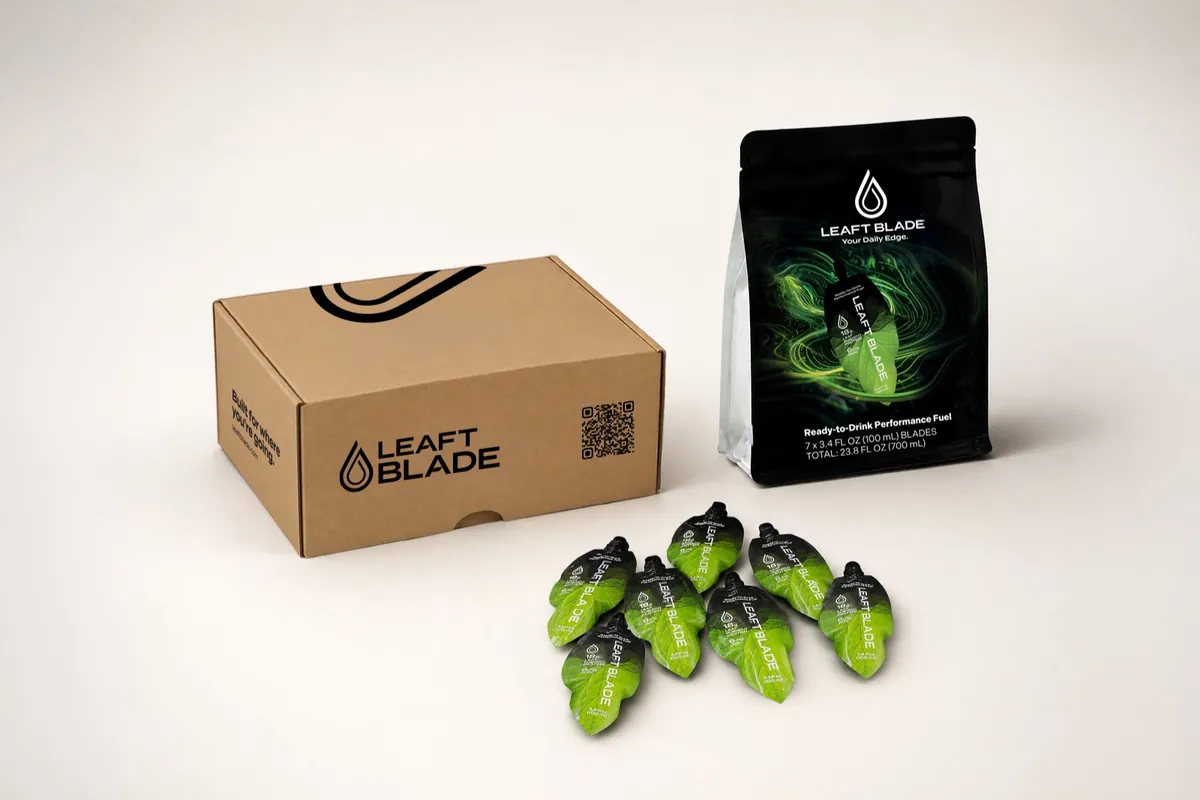 Leaft Foods’ Rubisco ingredient has moved beyond trials into a commercially sold finished product Leaft Blade containing 18 g of Rubisco protein for athletes (Image credit: Leaft Foods).
Scaling Rubisco protein supply
Leaft Foods currently has a Rubisco protein output of around 2.5 metric tons per week at its commercial demonstration facility in Canterbury, New Zealand. This gives the company “actual production experience” and a validated process at a meaningful scale.
“What we can guarantee to a given manufacturer depends on their volume and timeline, and that’s a conversation we have directly with each partner as we plan capacity expansion,” says Milne.
He also comments on supply variability in the “natural and seasonal” source crop alfalfa. “We work really closely with our alfalfa growers on a clearly defined growing system and harvest within very strict parameters.”
Rubisco’s path to mainstream adoption
Rubisco’s move from a contingency ingredient to a mainstream protein amid the whey supply squeeze is “mostly a matter of time, growth of real products in the market, and track record,” Milne asserts.
“Manufacturers move cautiously on new proteins, and they want to see consistent scaled production, in addition to functional performance. We’re already starting to check those boxes with our production projections, by serving existing B2B customers, and selling a consumer product that’s already being enjoyed by customers in the form of Leaft Blade.”
Every additional partnership and every additional year of consistent supply builds the case for Rubisco protein.
However, Milne admits that a challenging aspect of the Rubisco protein is that it is a new ingredient with limited processor experience. “There’s naturally more institutional familiarity with how whey and egg proteins behave across every scenario. We’re working with them to close that gap.”