

A banner featuring a sample box and dried vegetables
Home
Videos
Kalsec demonstrates ...

Kalsec demonstrates power of natural antimicrobials in shelf life extension for savory meats

23 May 2022 | Kalsec

Kalsec has undertaken new research which demonstrates how natural antioxidants can match the performance of synthetic ingredients while containing lower sodium levels, for clean label meat products. Kalsec’s Durashield is a product line that harnesses the enhanced synergies of natural antioxidants combined with natural antimicrobials to improve both shelf life and food safety in a variety of applications, including meat and poultry.
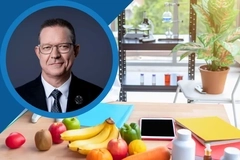

This is Benjamin Ferreir on the show floor of IFFA 2022 in Frankfurt, Germany.

I'm joined here today by Gareth Jones, and he's the product manager of Food Protection Europe at CLEC, and he's here to speak to us about the latest in sodium reduction and antimicrobial food food production.

Hello Ben.

Hi Gareth.

Nice to meet you.

For the first question, can you share some insights on your new research demonstrating how natural antioxidants can match the performance of synthetic ingredients while also lowering sodium in meat production?

Perfect, thank you very much.

Yes, we did some research actually last year using our Duualox QST product specifically to target replacement.

In sodium ascorbate in meat products, particularly cured meat products.

There's a lot of trends still in the meat industry to reduce sodium in foods, and we were looking at this as an opportunity to replace sodium.

It would have been in a way that with kitchen cupboard ingredients that consumers would understand.

So we're replacing sodium ascorbate, we're eliminating the sodium that comes from that.

And also giving a product that's based on rosemary extract and either Acerola cherry concentrate or green tea extract, so we think that's in line with the trends that we see in the industry for sodium reduction and cleaner labels that consumers can understand.

We did this research in cured ham in the UK and we'll be talking about the.

Work, I'll be sharing a presentation during a lecture this week.

And how is this particular ingredient sourced and produced?

We grow a lot of our own rosemary, you can see some rosemary behind me.

We grow our own rosemary in the US and we also source globally from other parts of the world where rosemary is grown, such as in Morocco.

And we also source the green tea from proven suppliers in Asia Pacific region, so we have a a list of trusted suppliers in that region, and Asarola cherry tends to come from Brazil.

So we source that where we're using it from South America.

And what particular artificial additives can your ingredient replace and why are these becoming unpopular on the market?

As I think I mentioned, the sodium coming from sodium ascorbate is a concern, and any of the synthetic antioxidants such as BHA, butylated hydroxyaniso, BHT, we can replace a lot of those kind of products which are synthetic, BH.

This is a complete aside, but BHA is not good for cats, so we also use some of our products.

In pet food, so we're looking to replace BHA with some of our natural antioxidants based on rosemary as , and consumers want to take away products that are not natural or appear to be synthetic and we're, we're very much meeting that trend with these plant-based naturally derived products.

Thanks for the great insights, Gareth.

Thanks for the.

More videos

Image