Banner with cereal bars and Biospringer logo with a learn more button in the right bottom corner
Home
Videos
ISM & ProSweets 2025...

ISM & ProSweets 2025: SternEnzym targets food waste and energy savings in confectionery sector

11 Feb 2025 | SternEnzym

At ISM & ProSweets 2025, SternEnzym’s R&D head, Sven Konradt, discussed the company’s innovative enzyme solutions, which can improve energy efficiency and sustainability while reducing sugar in baking. These enzymes stabilize output and lower cooking times, addressing challenges with viscosity-enhancing ingredients and promoting a more sustainable supply chain in the confectionery sector.
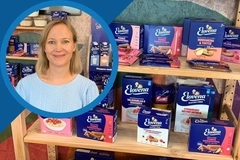
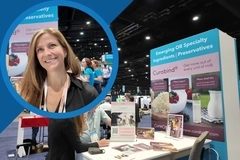
This is Anvisha Manjjal with food ingredients first.

I'm here with Sven Konrad, head of R&D at Stern Enzyme.

Sven, can you tell us what you're presenting on the show floor today?

Sure, thanks a lot for having me.

We're presenting the full range of enzymes that you could want for crackers, cookies, wafers, and confectionery products ranging from.

Lasers, hemicellulasses for viscosity reduction to acrylaid prevention, invertase for prolonged shelf life of soft fillings, etc.

So everything you could want if you're in the business for crackers, biscuits, wafers.

Great.

And how do these ingredients align with current market trends?

We see a lot of issues with supply chain of good raw materials, especially for wafers, so these enzymes enable you to produce good wafers with mediocre raw materials.

So whenever you have too much of viscosity enhancing ingredients in the dough, and you would need a lot of energy to remove the water from the wafers, these enzymes help reduce viscosity and therefore help you to evaporate water easier, save energy and time.

Sugar reduction is a hot topic right now.

How does your enzymatic FOS production address consumer demand for healthier confectionery that also doesn't compromise on taste?

Of course, healthier is one topic.

We do have a fructozyl transferase enzyme that produces fructo oligosaccharides from sugar.

Which are prebiotics, so these play right into the game of gut health promoting ingredients.

They are the food for our bacteria in the gut, which is really an important thing, an important trend that we see.

And on the other hand, we have asparaginase to prevent acrylaid formation, which is again a very high concern risk material that you would want to prevent from occurring in your baked goods.

Great, thanks for sharing.

How are your enzyme solutions helping manufacturers overcome challenges like uneven raw material quality and also just rising production costs in general due to the cost of living crisis and also climate change?

I mentioned one thing, the viscosity reduction, of course that means directly energy saving.

If you can use raw materials that are a bit problematic with the enzymes, you can make them work.

You can also prevent additives like metabuculfates if you use enzymes for gluten network degradation or proteases to soften your gluten network instead of artificial additives.

Going back to my question about climate change again, we see a lot of impact on just the availability of raw materials around the world due to the current climate crisis.

How is Stern enzyme supporting more sustainable and resilient confectionery production?

One thing we mentioned is, of course, there's always a point in energy saving in production simply by evaporation of water, which becomes more easily.

With those enzymes, on the other hand, these enzymes also prolong shelf life, so you have less food waste.

You have things that are in a consistent quality for longer times on the shelf, and consumers will be able to consume them longer with all the texture and taste attributes that they want.

Interesting.

There's also been a big regulatory shift towards clean label and more transparency in the food industry at large.

What role do your innovations play in addressing these shifts and concerns?

Obviously enzymes are processing aids, so they don't end up on a label.

That means they could be considered as a clean label ingredient, but this is not to disguise in terms of transparency.

I'm very much for transparency, and consumers want that.

It's just.

Also a bit misleading if you put everything that you add to a product as a processing aid onto the label, because then people will ask, so what does it do?

And actually it doesn't do anything in the final product.

It does something before that in the process and therefore enzymes are still considered not to be on the label.

For sure.

The Dubai inspired chocolate trend seems very popular on the show floor today.

How do you cater to today's social media and flavor driven consumer cohorts?

Of course we have our own social media channels for Stern enzyme.

We would hope and love if more people would sign up, but we broke 5000 just for Stern Enzyme last year.

We try to pick up on trends and we have very good technologists that pick up on these trends, and these wafers in a brownie and in a Dubai inspired chocolate cream were developed in our own lab.

We're not selling the ingredients necessarily that are.

In these creams, but we did a lot of sensory testing and we even packed them ourselves.

So this is a homemade product from Ste Enzymes Labs, and of course the wafers are made with our enzyme solutions.

Great, thanks so much for your time.

More videos

Image