
Banner featuring Angel Yeast logo with images of prepared savory meals
Home
Videos
ISM & ProSweets 2025...

ISM & ProSweets 2025: GNT presents natural colors amid legislative changes and “snackification” trends

07 Feb 2025 | GNT Group

GNT presented potato chips with “on-trend” flavors and colors, which align with “snackification” trends and consumer demand for diverse flavors. Jill Janssen, head of Sales, DACH, Benelux, and TR, reflects on changing regulations, such as the US ban on red dye No.3, and how the company’s plant-based Exberry colors can help manufacturers navigate technical challenges.
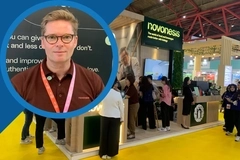

This is Andrisha Manjal for food ingredients first.

I'm here with Gil Jansen, who's the head of sales, Dak Benela and Turkey for GNT.

Gil, what is GNT showcasing at the show this year?

Thank you very much for having us again today.

What we are showcasing today at Proweeds are the snacks, so the potato snacks which you see over here.

We decided to color 6 plain potato chips with different seasonings and colors, linked to on trend flavors like you see on the left-hand side.

So for example, we have the green ones which are colored, which are colored green and flavored with charred scallion seasoning.

Again, we developed the rainbow one, so it's going really from green to blue to purple.

We have some yellowish, orange, and also some red options available.

We really see that people are attracted to them because they're looking for some on trend flavors, but also which come really to life via the colors, and that's what we made work now.

Also, at proceeds, where you see a lot of sweet things nowadays, sometimes it becomes as easy to also have like a savory option, which is a bit more salty, and that's the variety we offer here today.

Great, and what key snacking trends do your colorful potato chips reflect?

Like I just mentioned, we still see a lot of snackification going on, so people like to try.

Multiple things throughout the day, so eat more on more occasions, so not only go for 3 standard meals like we had before, like breakfast, lunch, and dinner, but they really like to have more occasions where they have smaller snacks.

And as mentioned as , we see that they are looking for more sophistication, basically.

They're not looking for the standard flavors, the standard combinations that they are used to, also in relation to color, but they're looking for more diversification, and that's something.

Like this, what it can offer by combining on trend flavors in very attractive, appealing colors.

Interesting with the recent bans on additives like red dye number 3 in the US, how can GNT's Xberry colors help manufacturers navigate these changing regulations, and what are some technical challenges that can come up while working with colors like these, and how does Interesting that you touched upon that.

I think there is a lot of development going on on a global scale, so you see a lot of development also in food regulations, which sometimes also involves the color business.

Our colors are always made from fruit, vegetables, and animal plants, so they are sustainable plant-based colors, which means that the majority of them do not have an E number on the label.

And indeed with certain bands like that, we definitely have some clean label alternatives available.

For our consumers and customers.

You also can see that we have a red option here, maybe I'll move it a bit more to the front, so you see that we have a red option as.

So this one is a combination of our red MM powder, so it's one of our red options, which we have a lot of available.

This one is made specifically from radish, for example, so it really depends on which kind of application you have and which kind of market, which suitable alternative is there.

If you look into the technical specifics from this, that's something which is also really depending, so it fully depends on which kind of application you have and where you focus on.

Luckily we have on global level several application centers available.

So for example, here in Germany, the closest one is the one in Ake, where we have roughly around 20 application specialists available for you who are there to help.

You can do a color match with an artificial one can help you with some new product launches, also mimic a certain artificial color and do a customized option solution for you.

So that's definitely something we are able to help you with.

Also with regards to regulatory support, we can also give you some advice on what's the best suitable solution for your application.

Great, thanks for sharing.

Sustainability is a growing priority for consumers and brands.

How do you ensure that Xberry colors support eco-friendly formulations?

Yeah, we definitely are on top of that.

Sustainability is a hot topic for us.

That's also why we say that we have sustainable plant-based colors.

A few weeks ago, we were awarded with the golden Ecovades medal, so that's something we are very proud about, and we also really like to share with you.

Here on Protweeds, although it's really focused on confectionery, we also have a beverage available, and this beverages is supporting a low carbon footprint, so this is the first product where we really made available like the carbon footprint of a certain specific application.

And that's what we try to do now more and more, so that we come up with a carbon footprint of our Exbury portfolio.

So for our customers who are really interested in that, that's available upon request, so we have some carbon footprint data available from every product, so consumers and manufacturers can use that for their calculations into the final product, so what the final product carbon footprint is.

To give an example of that, we also have this beverage here.

So it is a beverage which we call the citrus sunset, so it has a very nice mandarin flavor, and the overall carbon footprint of this particular drink is 0.08 kgs of carbon dioxide, and that's per liter, and of course excluding the packaging and the refrigeration, but this gives a good example of how eberry can contribute to a very low carbon footprint, because the color in this beverage, which you also see here on the picture.

Only contributes 2.6% of the total carbon footprint of this entire product, so that's also showcasing how we can contribute to that as G&T in day to day practice.

Very interesting, thanks for sharing again.

What emerging consumer or regulatory trends do you see shaping the future of food color innovation?

Yeah.

I think today, if you also look into, it's now almost the first day of, sweets is coming to an end.

If you see that we had a lot of critical consumers and manufacturers at our desk.

So it's definitely not that everybody believes what is told to them or what is shared in general media.

A lot of people really go into deep dive, go a deep dive or investigate that by themselves, so we see a lot of critical people becoming more aware of what they contribute and what they make and what they consume as.

So therefore I think this critical attitude becomes more and more, which also fits to more clean and clearer labels, and that's basically what you also saw with the sacrification trends.

So it's still tapping into this need for something special, sophisticated, but on the other hand, also providing a transparent look on.

What is in it, what you're consuming at the end as a consumer, so that together with our availability makes us, I think, a very interesting ingredient also for the future for consumers and manufacturers.

Thank you so much for sharing your insights with us.

Thank you very much for having us.

More videos

Image