

- Industry news
Industry news
- Category news
Category news
- Reports
- Key trends
- Multimedia
Multimedia
- Journal
- Events
- Suppliers
Suppliers
- Home
- Industry news
Industry news
- Category news
Category news
- Reports
- Key trends
- Multimedia
Multimedia
- Events
- Suppliers
Suppliers
Ever After Foods: Balancing scalability and sustainability for “financially viable” cultivated meat
04 Apr 2025 | Ever After Foods
Food tech company Ever After Foods has partnered with Bühler to help cultivated meat manufacturers scale and reduce production costs by over 90%. CEO Eyal Rosenthal talks about the collaboration and how its Edible Packed-Bed bioreactor is different from other methods of formulating cell-based meat. He also shares how low media consumption enables higher output to make cultivated meat production “financially viable.”
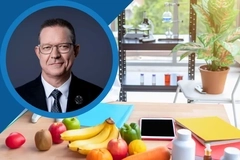
Hi, this is Ian Noin, a journalist at Food Ingredients First.
Food tech company Ever After Foods recently partnered with Beller to help cultivated meat producers scale production.
The company's CEO, ER Rosenthal, is joining us today to discuss how they plan to achieve that and the industry challenges they are targeting.
Welcome, E.
Hi, nice to meet you.
Great to meet you as.
So my first question is, Yael, how did the collaboration with Beller come about and what role did Beeler play in the development of cultivated meat production system?
So, the collaboration with Buller was born out from, of a shared vision to bring cultivated meat to the commercial reality.
At Eraft Foods, we developed a, a, a purpose-built food-grade system for growing real meat at scale, but to take it global, we needed a partner who, who understands how to industrial, food.
Bule builds, as you know, systems that power global food from grains to chocolate, pasta.
So we weren't looking for a supplier.
We, we actually needed a builder, and so together we are creating infrastructure, not a, not a proof of concept, but a real production system.
OK, great.
And could you tell us, about your edible pack bed technology?
How does it work and how is it different from the other cultivated meat production method that the industry is using currently?
Yeah, so, so, as I said, our, our system is completely different.
So our edible packbed bioreactor is fundamentally different way to grow cultivated meat.
Most of the industry, as you know, uses tan bioreactors which have been borrowed from, from the farmer, but animal cells don't grow in those conditions.
I always say it's like trying to grow meat in a in a in a stir tank is like trying to bake a cake in a washing machine.
The violent churning will destroy the delicate structure, leaving you with a meshy mess, and the same happens to those fragile cells.
So instead we grow them.
We grow natural animal cells on edible plant-based scaffolds packed in, in column.
This structure generates, creates a gentle 3D environment where cells attach, grow, and differentiate, forming structured muscle fat and connective tissue, and meat grows structured inside the bioreactor.
OK, great.
Thank you for explaining that.
And what would you say are the biggest scalability challenges that cultivated meat producers are facing today?
And how is your company helping them overcome that challenges?
Yeah, so, so, so the challenge isn't growing cells, it's growing them efficiently and at scale as, as, as you mentioned.
So the real challenge today is not in the basic science, it's in the, in the engineering of manufacturing infrastructure and the industry current approach is, is, is to scaling is like trying to, to filling a swimming pool, one glass of water at a time.
Most systems today give you very low yield, high cost, and, and, and cell slurry, which is not really meat.
Our systems deliver up to 68% product per reactor volume.
We are producing over 10 kg of structure need from, from just 25 L.
Other systems, just to give you the, the, the perspectives, will, will need around 60 times volume to get close and they still wouldn't launch the structure.
So, we built it for food manufacturing from day one.
This is not a, a, a lab tool, it's an industrial meat engine that is, is, is dedicated specifically for food products.
But that's really interesting.
And the company also mentioned there is a potential for 90% reduction in the production costs.
So would you like to tell us how you plan to achieve that?
So, so the reduction is, is, is really, it comes down to, to yield integration and, and, and simplicity.
The, the key in our system is separating the cells and growing tissues from, from the harsh mixing process.
This protects them from, from damaging, from damage allow us to precisely control their environment and so we can then aggressively killing and recycling the media without harming, harming the cells, making the process very, very efficient.
This means that we are using much lower media consumption and, and allow us to get higher output and less labor.
You know, the result is at the end of the day, it's not just a, a lower cost, it's a total redesign of, of what makes cultivated meat financially viable.
OK, great.
And, the cultivated meat industry is facing a lot of challenges, and in the future, how do you think, what are the key milestones that the industry still has to achieve to get consumer acceptance in general?
I think at the end of the day, it's, it comes up to, to three key points.
I think one, of course, post-parity, without it, cultivated meat will stay a niche, so cost is, is one of the key challenges that everyone is working and, and, and we must reduce the price considerably.
The second is the, the product experience, so taste, texture, and the nutritional value must meet or exceed what consumer expects from conventional meat.
And of course the third one, which is related also to the first point is the scalable infrastructure.
Producers need ready to use industrial systems, not large scale, not lab scale experiment.
And then that's exactly what we have built with Buller, and that is what will unlock the true adoption of cultivated meat systems.
OK, thank you for sharing that.
And in future, how does your company plan to elevate the cultivated meat innovations, and do you have any upcoming projects in pipeline?
Yeah, so for us, we are, we are not here to, to launch a single, a single brand.
Our mission is to enable a cultivated meat ecosystem.
We have proven the technology across multiple species, so we did the chicken, duck, beef, fish, and we are working with partners around the world to scale the production using our bioreactor and scaffold system.
And with Buller, we are taking this to the commercial manufacturing.
We don't just want cultivated meat to exist, we want it to thrive, and, and that means building the infrastructure and systems others can rely on.