
- Industry news
Industry news
- Category news
Category news
- Reports
- Key trends
- Multimedia
- Journal
- Events
- Suppliers
- Home
- Industry news
Industry news
- Category news
Category news
- Reports
- Key trends
- Multimedia
- Events
- Suppliers
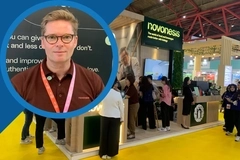
Mark Golder, CEO of Win-Win, explains how his team recreates chocolate’s signature taste, shine, and snap — without cocoa — amid supply pressures driven by climate change. Using patented fermentation and sustainable cereals and legumes, the UK-based firm delivers a convincing chocolate alternative for bakery and confectionery products. Golder also points to rising demand for cocoa-free options and stresses the need to scale production and educate consumers to build a more resilient, sustainable future for chocolate.
Hello and welcome.
This is Insha Noreen, journalist at Food Ingredients First.
Today we are discussing the growing demand for cocoa-free alternatives with Mark Golder, CEO of UK-based Win Win, which replicates the taste and snap of traditional chocolate using its fermentation technology.
Welcome, Mark.
Thanks Intu, it's great to be here.
Great to have you with us, Mark.
So, we know that cocoa supply is under increasing pressure, so how urgent is the need for a viable cocoa free alternative?
Yeah, that's right, of course, your, your audience will be aware of the issues to do with cocoa which are primarily caused by climate change and that's resulting in decreasing yields and, increasing deforestation to try and make up for that and so, there is an increasingly urgent need for that to, to be a, a solution, recent figures estimate, Something around a 200,000 metric ton gap in the availability of cocoa to make chocolate and the demand for chocolate globally, which of course is increasing, and so we're here to help provide a sustainable solution to fill that gap.
OK, great.
And how close would you say win-win is today to replicating the real sensory experience of chocolate that consumers love?
Yeah, we're really passionate about this, I'm a food scientist, actually by training originally, we're really passionate at Win Win about the, the taste of our product, we know that in food and in chocolate in particular, that's really important, but we ask people, don't just take our word for it, we've, tested our product with, with consumers in independent testing and we're delighted with the results that we get that, Consumers, of course like the taste of conventional chocolate, and they tell us they also like the taste of, of win-win as an alternative, so, so we would say we're, we think we're really close, we don't rest on our laurels, we're continuing to invest in R&D here at Win Win to continually improve our product, but I would invite all of your audience to reach out to us, we'll be happy to, help them to, to find, their way to the product and to try it for themselves and, and let us know what they think.
OK, that's, that's really exciting.
And you said you have a background in food science, so could you shed more light on how you use the fermentation technology to replicate the taste and shine and snap of traditional chocolate?
Yeah, we're really passionate here at Win Win about fermentation.
Our business is, is, is built on that technology.
You know, fermentation is a really ancient natural process, but actually really sophisticated, particularly in developing taste, and the reason we're so passionate about it is we've developed a a, a patent, and we've got two patents.
Being in a third in application on our process, which enables us to create chocolaty flavors from naturally and sustainable cereals and legumes, and so that fermentation is the thing that enables us to really create the taste, in terms of the shine and the snap you mentioned, that's also really important to manufacturers, actually that comes from some of the other components of the product, particularly the fat system and, and we're also, pioneering in our work to develop, suitable fat systems, that combine together to create a product that tastes fantastic, looks like chocolate, and performs like chocolate, particularly with that, that shine and that snap.
So Mark, could you tell us a little about the R&D challenges that the team faces while developing the cocoa-free alternative to chocolates?
Yeah, of course.
You know, we have a fantastic talented R&D team here at Win Win and of course, although it sounds straightforward what we're doing, it, it, it's actually really exceptional technology that enables us to make chocolaty flavors from cereals and legumes that that are not cacao, you know, it's, it's really quite incredible.
Now we're constantly refining and learning more about that process, so actually right now we're testing new versions of.
Product where we can, we can take our learnings and experience and start to apply those, so, at Win Win you know whilst we're really proud of the product that we currently have and that's commercialized, er we're constantly innovating on those techniques, particularly around fermentation to help us deliver more chocolaty flavors, er better texture in the product and, and even better characteristics for consumers to enjoy.
Your products are designed to work in existing production lines, right?
So how critical is that for driving adoption among manufacturers?
Yeah, we, we want to be as, as seamless and as helpful for manufacturers as possible and, and, and we know that if we can design our product to work just like chocolate in a manufacturing environment, then that's, that's the most helpful that we can be, and so, yeah, we think that's important, there's no additional equipment needed by product manufacturers to use win-win.
And, and we think that's the most straightforward, way of, of helping our products to be adopted across the industry.
OK, great.
And which chocolate applications are you seeing the strongest interest in so far in using Win-win's cocoa-free alternative?
Yeah, we're, we're seeing huge demand, particularly in in bakery and patisserie applications, so cakes, biscuits, patisserie, cookies, that kind of product, in ice cream also, we're seeing, we're seeing good demand, and in other sectors like, like desserts and so on.
We're really, we're really proud of the products that we, we've yet to really find an application where it, it hasn't worked as a one for one replacement for chocolate, and so we're, we're discovering every day and every week as customers are working with us new applications, er for our product, but, certainly in those areas that I mentioned, particularly bakery, er we're seeing, we're seeing a strong uptake.
OK.
And with so many various applications, what are the biggest challenges you see in scaling cocoa-free chocolate, and how do you overcome them?
Yeah, from our perspective, we've been able to scale up our, our production very quickly, so, we're confident that we have the raw materials and the supply chain, the technology to produce the product, you know, I think the expansion of cocoa-free, is a new, is a new approach, and part of the solution for sustainable chocolate.
Clearly that's going to take some time, and I think in particular, helping consumers understand, both the issues and how cocoa-free, provides a solution, you know, we want people to recognize that this is a fantastic tasting product, but it avoids many of the issues and challenges that exist with the current cocoa supply chain, so, I think our role is to create something that, that tastes fantastic and that is, is, is easily used in the industry and then working with our customers to help consumers understand why this is something that they may be interested in and, and hopefully they're gonna really enjoy.
OK, great.
And can you also tell us about some of your recent partnerships and how they can accelerate the market adoption of your products?
Yeah, , your audience may have seen the announcement of, of some of our distribution.
Partner, partnerships in, in Germany with, with Martin Brown and recently in the UK with Keylink, , these partnerships really help us in make the product, making the product widely available in a variety of different sectors so we're able to, I work directly with large manufacturing customers and large food service businesses, but also partner with, with distributors to help us get the product to everybody, we want, Win Win to be as widely available as possible, wherever, customers could find conventional chocolate at the moment, we want them to, to find win-win as, as an option to try.
OK, great.
And, in future, how do you think and what will define the success of cocoa-free chocolate, and what milestone is when when working towards?
Yeah, so in terms of success, you know, our, our vision is, is a more sustainable future for chocolate, you know, as I mentioned at the start, climate change unfortunately, isn't, isn't going to stop anytime soon, we want to play our part.
In reducing that, you know, win-win is 80% lower in carbon emissions than conventional chocolate uses around 80% less water, so, we want to play our part in, in, in slowing climate change if we can, and for us, therefore, adoption of win-win as part of the solution to a more sustainable future is, is how we would define success.
You know, there is this, there's this structural gap, we support initiatives that help give a, er a better deal to cocoa farmers, help reduce deforestation, , but we know that more sustainable solutions are going to be needed in order to meet global demand, so, so for us what success looks like is a, a fair deal for er cocoa.
Actually, a reduction in deforestation and an adoption of win-win, as a, as part of the solution for all of those delicious chocolaty treats that are enjoyed the world over and, and that we're actually consuming more and more of.