

Salt reduction reimagined: Crafting balanced, flavorful solutions for health-conscious consumers

Key takeaways
- Salt reduction strategies shift from sodium substitution to more sophisticated flavor optimization, focusing on enhancing the entire taste profile of food products.
- Ingredient suppliers balance consumer demand for clean label products with the technical challenges of maintaining taste, texture, and shelf life while reducing sodium.
- Fermentation-based ingredients and yeast extracts are at the forefront, enabling significant sodium reduction without sacrificing flavor.

The food industry is witnessing a significant shift in how salt reduction is approached. What once focused solely on lowering sodium content is now evolving into a broader and more sophisticated strategy centered around flavor optimization.
With increasing pressure from health organizations, governments, and consumers, manufacturers are striving to create reduced-sodium products that don’t sacrifice taste, texture, or overall quality. This reformulation challenge has led to the development of innovative ingredients and technologies, particularly in fermentation and flavor enhancement, which allow for the creation of more balanced and complex flavor profiles.

As consumer demand for clean label, healthier options continues to rise, food manufacturers are looking for ways to reduce sodium without compromising the eating experience. Innova Market Insights found that a quarter of global consumers view low salt as essential to making indulgent foods feel healthier. Almost half say they avoid salt to age more healthily. The market researcher’s data suggest there was a 4% CAGR in reduced salt claims in F&B launches globally between 2024 and 2025.
Governments and health organizations worldwide are ramping up efforts to tackle excessive sodium intake, which is linked to high blood pressure and cardiovascular diseases. Initiatives like the Healthier Food and Food System guidelines and front-of-package labeling are putting more pressure on food manufacturers to reduce sodium in their products.
Experts at ingredient leaders Kerry, Biospringer by Lesaffre, and Biolev by Levapan highlight how the future of salt reduction technology is moving beyond simple sodium substitution to creating customized, holistic flavor profiles. We explore how these evolving technologies are shaping the future of food ingredients, offering solutions that meet regulatory requirements but also deliver on sensory satisfaction.
From sodium reduction to flavor optimization
Salt-reduction technologies have evolved significantly in recent years. Traditionally, sodium reduction was seen as a simple subtraction of salt to lower sodium levels in food products. However, with rising consumer demands for healthier, better-tasting options, the focus has shifted to flavor optimization — a more comprehensive approach that enhances the overall sensory experience.
 Advanced fermentation ingredients reduce sodium while boosting flavor depth and mouthfeel for a fuller, more satisfying taste.As Hugo Leclercq, global portfolio director at Kerry, explains, salt reduction is now about “designing the rhythm of flavor,” which includes addressing the entire taste curve — “the upfront impact, the mid-palate body, and the lingering finish.” Instead of eliminating saltiness, Kerry is pioneering methods to rebuild flavor in ways that maintain balance and enhance the entire eating experience. This holistic approach helps manufacturers design products that still deliver a full, satisfying taste without the high sodium content.
Meanwhile, Marion Alexandre, global senior food application specialist at Biospringer, emphasizes the role of fermentation-based ingredients in this transformation. According to Alexandre, “yeast-based ingredients like the Springer Umami and Springer Cocoon ranges deliver more than just saltiness — they provide depth, complexity, and mouthfeel that salt alone cannot achieve.”
Daniel Lopez, marketing manager at Biolev, takes a slightly different angle. He describes the benefits of multi-modal flavor enhancement, using yeast extracts to “trigger umami receptors” and improve the sensitivity of salt receptors on the tongue. This approach allows for up to 50% sodium reduction while still preserving the flavor “punch.” Biolev’s yeast extracts help create a cohesive taste experience by acting as a “flavor bridge,” ensuring that the reduced-sodium product remains both savory and satisfying.
These innovations mark a key shift in the salt-reduction landscape, where the goal is no longer just to cut sodium but to optimize and balance flavors for a better, healthier eating experience.
Balancing clean label with functionality
As the demand for healthier, cleaner food options grows, ingredient suppliers are faced with the challenge of delivering salt reduction solutions that meet consumer expectations for transparency without sacrificing taste, texture, or shelf life. The growing preference for clean label products — those with simple, recognizable ingredients — has led to significant innovation in how sodium is reduced in food without compromising overall product integrity.
Kerry approaches this challenge with a holistic, systems-based strategy that integrates multiple solutions. As Leclercq explains, salt is not only crucial for taste, but it also impacts texture, moisture retention, and shelf life stability. Simply removing sodium without compensating for these roles can result in subpar products. “By combining our portfolios of taste, texture, and preservation solutions, along with deep application expertise, we help manufacturers reduce sodium while protecting product performance end‑to‑end,” he says.
Biospringer also recognizes the importance of clean labels, focusing on fermentation-based ingredients to meet the demand for natural, minimally processed options. Alexandre says that fermentation-derived ingredients, such as the Springer Reveal and Multirome ranges, help reduce sodium while enhancing flavor complexity and mouthfeel.
“We conduct extensive sensory analysis with trained panels to ensure our clean label solutions deliver satisfying taste experiences that meet consumer expectations. Our recent work with tomato sauce, miso soup, and beef broth demonstrates that significant sodium reductions (25–30%) can be achieved while maintaining or even enhancing flavor profiles,” she notes.
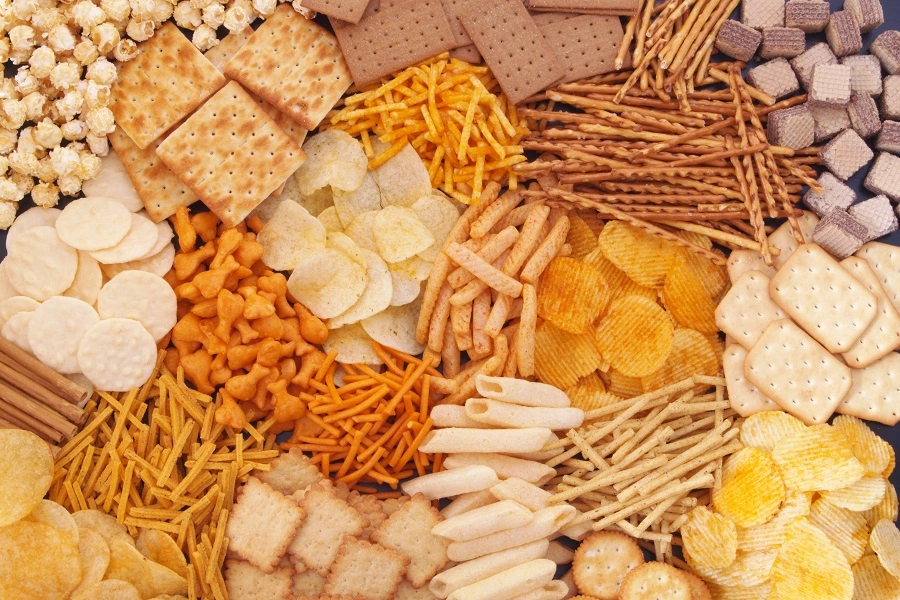 Clean label solutions are transforming snacks by reducing sodium without sacrificing flavor complexity or texture.Biolev offers a slightly different solution by focusing on maintaining the “Golden Triangle” of taste, texture, and shelf life, especially in products that rely heavily on sodium for structure and preservation. Lopez explains that Biolev’s yeast extracts help solve several challenges simultaneously. “We use yeast extracts to provide a savory background, mimicking the mouthfeel of sodium, and helping maintain structural integrity and juiciness,” he says.
In meat and plant-based products, sodium typically aids in protein extraction and water binding. Lopez highlights how Biolev’s Plus Wall 30 helps preserve these qualities without the need for added sodium. Furthermore, Biolev’s ingredients contribute to microbiological stability, an essential factor when sodium levels are reduced, ensuring that shelf life remains intact. Lopez adds, “We work with formulators to ensure that while our extracts provide the flavor, the overall system remains microbiologically stable through synergistic clean label hurdles.”
Key ingredients leading the way
Fermented ingredients, umami compounds, and kokumi enhancers are reshaping sodium reduction strategies by providing more than just saltiness. These ingredients offer depth, richness, and mouthfeel — key elements often compromised in reduced-sodium formulations. Leclercq at Kerry emphasizes that fermentation-derived compounds “restore far more than just salty impact” by rebuilding savory depth, mouthfeel, and flavor continuity.
Alexandre at Biospringer adds that the company’s fermentation-based ingredients, such as the Springer Umami range, “deliver more than just saltiness” and help recreate indulgent flavors that appeal to consumers. These ingredients enable a move away from traditional sodium replacement toward “purposeful taste design.”
Similarly, Lopez highlights Biolev’s yeast extracts, which trigger umami receptors and “increase the sensitivity of salt receptors” on the tongue. Lopez points out that this allows for up to 50% sodium reduction without losing the product “punch,” offering a cohesive and satisfying flavor experience.
These innovative ingredients are proving essential in allowing food manufacturers to create lower-sodium products without sacrificing taste, functionality, or consumer appeal.
Industry opportunities and hurdles
Sodium reduction presents both opportunities and significant challenges across various food categories. Alexandre sees major opportunities in categories like snacks, processed meats, cheese, and ready meals. However, she points out that “sodium is crucial for texture, preservation, and flavor development” in products like cheese, making reformulation more challenging.
 Yeast extracts enhance umami and mouthfeel in dairy and sauces, overcoming sodium’s critical role in texture and preservation.Likewise, Lopez identifies dairy-based sauces and baked goods as promising areas, where sodium reduction can occur with minimal flavor impact. “These are sodium sources where consumers don’t expect high salt content,” he explains.
Despite these opportunities, technical hurdles persist. Alexandre highlights the complexity of sodium reduction in ready meals, noting that these products are multi-component, requiring a “holistic approach” to balance flavor and texture.
For Biolev, challenges often arise in processed meats and snacks, where sodium plays a dual role as both flavor enhancer and preservative. Lopez highlights the company’s approach to gradual reformulation, which ensures products remain below the “High in Sodium” threshold for US FDA labeling without alerting consumers to significant changes in taste.
Regulatory pressures and future outlook
Governments and health organizations are intensifying their efforts to address sodium intake through stricter regulations, particularly with front-of-package labeling and health guidelines. Alexandre expects that “regulatory targets will become more detailed and category-specific,” with governments pushing for more transparent labeling like “low sodium” claims. As she points out, these evolving regulations will increase pressure on manufacturers to reduce sodium without compromising product quality.
Lopez stresses that proactive reformulation will be key, especially as the US FDA’s Front-of-Package labeling plans gain traction. “We are currently helping our partners reformulate before the regulations become mandatory,” he explains. Biolev aims to ensure its clients’ products remain “label-free,” maintaining brand loyalty and consumer confidence.
As regulations tighten, Leclercq at Kerry stresses that manufacturers must “move quickly to meet sodium-reduction targets” while still preserving the flavor and texture consumers expect. The future of sodium reduction will depend on the industry’s ability to meet these regulatory demands without sacrificing taste, he says.
The shift from simple sodium reduction to flavor optimization represents a significant evolution in food formulation. Ingredient suppliers are rising to the challenge by using advanced, fermentation-based solutions and multi-modal flavor enhancement techniques to reduce sodium while maintaining rich, complex flavors.
As the industry moves forward, continued collaboration and creativity in ingredient solutions will play a key role in shaping the future of reduced-sodium foods.


Upcoming webinars

2027 Food Safety Risks for Quality & Compliance Leaders
FoodChain ID

Formulating for function: Developing benefit-led beverages with natural colours, botanicals, and flavours
Givaudan Sense Colour

Let's reveal the grain potential: Innovate
Meurens Natural