

“Air-grown” protein: Solar Foods reveals next steps at Future Food-Tech San Francisco 2026


Key takeaways
- Solar Foods will showcase its “air-grown” protein (Solein) at Future Food-Tech San Francisco 2026, emphasizing its scalability and sustainable production.
- The high-protein, functional ingredient supports growing demand in health and performance nutrition.
- The company is scaling up production with a new facility, while debunking misconceptions about Solein being “lab-made” or GMO.
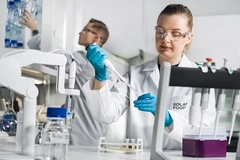
Finnish firm Solar Foods is gearing up for Future Food-Tech San Francisco 2026 in the US (Mar 19–20), where it will demonstrate how its nutritious and ultra-sustainable “air-grown” protein can be applied and scaled across various F&B applications, including meat alternatives, dairy substitutes, pasta, and snacks.
Solar Foods produces Solein using microbes fed with carbon dioxide, water, nutrients, and renewable electricity. By relying on fermentation instead of agriculture, the company can create a high-protein ingredient without farmland, large water use, or dependence on weather. This approach allows food production to happen almost anywhere, marking a shift toward more controlled, resilient, and scalable systems.
The product targets several major global trends, including the demand for sustainable protein, reduced environmental impact, and food security in a changing climate. It aligns with the rise of alternative proteins and circular, low-resource production methods, while also appealing to innovation in space exploration and future urban food systems.
Ahead of Future Food-Tech, we caught up with Laura Sinisalo, brand and marketing director, to understand how the company’s novel protein, branded Solein, excels not only as a high-quality, functional ingredient for fast-growing nutrition categories, but also as a scalable, stable, and sustainable alternative to traditional protein production, sitting at the intersection of climate tech, biotech, and future nutrition.
Better-for-you protein products
In San Francisco, Solar Foods will showcase product concepts for Health & Performance nutrition products, a category in which Sinisalo says Solein excels as an ingredient. Solar Foods creates prototypes to support its customers and give them a head start in product development.
“Solein offers high-quality protein and exceptional functionality to a product category where quality and nutrition matter,” she explains. “The US Health & Performance nutrition market alone is worth ~US$10 billion, and it keeps growing. Consumers are demanding more and more protein-enriched products — not just for boosting performance, but also for supporting an active lifestyle.”
“At the moment, there is more protein demand than there is offering, and we are able to address the protein gap in the market.” Laura Sinisalo, brand and marketing director at Solar Foods.
Solar Foods will present its Solein Protein Drink concept at Future Food-Tech to demonstrate Solein’s capabilities in an increasingly popular, widely used product category. This concept contains significantly less naturally occurring sugars and carbohydrates than popular protein sources like dairy-based whey and plant-based proteins, answering the growing consumer demand for healthier products.
The protein content ranges from 12–21 g per 250 ml package, and it can be adjusted to customer and consumer needs. Solein’s characteristics mean the drink is gluten-free, non-GMO, and contains no cholesterol or soy, making it suitable for different diets.
As an ingredient, Solein contains 80% protein, from which 43% is essential amino acids and 20% BCAAs, supporting performance and recovery. It also has a very low carbohydrate content and contains iron and vitamin B12, which plant-based proteins lack.
Solein Protein Drink follows Solein Protein Bites and Solein Shake, the company’s product prototypes for protein bars and ready-to-mix protein powders.
Scalability and sustainability
Solar Foods’ first commercial-scale production facility (Factory 01) has demonstrated that the technology behind Solein can be scaled, confirming a 100-fold scaling from pilot level. This week, the company will be sharing news of its next production facility — Factory 02.
“Factory 01 started operations in the spring of 2024, and it has enabled us to produce Solein since then, proving we can bring a food ingredient to market with secure supply, consistent quality, and no price volatility,” says Sinisalo.
“At Future Food-Tech, we will also be sharing our scaling plans, including our next production facility, Factory 02, which will scale our production capacity from Factory’s 160 tons to 6,400 tons annually.”
“Our gas fermentation technology enables us to produce food more efficiently and sustainably than ever before. Food can be produced anywhere in the world, detached from land and large-scale water use, and food production is not dependent on weather and climate conditions. We can basically turn deserts into food farms with our production technology.”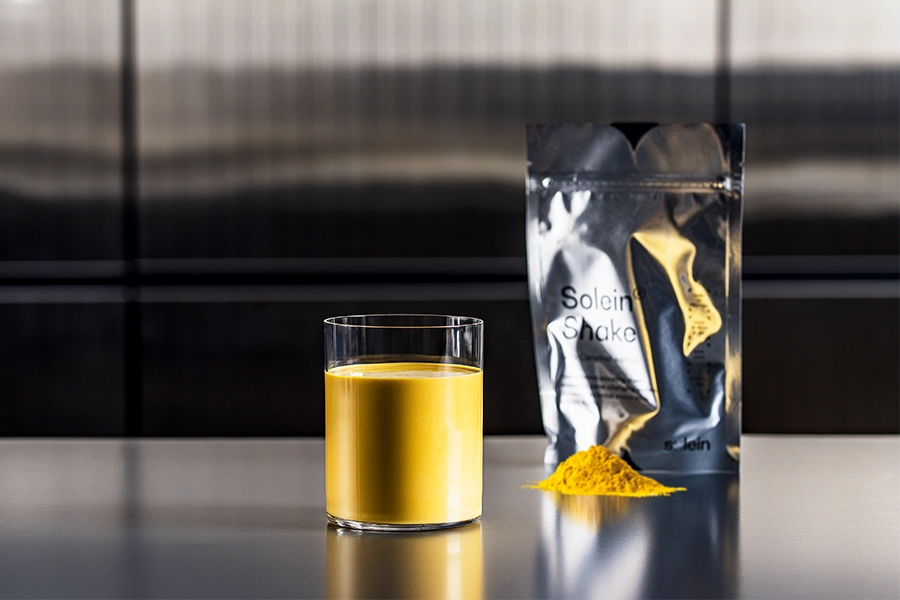 Solar Foods’ Solein Protein Drink concept.
At the same time, Solein’s mild taste avoids any unwanted off-notes to final products, and it can be used in numerous flavor combinations. The protein drink can be made in various flavors, from classic chocolate, chocolate-raspberry, and vanilla to fresh and fruity flavors like mango.
The ingredient is also well-suited for UHT processing, commonly used by the food industry in protein drinks, enabling the product to be stored at room temperature. The UHT treatment does not alter the taste or smell of the final product made with Solein, which is more common when dairy-based protein sources are used.
Solar Foods launched its protein in the US in 2024 in partnership with Olmsted, a New York City restaurant.
Opportunities and misconceptions
Solein’s production is not dependent on farming cycles, which the company says makes it a secure supply of food, capable of addressing the global protein supply gap. The ingredient’s production can be scaled with fermentation tanks, ensuring secure availability and steady quality throughout the year with no price fluctuations.
“The food ingredient market has seen increased price and quality volatility during the past years. Gas fermentation technology enables food production with secure supply, stable quality, and no price volatility, while at the same time enabling protein production in a much more sustainable way,” says Sinisalo.
For Solein, the biggest misconception is that the ingredient is “lab-made” or GMO, which can create unwarranted negative perceptions.
“Our microorganism originates from the Finnish wilderness, and in our production, we follow nature’s own playbook, without adding anything or taking anything away. We use the whole biomass of the microbe, and there are no significant side streams,” Sinisalo concludes.