

Smey CEO: How AI and yeast fermentation are reshaping fats and oils

Key takeaways
- Smey uses AI and yeast fermentation to develop fats with tailored texture, melting behavior, and functionality.
- Its initial alternatives target cocoa butter, avocado oil, and palm oil amid supply uncertainty and price volatility.
- European Novel Food approval and production scaling remain key hurdles to commercialization and affordability.
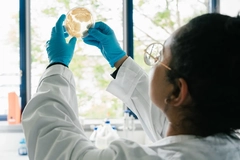 (All image credits: Smey).
Climate pressures, price volatility, and supply uncertainty are driving demand for alternatives to conventional oils and fats. France-based Techbio firm Smey combines AI, yeast discovery, and fermentation to develop lipids with tailored melting behavior, texture, and functionality, initially targeting cocoa butter, avocado oil, and palm oil alternatives.
While naturally occurring yeasts offer promising lipid profiles, performance requires application testing. European Novel Food approval remains a major barrier, while scaling production will be crucial to affordability.
FoodIngredientsFirst speaks with Viktor Sartakov-Korzhov, founder and CEO of Smey, about its Lipid Atlas discovery platform, the formulation opportunities for yeast-derived fats, and the regulatory and production challenges ahead of food commercialization.

Tells us about Smey and what it aims to bring to the food ingredients industry?
Sartakov-Korzhov: Smey was founded in 2023 with a simple question: imagine if we could create entirely new ingredients from naturally occurring yeasts whose potential has yet to be explored?
We started with the belief that nature holds an extraordinary diversity of microorganisms whose potential remains largely unexplored. By combining yeast discovery, artificial intelligence, and precision fermentation, we turn that biodiversity into new ingredients serving multiple industries, from beauty to food.
Our laboratory at the IZB biotechnology center in Martinsried, near Munich brings together our R&D team, with expertise spanning microbiology, lipid science, fermentation engineering, artificial intelligence, and manufacturing, allowing us to move from microbial discovery toward industrial applications.
 Viktor Sartakov-Korzhov, founder and CEO of Smey.For the food ingredients industry, our ambition goes beyond finding alternatives to existing oils and fats. We aim to create new lipid profiles with tailored functionalities that help manufacturers differentiate their products, improve performance, and develop innovative formulations, while benefiting from more reliable supply chains and greater control over ingredient sourcing.
How do you combine AI with the Lipid Atlas to identify promising oils and fats for specific food applications?
Sartakov-Korzhov: Traditionally, ingredient development starts with a limited number of available oils and explores how to adapt them to different applications. With Lipid Atlas, we want to reverse that logic — start with the functionality the industry needs and identify which lipid profiles could deliver it.
Lipid Atlas allows us to explore the diversity of fatty acid compositions and identify promising profiles for specific food applications, from cocoa butter alternatives to fats with tailored melting behavior and texture. AI brings a predictive dimension to this process. Our internally developed AI models are trained specifically for lipid discovery. By analyzing lipid data, these models predict which lipid profiles could deliver specific properties, helping us identify and prioritize the most promising candidates before experimental development.
Why did you choose Noyl Cocoa, Noyl Avocado, and Noyl Palm as the first examples of this approach, and what industry needs do they address?
Sartakov-Korzhov: First, these ingredients are widely used across both food and beauty, the two industries where Smey initially focused its activities.
Their tropical origins also make their supply chains particularly vulnerable to climate change, agricultural constraints and price volatility, creating a growing need for more resilient alternatives.
But above all, we started with real industry demand. This is particularly true for cocoa butter equivalents, where significant price instability and supply uncertainty have accelerated the search for alternatives that can deliver comparable functionality and performance. These three ingredients are our starting point to demonstrate how yeast-derived lipids can address concrete market needs, while opening the door to entirely new lipid profiles designed for specific applications.
How do these ingredients compare with conventional cocoa butter, avocado oil, and palm oil in terms of taste, texture, and ease of use in food products?
Sartakov-Korzhov: What makes our approach particularly interesting is that, through Lipid Atlas, we have identified several yeast strains capable of producing lipid profiles similar to those of cocoa butter, avocado oil, and palm oil.
This means we are not limited to a single alternative for each ingredient. We can explore multiple options, each with potentially different characteristics, and select the most promising one depending on the application. Importantly, our approach does not involve genetic modification. We work with naturally occurring yeasts, leveraging their existing ability to produce lipids.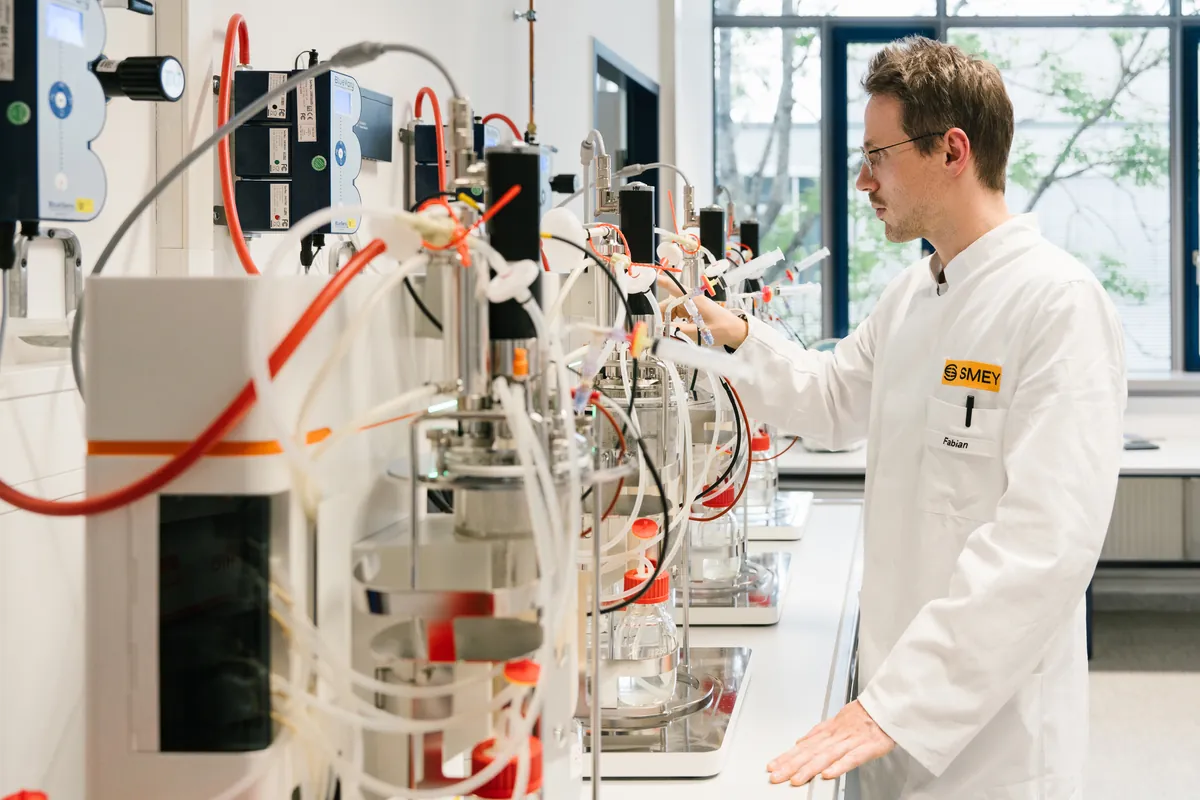 Smey works with naturally occurring yeasts, leveraging their existing ability to produce lipids.
For food manufacturers, this creates flexibility to target specific properties, such as texture, melting behaviour or functionality. The goal is not simply to replicate conventional oils, but to identify the lipid profile that best meets the requirements of each product. Taste and performance in finished formulations are then assessed through application testing.
How close are these ingredients to wider commercial use, and what are the main challenges in making them accessible and affordable for food manufacturers?
Sartakov-Korzhov: Although our production process is entirely natural and does not involve genetic modification, regulatory approval remains the main barrier to wider commercial use in food. Yeast-derived oils are subject to Novel Food regulations in Europe, which means we still have a significant regulatory journey ahead before these ingredients can reach the market.
On the production side, we are more optimistic. We have already gained valuable experience in scaling up our ingredients for the cosmetics industry, and this provides a strong foundation for food applications. Increasing production volumes will also be key to reducing costs and making these ingredients more affordable for manufacturers.
We will be attending Fi Europe in Frankfurt, Germany (Nov 17–19), to showcase our latest innovations, including our AI-powered discovery platform and new ingredient samples. The event will be an opportunity to demonstrate how Smey is moving from lipid discovery to tangible, high-value specialty fats and oils. For food manufacturers, this opens the door to joint R&D and application development projects focused on creating tailored lipid solutions that address specific formulation challenges and enable differentiated food products.