
Plant-grown myoglobin offers route to meat-like color and flavor amid scale-up hurdles


Key takeaways
- Researchers produce stable animal myoglobin in lettuce and tobacco chloroplasts, opening a potential new molecular farming route for meat-like ingredients.
- Yields were promising, but only about 35% of tobacco-produced myoglobin contained heme, limiting its color, flavor, and nutritional functionality.
- Experts see commercial potential but say scale-up, food safety, regulation, processing costs, and improved heme incorporation remain major hurdles.
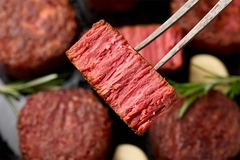
Researchers have successfully produced stable animal myoglobin in the chloroplasts of lettuce and tobacco plants. The results point to a potential new molecular farming route for ingredients that deliver the color, flavor, and nutritional properties associated with meat.
The study, published in Frontiers in Plant Science, demonstrates what the researchers say is the first stable production of myoglobin in higher plants and the first reported expression of a foreign hemoprotein in lettuce.
Myoglobin is an oxygen-binding protein found in animal muscle. Its heme component plays an important role in meat’s red color, metallic and umami notes, and bioavailable iron content. This makes it an attractive target for developers seeking to improve the sensory performance of plant-based meat.
“Here we show that plants can be engineered to produce the animal protein myoglobin in their chloroplasts,” says lead researcher Dr. Alexia Groff of Imperial College London, UK. She adds that the approach could offer a more sustainable production route for plant-based meat ingredients.
Turning chloroplasts into protein factories
The team engineered tobacco and lettuce by inserting a gene encoding porcine myoglobin into their chloroplast genomes using biolistic transformation, commonly known as a gene gun.
The plants subsequently grew, flowered, produced seeds, and passed the modified chloroplasts to their offspring, demonstrating stable inheritance.
Myoglobin reached approximately 2.7% of total soluble protein in tobacco and 1.5% in lettuce. On a dry-weight basis, researchers estimated yields of around 800 mg/kg in tobacco and 810 mg/kg in lettuce.
Chloroplast production also outperformed nuclear expression in tobacco by at least threefold. Chloroplasts can be attractive for recombinant protein manufacturing because their bacterial ancestry, high genome copy number, and reduced susceptibility to gene silencing can enable relatively high expression.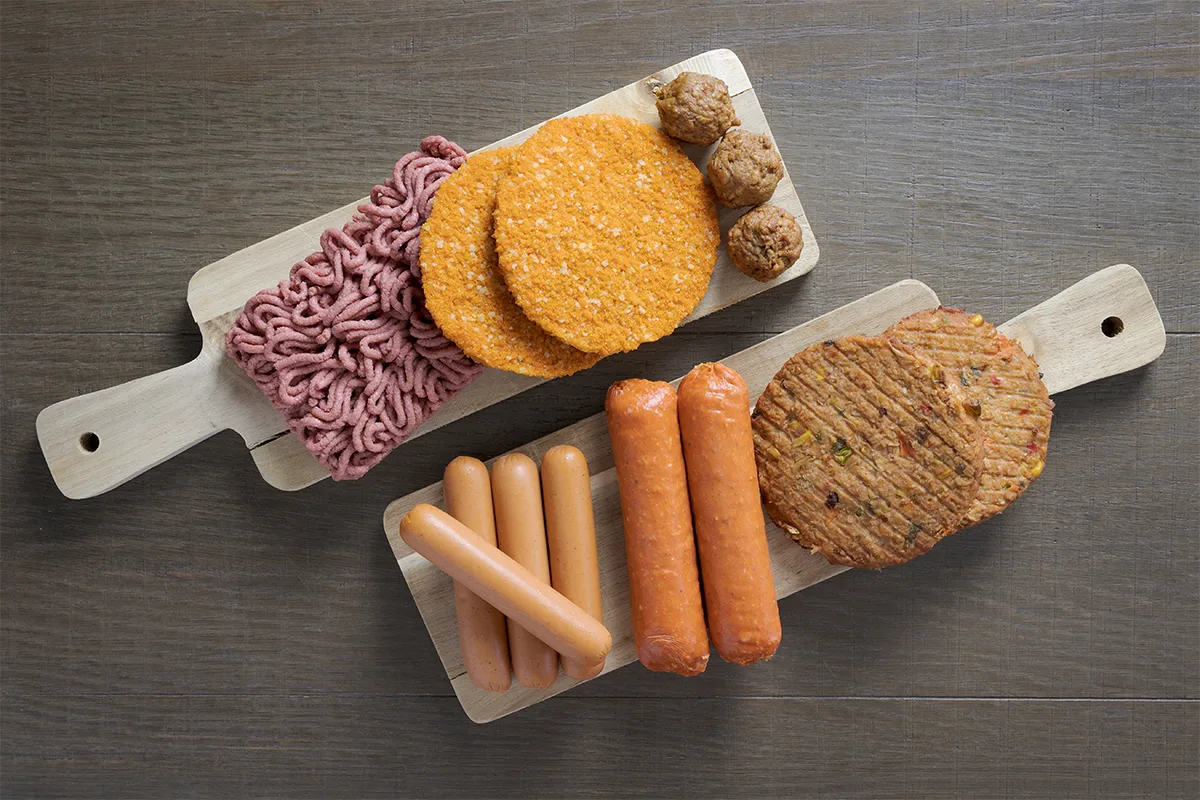 Plant-grown myoglobin could offer food makers a new route to meat-like color, flavor, and nutrition.
However, the quantities remain substantially below those naturally occurring in animal muscle. The researchers estimate myoglobin concentrations in beef muscle are roughly ten times higher on a dry-weight basis.
They argue that agricultural productivity could nevertheless change the economics. Plants can require significantly fewer resources than livestock, potentially allowing protein output per hectare to become competitive if expression, extraction, and processing can be optimized.
A dedicated techno-economic assessment has not yet been conducted.
Heme remains the critical bottleneck
One of the most significant barriers to commercializing plant-produced myoglobin is not simply increasing protein yields, but ensuring that the myoglobin produced is fully functional.
Myoglobin purified from the tobacco plants appeared correctly folded, but only around 35% contained bound heme. By comparison, the researchers reported around 80% heme occupancy in myoglobin produced using E. coli.
That shortfall could limit food applications because heme is central to the ingredient’s ability to reproduce characteristic meat color, flavor, and nutritional properties.
Rodrigo Ledesma-Amaro, academic lead in engineering biology for sustainability and director of the Bezos Centre for Sustainable Protein at Imperial College London, calls the research an “important advance” over earlier plant and algal work.
However, he stresses that commercial potential will depend on improving heme incorporation and demonstrating food functionality, safety, field performance, processing requirements, and clear economic and environmental advantages at scale.
The researchers suggest future approaches could include engineering plants to increase heme biosynthesis, supplying heme precursors, and optimizing regulatory sequences and growth conditions.
From proof-of-concept to ingredient platform
Derek Stewart, co-director of the UK’s National Alternative Protein Innovation Centre, similarly views the findings as a promising proof-of-concept, but highlights the incomplete heme loading and the study’s reliance on a limited number of independently transformed plant lines.
He also flags tobacco as problematic for food production because the crop naturally contains bioactive alkaloids, creating additional extraction and food safety challenges.
Lettuce may therefore hold greater relevance for food ingredient developers. Groff says myoglobin could eventually be extracted from the leaves and purified using industrial protein processing technologies before being incorporated into plant-based meat formulations.
Study co-author Dr. Kyoko Morimoto, chief scientific officer of plant biotechnology company Kyomei, also raises the longer-term prospect of developing myoglobin-producing lettuce as a heme iron-enriched food, subject to regulatory approval.
For ingredient manufacturers, however, the nearer-term opportunity may be using crops themselves as production platforms for animal-identical proteins without relying exclusively on microbial fermentation and stainless-steel bioreactors.
The research shows that such a platform is technically possible. Whether plant-made myoglobin can deliver the purity, functionality, cost, regulatory clearance, and volumes required by the food industry is now the more consequential question.



Upcoming webinars
Oat-Standing Ingredients - Showcasing Irish Grain Through Innovation
Tirlán Ingredients

2027 Food Safety Risks for Quality & Compliance Leaders
FoodChain ID
Formulating for function: Developing benefit-led beverages with natural colours, botanicals, and flavours
Givaudan Sense Colour