

Plant-based milk demand fuels Oatly’s Swedish capacity expansion

Key takeaways
- Oatly invests US$16M in its Landskrona facility, increasing production capacity by more than 33%, with completion expected by March 2027.
- The expansion responds to rising demand for oat-based beverages across Europe, particularly in the UK, Germany, France and Spain, where most production is exported.
- The project aligns with sustainability and supply chain goals, sourcing more oats from Swedish farmers.
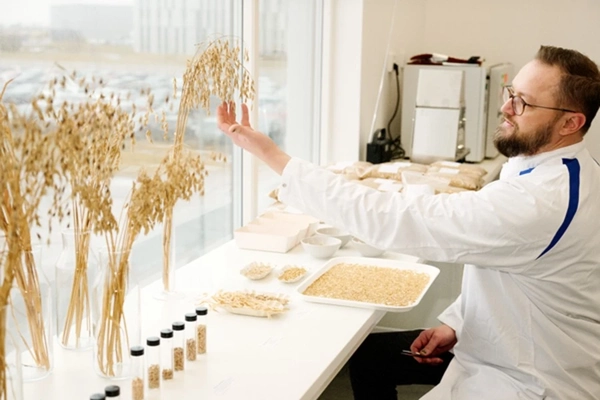
A resurgence in demand for oat-based beverages is behind Oatly’s expansion plans to increase production at its key facility in Landskrona, Sweden. The company says this is a multi-year investment with the expanded infrastructure expected to boost the site’s production capacity by more than 33%.
Oatly already exports approximately 70% of the volume produced at the Landskrona facility, driven by increasing demand from established markets in the UK and Germany, as well as emerging expansion in France and Spain, where the category is gaining popularity. Export volumes are likely to increase once the facility expansion is complete.
Yesterday, the oat milk brand announced a US$16 million (~€15 million) investment, with construction in Landskrona beginning this month and scheduled for completion by March 2027.

The cash injection highlights how alternative proteins are moving from niche growth into mainstream scale and profitability.
Traceable supply chains
Oatly’s expansion follows a period of restructuring and cost-cutting, and will require sourcing more oats from Swedish farmers, which aligns with the company’s strategy for sustainable, local sourcing.
The Landskrona facility, in its twentieth year of operation, will be expanded to boost production capacity from 150 to 200 million liters per year. Oatly claims this will be done within the same physical footprint. The facility sources 100% renewable energy, and this expansion is forecast to lower Oatly’s total corporate climate impact throughout this year and into 2027.
Major oat investment
The expansion closely follows Oatly reporting profitable growth in both the fourth quarter and the full year 2025. The company reached US$862.5 million in revenue, a 4.7% increase compared to 2024.
Oatly reported record sales volumes and higher revenues, even as it navigated operational challenges and a legal ruling in the UK related to its “Post-Milk Generation” branding. Last month, the UK Supreme Court unanimously ruled that Oatly cannot use its “Post Milk Generation” trademark on oat-based food and drink.
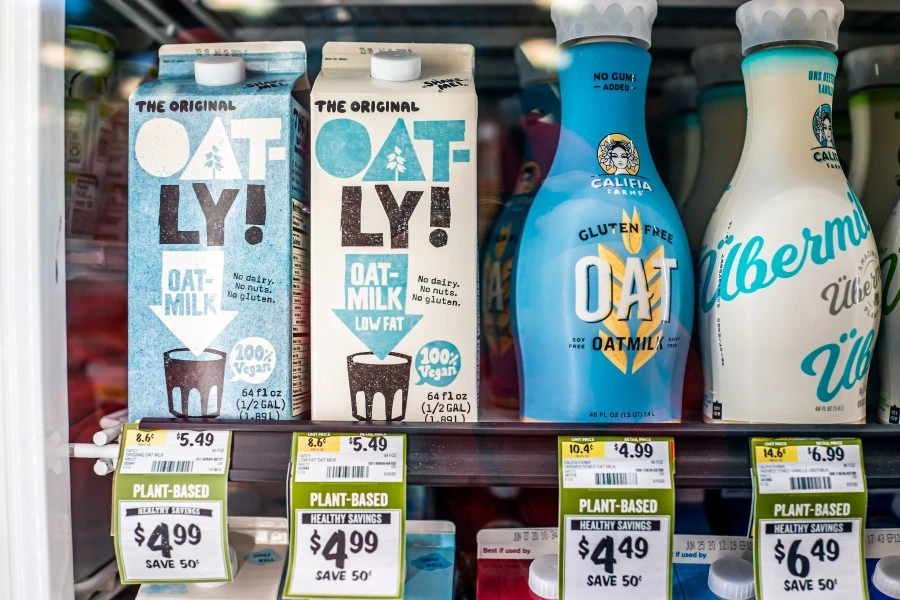 Oatly has been expanding its oat-based milk beverage line in recent years, with innovations for at-home use as well as solutions targeting the foodservice industry.
Oat milk NPD
Oat milk is often regarded as having one of the best flavor profiles among plant-based milks, with high compatibility with coffee.
Oatly has introduced several new products across its core oat drink portfolio and adjacent beverage categories in the last few years. The launches mainly fall into three innovation themes: core oat drink reformulation, barista/foodservice formats, and new ready-to-drink (RTD) beverages.
The company unveiled a new matcha latte-flavored oat milk and added Unsweetened Oatmilk and Super Basic Oatmilk to its US portfolio last summer to enhance smoothies, coffee, and cereals.
The company also introduced a Barista Iced Coffee range last year in Oatly’s first move into RTD coffee beverages. This Arabica coffee, blended with oat milk, comes in 235 ml cans and is positioned for on-the-go consumption, driven by Gen-Z cold coffee demand.
Oat-based options trending
Innova Market Insights data shows plant-based milk is the most consumed plant-based product in the UK, with one in four European consumers purchasing dairy alternatives on a typical grocery trip.
Moreover, Innova’s data indicates that dairy alternative milk launches with oat ingredients grew by an average of 10% globally from 2021 to 2025. In Europe, oat-based plant milk launches grew by 5% over the same period, and Europe was the largest market in 2025, accounting for 49% of global launches.
Consumer data shows that 46% of consumers globally say they usually choose oat-based options in plant-based milk, rising to 51% in Western Europe (Innova Meat, Dairy & Alternative Proteins Survey 2025).
Coffee culture
The popularity of plant-based beverages is gathering pace in and out of the home.
Another major driver behind Oatly’s latest investment is strong growth for barista-style beverages and automated coffee machine solutions seen across coffee shops and foodservice channels.
Plant-based milks are becoming standard café ingredients, not just retail products.
Oatly Group and McDonald’s in the Netherlands have inked a new partnership to bring Oatly Barista Edition to all 264 restaurants in the country.
“We’re seeing growing demand for our products, so the time is right to upgrade our Landskrona site, which has performed fantastically well in recent years, both in stability of output and outstanding cost management. The Landskrona factory is a key site for us, not only because of our roots in Sweden, but also because it’s a fully owned, end‑to‑end production hub and home to many of our core functions,” says Simon Broadbent, SVP Sustainable Operations at Oatly.